


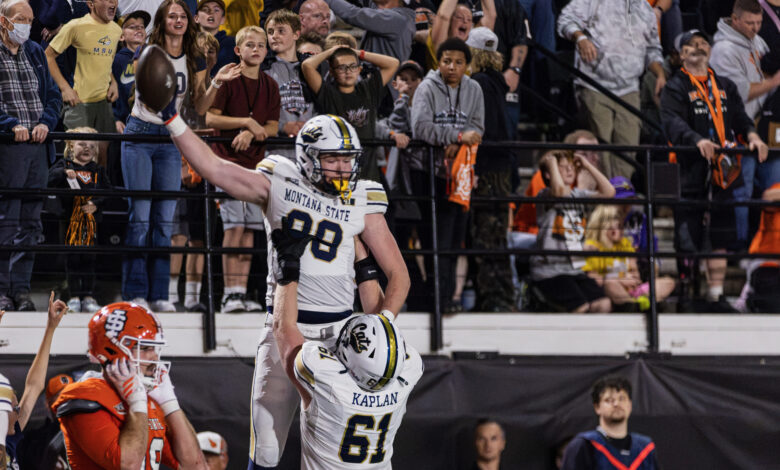
You have to keep up with the times in college football, especially when it comes to overtime rules. Doing so paid off for Montana State head coach Brent Vigen this past Saturday when the Bobcats pulled out a 28-26 triple-overtime thriller at Idaho State.
Getting that deep into the current format was new for Vigen.
“I have not (been in triple overtime) in the current setup,” Vigen said Monday. “If we go back to 2016 at Wyoming, we had two of them, but that was the old way, where you would play forever.”
And ever.
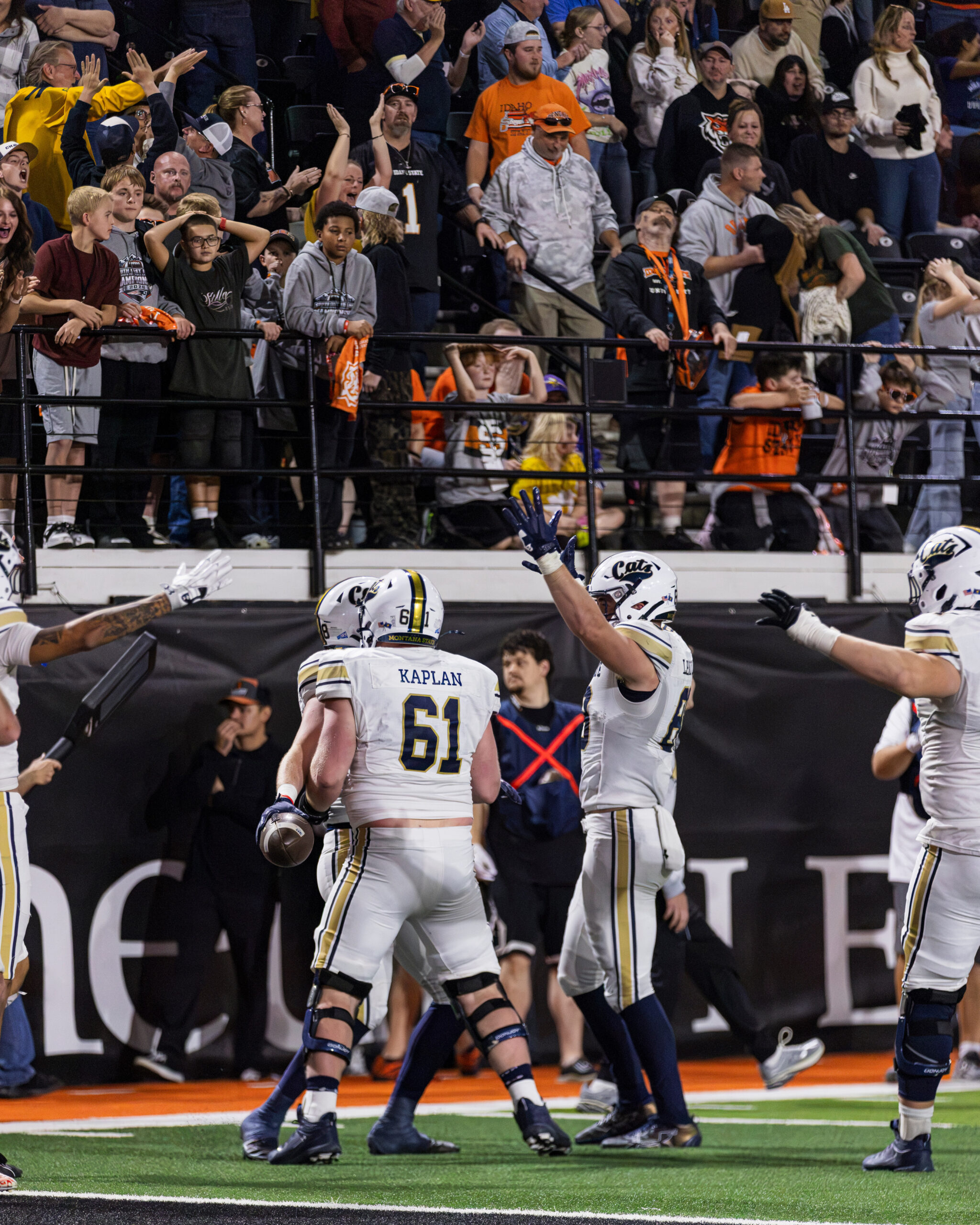
College football’s third overtime changed to alternating two-point conversions in 2021, but Montana State had never gone that deep during that span until it traded field goals with the Bengals in the first two overtimes Saturday. When the NCAA first adopted overtime, the ball was placed at the 25-yard line every period, and games often dragged on for several periods before a winner was determined. In 2018, Texas A&M and LSU went seven overtimes before the Aggies finally prevailed, 74-72.
The marathon nature of NCAA overtime was amended to speed things up until it evolved into its current format. The first overtime plays out like any other possession: a team that scores a touchdown can kick the extra point or go for two, and a team that doesn’t reach the end zone can attempt a field goal.
The second overtime takes the kick away. Teams that score a touchdown must go for two, eliminating the easy extra point that kept extending games. From the third overtime on, each possession is a single two-point play, which speeds things up considerably even if teams keep matching each other.

Because the later overtimes come down to two-point attempts, teams must be prepared with a number of short-yardage plays. That has led teams to spend more practice time on them, and for some teams — like Montana State — that attention has paid off not only on fourth downs but in the overtime win over ISU.
Vigen had to rethink his approach based on the changes. MSU now has more than 10 plays it can choose from instead of just a few.
“Each step along the way, it’s different, and before you know it, you’re in a two-point play contest,” Vigen said. “We’ve upped the ante on how much we’ve worked two-point plays in the last couple years since the rules changed.
“Before these rule changes, you might carry three to five two-point plays that you may not get to all season. Now, based on this rule alone, you better have double digits that you could go to. You probably have the same starting point you would use in regulation, but if you get into this back-and-forth, you better have a list.”
Teams often go for the win when they score what looks like a game-tying touchdown. Vigen chose to kick in the first overtime against North Dakota State in the 2023 playoffs. It turned out to be the wrong choice — the kick was blocked, ending MSU’s season.
“After that overtime game against North Dakota State in ’23, we shifted gears in how we prepared for overtime in the offseason,” Vigen said. “Whether you agree with that way of doing it or not, that is the rule. So we’ve continued to put time into our two-point plays and defending them, and we play out overtime in fall camp a couple times so our guys understand the rules.
“We’ve been in a couple overtime games since — the double overtime against South Dakota State, the overtime in the championship — and this is our first time getting to the third overtime.”
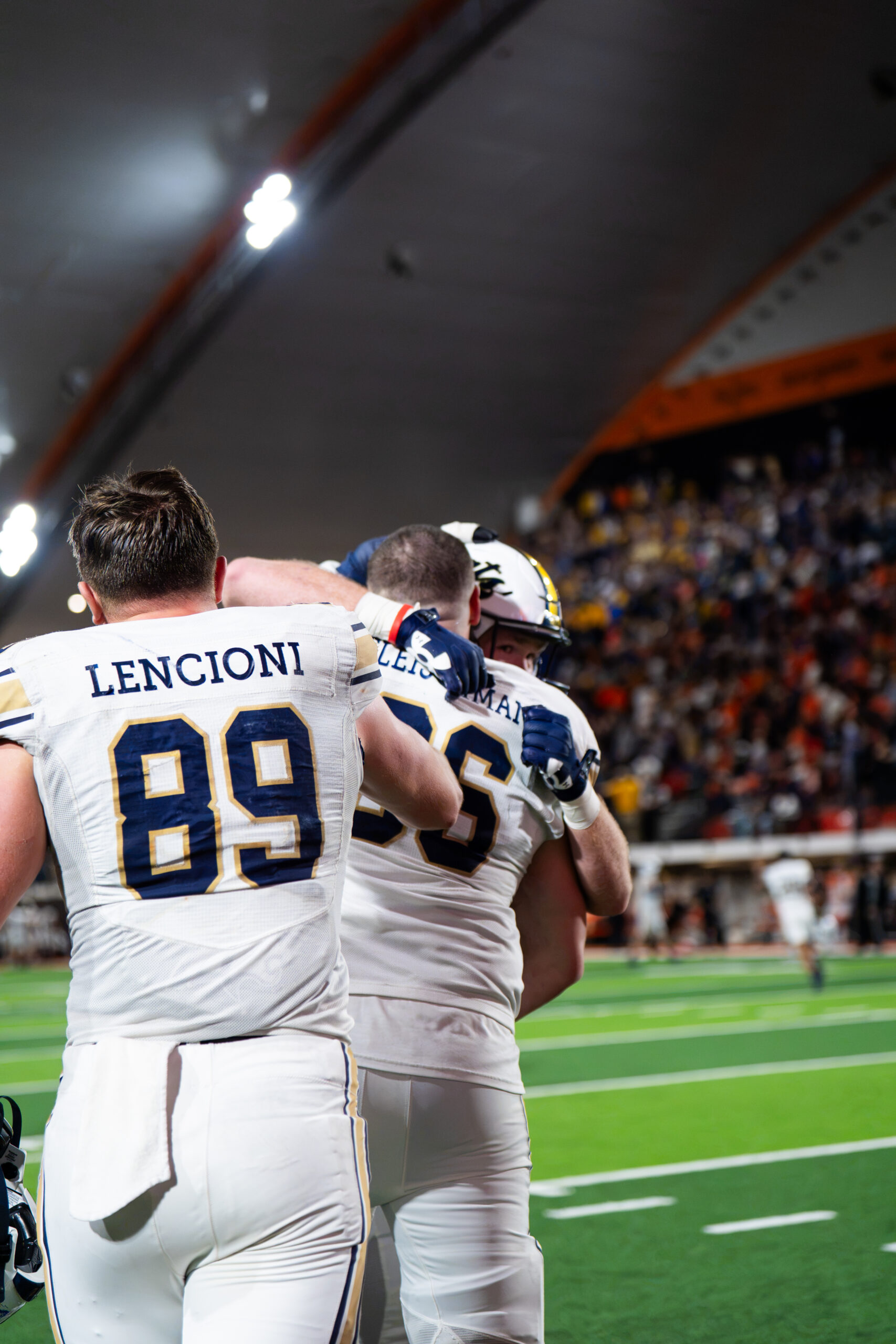
MSU could have gone for the win late in the fourth quarter after tight end Rocky Lencioni hauled in a touchdown pass from Justin Lamson, but it kicked the extra point to tie the game at 20-20.
“Even with us down 20-19 after Rocky’s catch, there’s a thought you go for two,” Vigen said. “There was too much time on the clock, in my opinion, and I felt like our defense was doing enough. There’s a feel: how is your defense playing, what’s their ability to stop the other team, and your willingness to go play in overtime.
“Then you get in overtime and you’re back to square one. Defensively, you give up two field goals and you don’t allow a two-point conversion, you’ve done everything you can. Offensively, we kick two field goals. In the first overtime, I thought we had a couple runs that should have popped to end the game, but that didn’t happen. Then you’re in this funky world of college football in that third overtime, in a two-point play contest, and we got it done there.”

Safety Caden Dowler made a great play to stop ISU’s attempt. The Bobcats then lined up for their try, only to have the Bengals call timeout after seeing MSU’s formation. Vigen, knowing ISU would come out with a defensive look aimed at stopping that formation, simply changed the play.
His second call went to one his players knew by heart.
“The play we ran, you’ve seen our guys run countless times, and that’s not just this year — that’s going back to last year,” Vigen said. “In this situation, we went with one that had been a two-point, ready-up play for quite some time, so there’s a sense of confidence that our guys know what we’re doing. This play has been run against our defense a time or two, and it’s been challenging for our defense to defend. Coach [Pete] Sterbick made the call, and most importantly, our players got that call and said, ‘OK, we know what we’re doing, we’ll go execute it.’”
Quarterback Justin Lamson took the shotgun snap, rolled left and pitched to wide receiver Dane Steel on what looked like a reverse, and Steel threw to tight end Rylan Schlepp for the winning conversion.
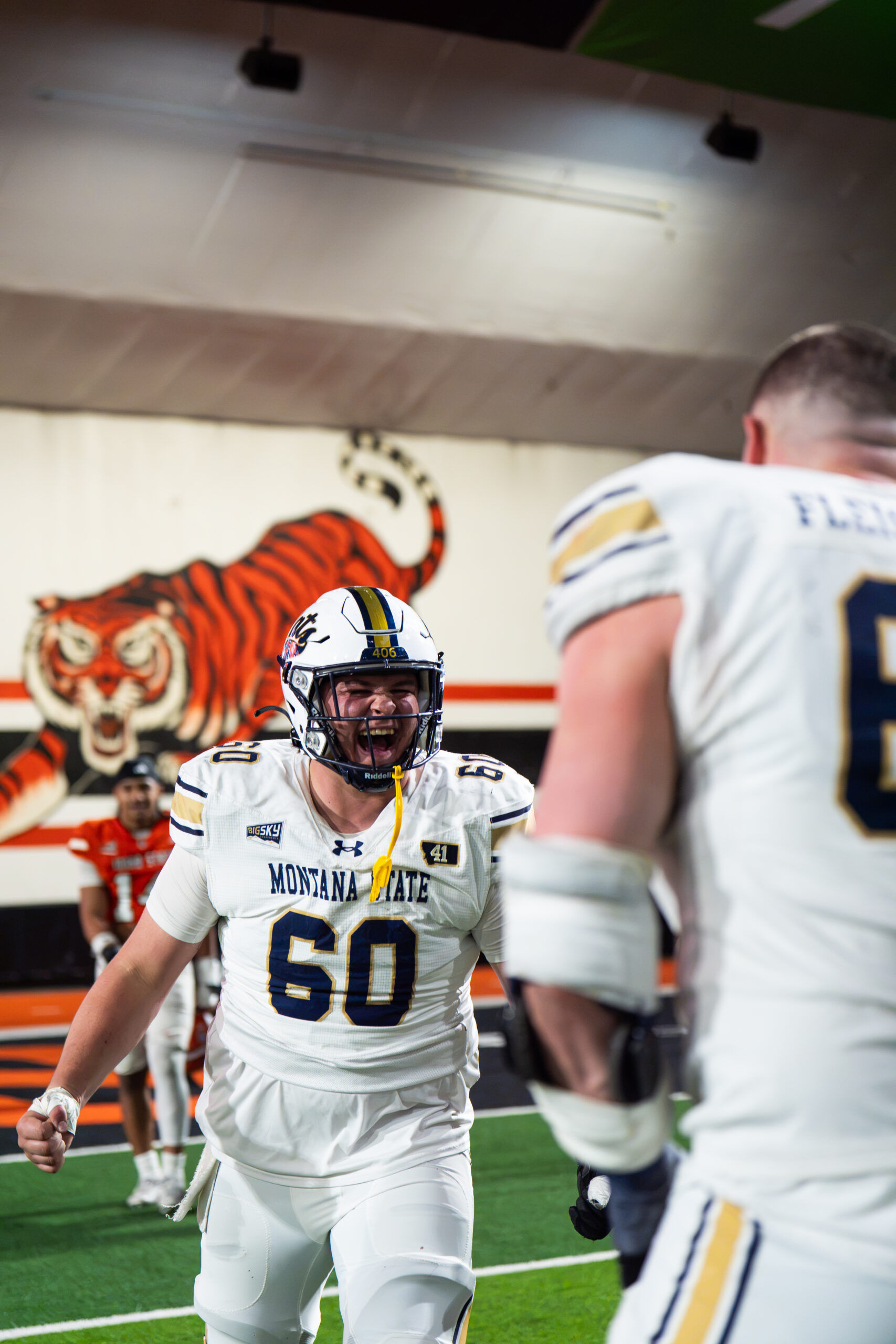
The defensive stop that set up the game-winner came from a lesson MSU learned the hard way a month earlier at Idaho, when Vandals quarterback Joshua Woods slipped past MSU defensive end Zac Crews on the decisive play to snap the Bobcats’ 19-game winning streak.
“At Idaho, we didn’t play that play right. We didn’t play with discipline,” Vigen said. “This one, we played with the correct amount of discipline. The two they had run previously weren’t big plays, but the one they ran in the second overtime still got four yards, so I don’t know if that made them comfortable that they could get the three needed. Then the ball’s on the three, we tighten up and change a little portion of Caden’s responsibility, so Caden could do what he did.
“He did what he was supposed to do, and everybody did on this one. At Idaho, everybody did not do what they’re supposed to do. You live and you learn, right? If we don’t learn a few lessons out of that loss, then shame on us. I think in this moment, that showed.”
A lot happened in overtime before the drama of the two-point attempts that both broke MSU’s way. The defense held strong twice and limited ISU to field goals. On the first play of overtime, linebacker Cole Taylor made a six-yard tackle for loss, though it didn’t knock the Bengals out of field-goal range.
“For our defense to go through overtime, hold them to two field goals and keep them out of the end zone on the two-point (try) in the third overtime — that’s really all you can do defensively,” Vigen said. “Offensively, we would have loved to push that ball in for a touchdown in the first overtime. We didn’t quite get that done, but ultimately we made the two-point conversion when it came down to it. Again, proud of the guys for finding a way.”

All that planning paid off for MSU, which maintained its tie with Northern Arizona for the Big Sky Conference lead and stayed in position for one of the coveted top two seeds in the FCS playoffs, which guarantee home-field advantage throughout.
The Bobcats continue that quest Saturday at noon when they travel to Greeley to face Northern Colorado.
