Montana State got off to a rocky start in 2025, losing to a pair of formidable opponents in the FBS No. 7 Oregon Ducks in the season opener, then the FCS No. 2 South Dakota State Jackrabbits. The Ducks are the No. 5 seed in the FBS playoffs and have advanced to the quarterfinals, while SDSU suffered a slew of injuries before making the FCS playoffs on the final day of the regular season, only to fall in the second round at Montana.
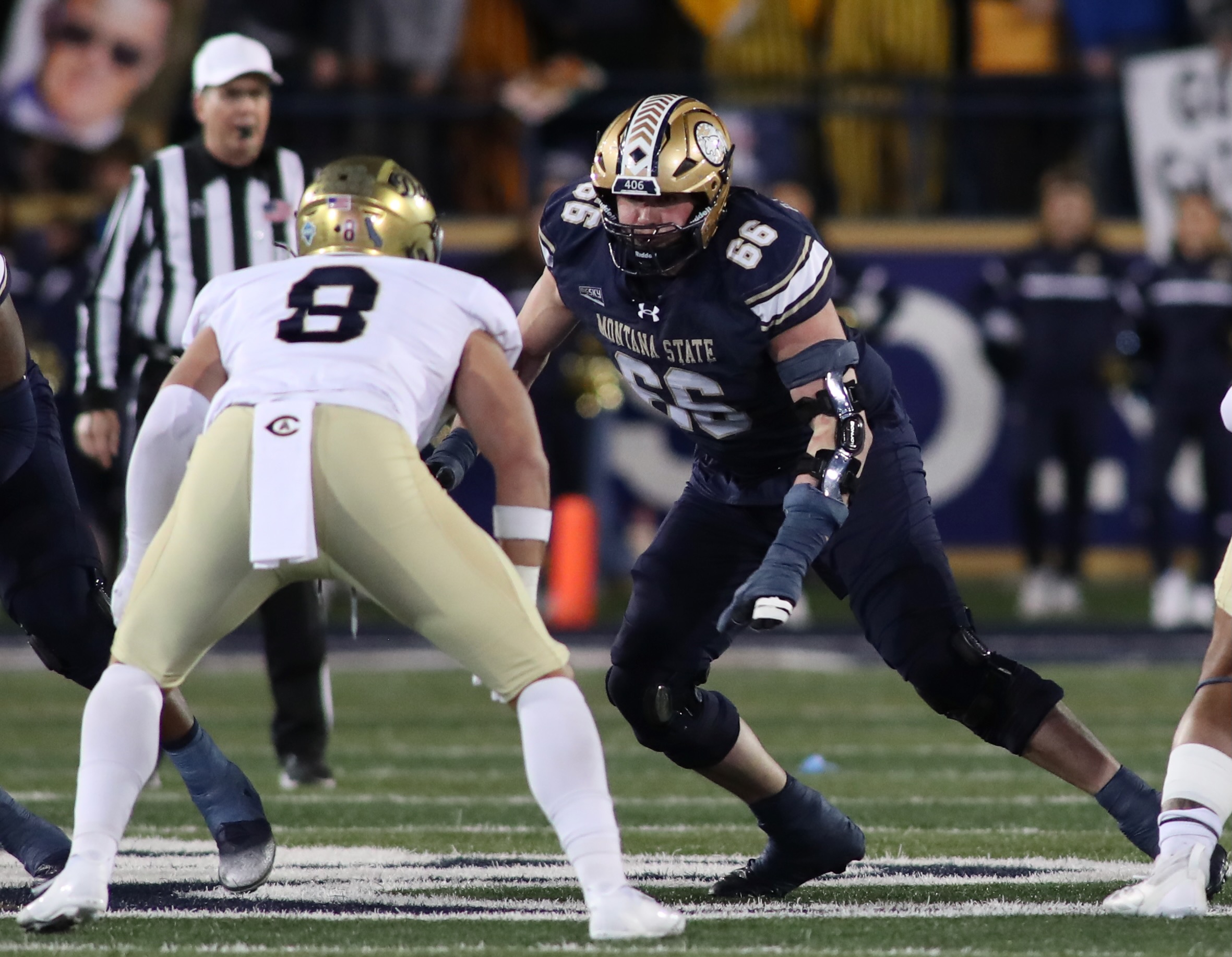
The biggest reason the Bobcats found themselves in a 0-2 hole and struggling to find their groove on offense through the first four weeks of the season, opponents aside, stemmed from an injury to center Burke Mastel during the prep week for Oregon. The sophomore from Red Lodge who showed all-league potential as a starting guard las season suffered a hand injury that forced a chain reaction across the offensive line as the Bobcats to moved senior guard JT Reed to center – the position he stayed at – and its most experienced lineman, right tackle Titan Fleischmann, to right guard.
MSU jumped left tackle Cedric Jefferson to right tackle and brought up freshman Braden Zimmer to play left tackle. Everett Carr, the left guard, was the only lineman to stay at his spot. But once Mastel returned, he replaced Carr in the starting lineup.
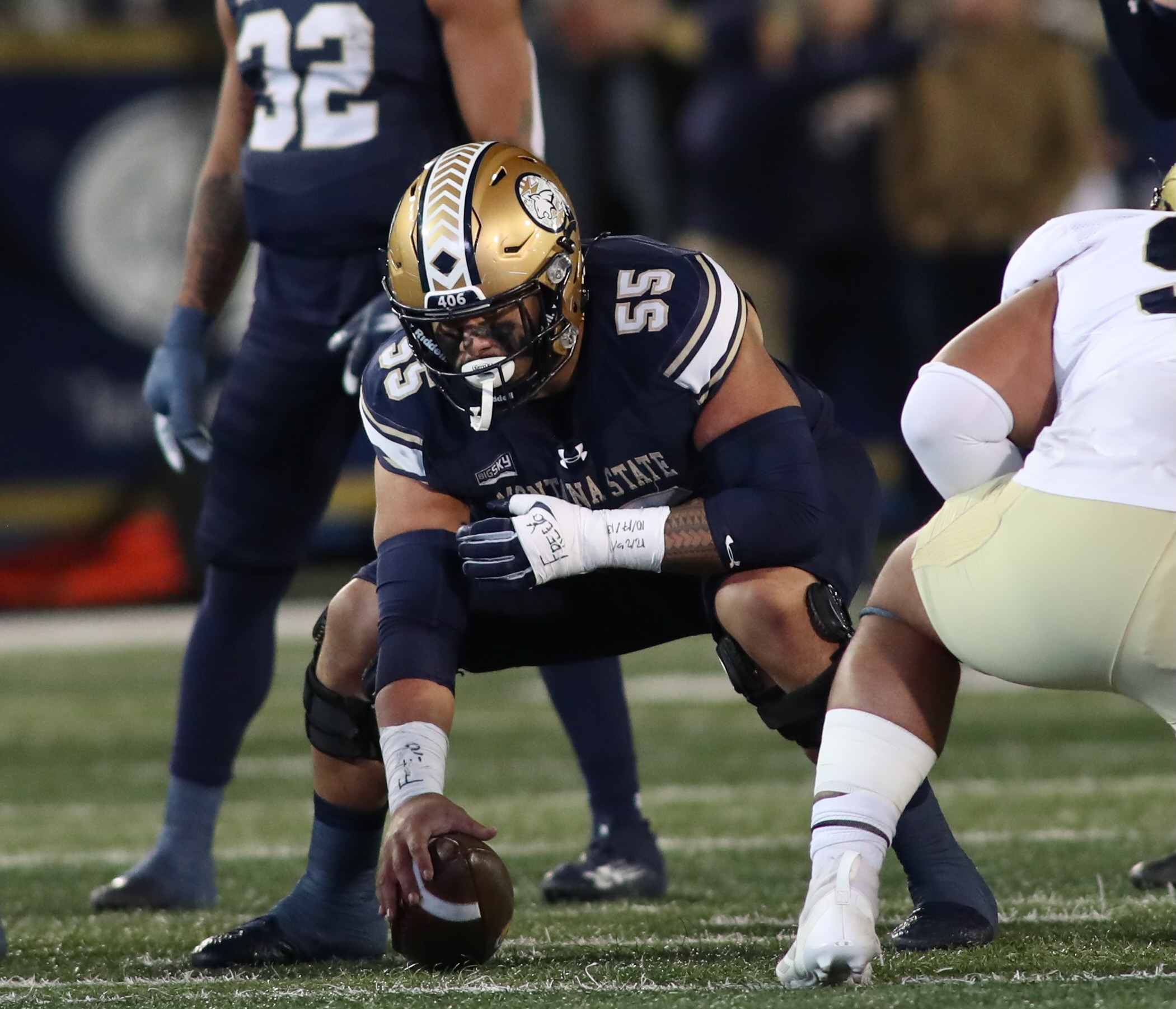
“We call ourselves the ‘DJM (Don Joy Mafia)’ so with (offensive line) coach (Matt) Smith coming in, I think the standard definitely jumped,” Reed said about the reshuffle and Matt Smith taking over for Al Johnson as the offensive line coach. “You are never going to be able to get better as a program or a person if you don’t continue to raise the bar, raise the standard.”
MSU head coach Brent Vigen also recognizes the ability of his veteran linemen – Reed and Fleischmann – to keep the rest of the offense, and particularly the younger linemen, from succumbing to a state of panic. Those two led the way for a rebuilt unit that lost first-team All-Americans Marcus Wehr (graduation) and Conner Moore (transferred to Michigan State) along with all-league seniors Cole Sain and Justus Perkins.
After the first two weeks and the first couple speed bumps, the MSU offensive line has found its stride once again. And that strength not only gave Montana State two wins in 28 days over Montana; it also gave the Bobcats another bid in the national title game.
“I think to have Titan and JT’s experience, to have those two as a stabilizing force, I think that’s been really important to us,” Vigen said. “That group now, while it didn’t start the year together, we had to shuffle the deck immediately. Now, this group of five guys has been together for several months now. I think they’ve continued to get better and done a really good job of week in, week out with different fronts and schemes we’ve seen covering guys up and allowing the running backs opportunities and lanes.”
“We’ve continued to learn every single week and been able to take criticism every single week even when we were successful and apply it to the following weeks,” Fleischmann said.
The offensive line hasn’t been the only emergent group on offense. Most expected MSU’s running backs, led by senior Julius Davis and sophomore captain Adam Jones, to be standouts. Nobody’s surprised that Taco Dowler is an All-American as a receiver and returner. But the tight ends, which lost first-team All-American Rohan Jones to the transfer portal (Arkansas) and Ryan Lonergan to graduation have also helped aid a run game that’s produced two 1,000-yard rushers.
Jones was sure to give credit to the group that includes junior Hunter Provience, sophomore Rylan Schlepp and redshirt freshman Rocky Lencioni, one of the breakout stars of this Bobcat season.
“The tight ends are warriors,” Jones said. “They’re a glorified O-lineman in our program at time and my celebration with Rocky’s catch; any time I see a tight end get some praise, I love it because they’re in the trenches all day blocking for me and Julius (Davis) and Colson (Coon) and they deserve a lot of credit, too.”
With everyone except Carr playing a new position, the Bobcat’ offense generated just 30 points during regulation against Oregon and SDSU. MSU bounced back the next week against San Diego to tally 41 points and 539 yards only to run into an unorthodox Mercyhurst the next week and to no fault of their own struggled to get the ball back from the Lakers. Mercyhurst, who had an edge in time of possession despite not scoring a point and being held to just 263 yards, limited MSU to just five possessions, 17 points and 354 yards of total offense.
The output sent Bobcat fans into a tizzy and created doubters across the FCS landscape.
MSU responded in a big way the next week and didn’t look back as they smothered Eastern Washington 57-3 in the Big Sky Conference opener for both schools. That started a string of 11 games averaging 462 yards of total offense per game after the first four yielded an average of 372. More pointedly, the Bobcats, who have made a name for themselves by running the ball as well as any team in the FCS over the last seven seasons, went from averaging 177 yards per game and 4.7 per rush in the first four games to 256 rushing yards per contest and 6.1 yards per carry over the last 11 games.
When the Oregon game is eliminated, the Bobcats have some of the best offensive numbers in the FCS. The Bobcats would be fourth in yards rushing per game (248.1), fourth in pass efficiency (170.2), fifth in yards per play (7.0), fifth in yards per rush (5.9), and eighth in yards per pass attempt (8.9).
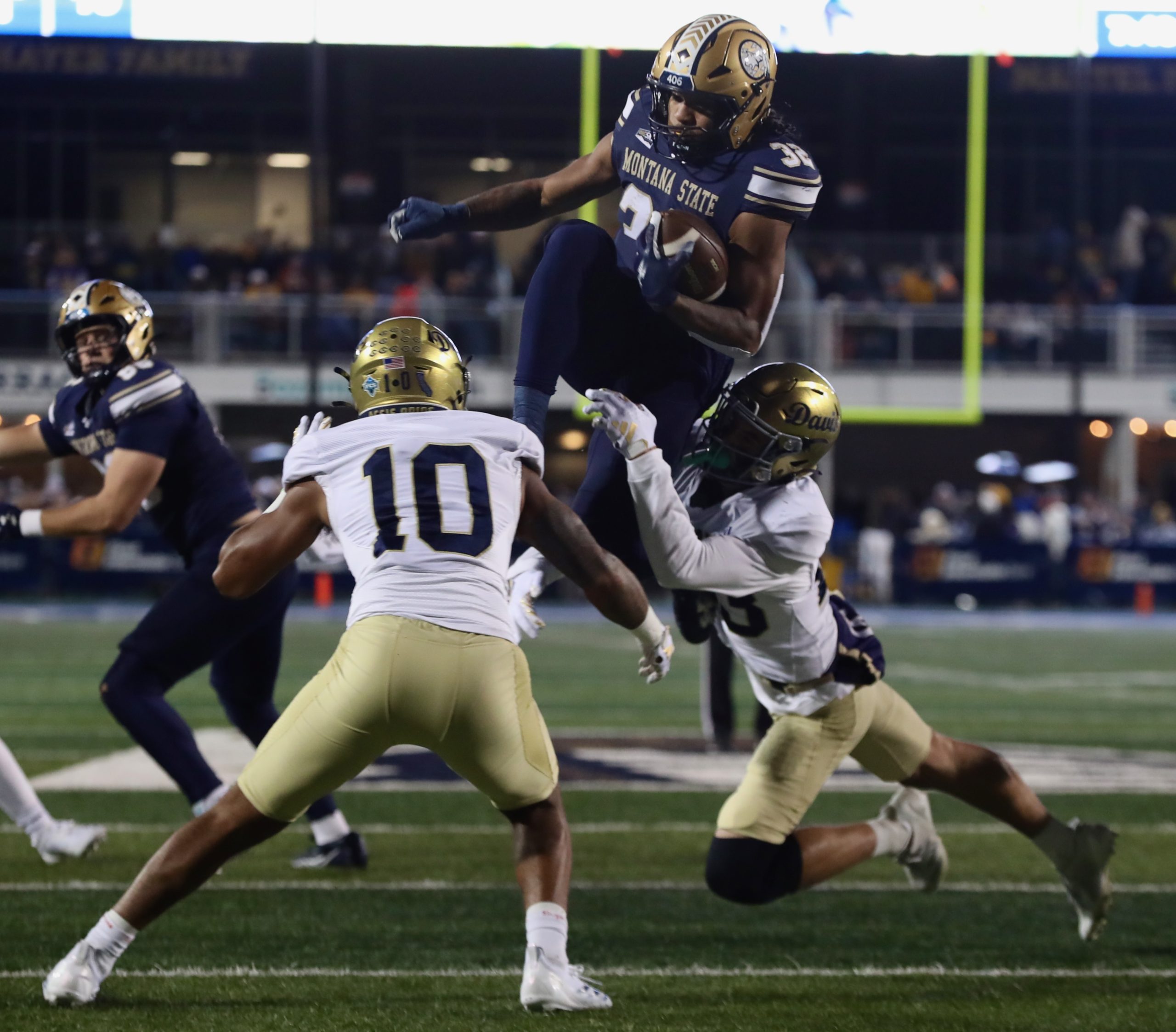
Once MSU got past its rocky non-conference start, the Bobcats blew away the rest of the teams in the BSC statistically. In conference-only games, the Bobcats led the league in scoring offense (45.4), scoring defense (13.8), total offense per play (7.5) and per game (476.0), total defense per play (4.6) and per game (310.3), rushing offense per play (6.3), rushing defense per play (3.7) and per game (113.1), pass offense efficiency (182.4) and pass defense efficiency (106.6). They were second to Sacramento State in rushing offense per game at 234.5.
That statistical success is a byproduct of MSU’s offensive line being able to stay focused.
“Another thing that we preach on the offensive side is ATD: attention to detail,” Reed said. “At this point of the season, a lot of teams will lose games based off bad fundamentals, bad attention to detail and not being able to do little things right.”
The Bobcats have gone up against five playoff teams(No. 3 Montana twice) over the last five weeks and have been productive on the offensive side of the ball. They scored over 30 points and have gained over 400 total yards in all but one game, but they still averaged 36 points per game, 411 total yards per game and 6.9 yards per play.
The line isn’t the only thing that gets the offense going as MSU might have the best running back tandem in the nation in senior Julius Davis (165 carries, 1,100 yards and eight touchdowns) and sophomore Adam Jones (168-1,047-15; 32 receptions, 285 yards, two touchdowns). Quarterback Justin Lamson is one of the most efficient passers (168.1) in the nation, along with being able to run the ball (164-704-14) on set plays and out of the pocket.
“We also have two really good running backs,” Vigen said. “You can look at it and think the offensive line make the running backs what they are but I think you have to give credit to the running backs making the offensive line what they are, too. Certainly, in the pass protection game, I think they have continued to get better and better.”
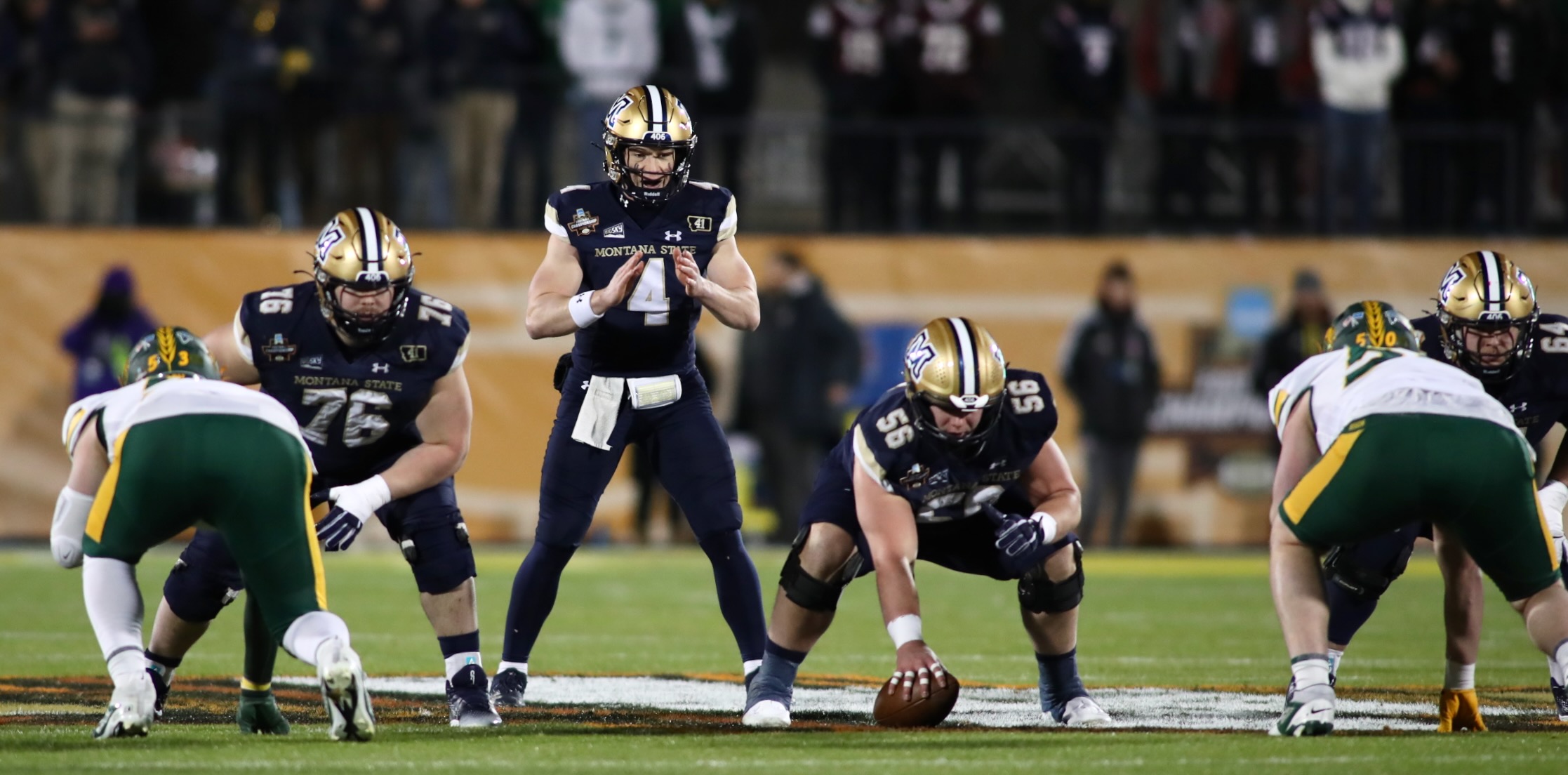
This week the offensive line will have to deal with a longtime nemesis that is not necessarily Illinois State, but the Missouri Valley Conference, which has stymied the MSU offense on numerous occasions over the last decade. The Bobcats have faced NDSU, SDSU, South Dakota, North Dakota and Western Illinois 15 times during that stretch and have been held under 20 points seven times. They’ve done better recently, scoring over 30 points in three of the last four meetings with the only score under 30 being the 24 points it had this season against SDSU, but got seven of those in overtime. MSU lost to North Dakota State 35-32 in last year’s national title game.
Illinois State finished in the middle of the MVFC pack this season, but ripped off four straight road wins to set up the clash in Nashville.
“Especially with this playoff run, they’ve kind of got a little bit of street cred on how physical they are,” Fleischmann said. “Their linebackers come down hill fast and hit hard. Their defensive linemen play very aggressive. It’s a good test for us and it’s a good time for us to show how physical we are, too.”
Specifically, MSU will need to identify the force that is ISU middle linebacker Tye Niekamp, who is the reigning defensive player of the year in the MVFC. The son of ISU defensive coordinator Travis Niekamp, who coached in 2016 and 2017 at Montana, has 155 tackles and 14.5 tackles for loss so far this season.
“Really good personnel on the defensive side of the ball,” Vigen said. “Niekamp is the leader with over 150 tackles and all the tackles for loss. It’s a really impressive defense that’s really impressive on film.”
The Bobcats will fly out of Bozeman for Nashville on Friday for the Jan. 5 title game matchup against the Redbirds.