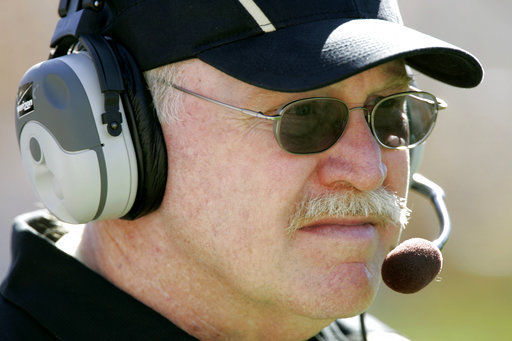
Through 14 years working on the same sidelines together, current Illinois State head coach Brock Spack and the late Joe Tiller, a Montana State legend, who went on to be the head coach at Wyoming and Purdue got to know each other well. Maybe too well.
Spack was the defensive coordinator under Tiller from 1995 to 2008, while he was the head coach for the Cowboys and Boilermakers. He knew all about Tiller’s allegiance to the Bobcats and how to yank his chain.
“You wanna get him (Tiller) really mad?” Spack asked while holding back his laughter. “Just ask him how the Griz did on Saturday. He would get so freaking mad. I mean literally, he’d get so red. I’d turn it on him every so often, “how’d those Griz do yesterday?” “Bobcats! You jackass!” he’d say.
“He loved Montana State. He made sure you knew where he went to school. He loved it. I know he went out and watched a few games when he moved out to Buffalo, Wyoming (after retirement). He was very proud of it, and I think he would’ve loved to have been the head coach there. I really do. He just loves Montana State.”

Tiller is one of Montana State’s most accomplished alumni, particularly in the world of college football.
His Montana State Hall of Fame biography reads:
“Joe Tiller gained his greatest fame after leaving Montana State, but was considered one of Montana State’s best tackles ever at the time of his graduation. Tiller followed a proven pipeline of talent from the Great Lakes region – he hailed from Toledo, Ohio – to the Bobcat program that produced amazing talent from the 1950s well into the 1970s. Entering Tiller’s senior season, first-year Bobcat coach Jim Sweeney (who had coached the program’s linemen since 1960) called Tiller one of the best football players he’d ever coached, and the 1963 Bobcat media guide indicated that the big, agile lineman made several schools’ all-opponent teams, “including Utah State and Wichita State.”
“The 1962 media guide called Tiller indicated that as a sophomore he established himself as a defensive specialist (in a time when college football was transitioning from single-platoon football to a more specialized game), and throughout his career he was recognized as a solid tackler who offered a physical presence on both sides of the ball. He nailed down a starting spot in 1962, and as a senior the following year was recognized as one of the top players in small college football. He earned Honorable Mention All-America honors that season, serving as a team captain, as well. After a brief time in the CFL, Tiller joined the Bobcat coaching staff in 1964 and remained until 1970, when he joined Sweeney at Washington State. From there, his coaching career rocketed toward greatness, culminating as a beloved Hall of Fame head coach at both Wyoming and Purdue.”
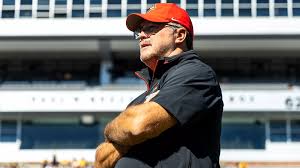
The connections between coaches and players in college football never ceases to amaze. With Montana State and Illinois State getting ready to face off for the Football Championship Subdivision title on Monday night, you don’t have to look far to find a big one.
Tiller went on to become one of the most prominent coaches in the country when he culminated his career with a 12-year ride in the Big Ten Conference as Purdue’s head coach after spending six years as the head coach for the Wyoming Cowboys of the then Western Athletic Conference. Tiller led the Boilermakers to the 2000 Big Ten title and was named the Big Ten’s coach of the year in 1997. At Wyoming, Tiller took the Cowboys to the 1993 Copper Bowl and the WAC championship game in his final (1996) season, which it lost and gained the unwanted distinction of being the last team to finish in the top 25 and not get a bowl invitation.
While an assistant at Purdue, one of Tiller’s understudies was Spack, a former Purdue All-American linebacker himself.
Spack briefly crossed paths with Tiller during his senior season as a linebacker at Purdue when Tiller came on board as the defensive coordinator. Spack was named to the All-Big Ten first team that season but instead of playing professionally, he returned to Purdue. That short player-coach relationship blossomed into a full-blown one when Spack stayed at Purdue as a graduate assistant upon graduation only to see it end abruptly when Tiller took the offensive coordinator job at Wyoming in 1987.
Years later while the head coach at Wyoming, Tiller found himself looking for a defensive coordinator in 1995. He got Spack to join him and the two were inseparable until Tiller retired in 2008 and Spack landed the ISU head coach job the following year. The 14 seasons as Tiller’s right-hand man left an indelible mark on Spack, who’s teams carry Tiller’s mark on them in many ways.
Tiller came to MSU from Toledo, Ohio after playing at Rogers High School. He was a starting offensive lineman for Herb Agocs and Jim Sweeney from 1960-63. He was named an honorable mention All-America his senior season and was invited to the East-West Shrine All-Star game. The American Football League’s Boston (New England) Patriots drafted Tiller 140th overall in 1964 AFL draft. He opted to play in the Canadian Football League instead signing with the Calgary Stampeders and playing there for one season.
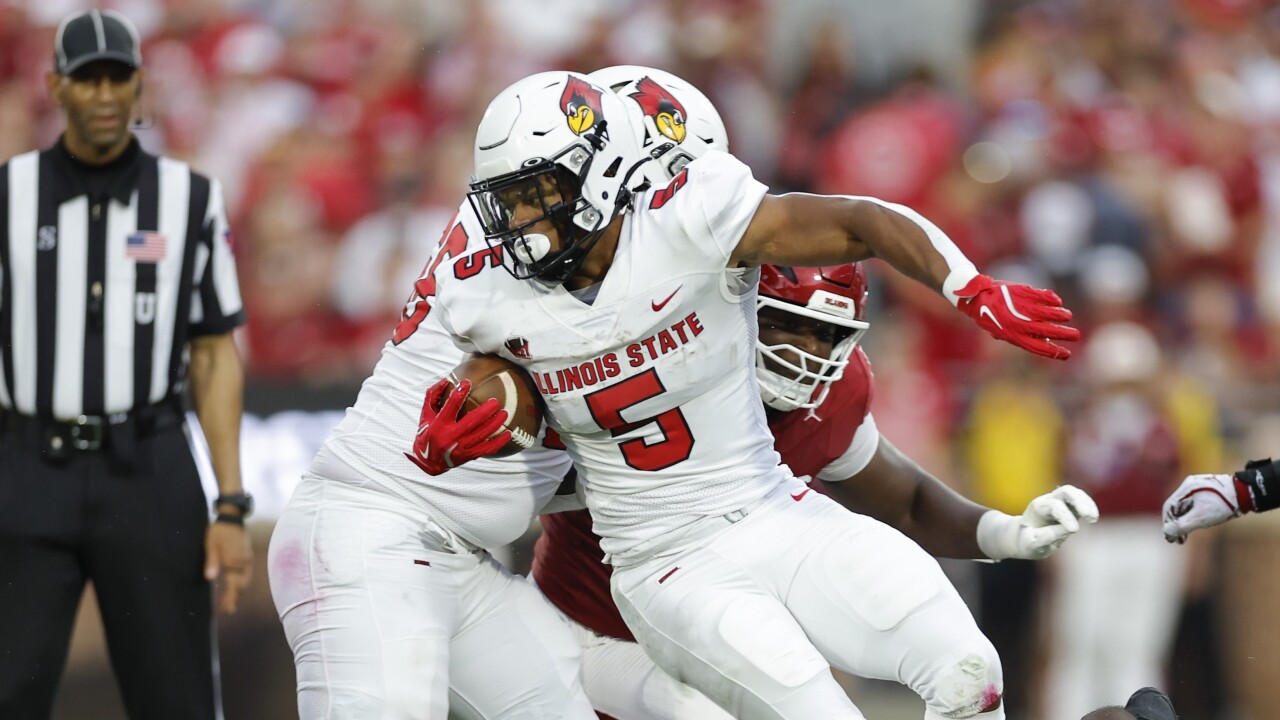
Spack has a 123-78 record with ISU, which has been his only head coaching job. He’s won two MVFC titles (2014, 2015) and is 12-6 in the FCS playoffs. His lone appearance in the FCS national championship was a heartbreaking 29-27 loss to North Dakota State in 2014. The Redbirds fought back from a 20-7 deficit in the third quarter and took a 27-23 lead with 1:38 to play on a 57-yard touchdown run by quarterback Tre Robertson. They gave the game back to the Bison when current NFL quarterback Carson Wentz connected on 32 and 33-yard passes to set up his own 5-yard touchdown run with :37 to play.
“Brock Spack is so well respected in this coaching profession,” MSU safeties coach Bryan Shepherd, who went on a visit to Illinois State before committing to North Dakota State in 2011, said on Monday. “At Illinois State, he’s done a great job of establishing a program.”
While Shepherd didn’t accept the offer to ISU he had a strong sense that things were on the verge of blossoming for the Redbirds.
“When I visited, I thought the campus was beautiful and you could tell something was going on there,” Shepherd said. “Coach Spack and his staff, you could tell they demanded respect and were building something.”
Shepherd was correct, and just three years later he’d being going head-to-head with ISU and Spack in one of the most competitive national title games in FCS/I-AA history.
MSU head coach Brent Vigen went up against Spack and Illinois State five times from 2009 to 2013 while Vigen was the offensive coordinator and QB coach at North Dakota.
“Coach Spack has been there for quite some time so had a chance from 2009 until 2013 when I was at North Dakota State to compete against his teams,” Vigen said. “They were always very well-coached, very talented teams and that’s certainly the case with this team here in 2025.”
“Generally speaking, this team looks very well coached and a team full of talent and that’s my recollection of those teams. We lost to them in 2009 and 2010 in his first two years and we were able to beat them the last three. My memories of those games were they were all very hard-fought battles. The wins that came our way were very challenging.”
Vigen was able to glean a few things while going against Spack’s teams those five years.
“I think it’s a team that reflects who he is,” Vigen said. “He was a great linebacker. He was a successful defensive coordinator prior to becoming a head coach. So, there’s a toughness factor that his teams have always exuded.”
“It definitely reflects who he is as a coach and what he believes in.”
Whatever the outcome of Monday night’s title game between the Bobcats and Redbirds, Joe Tiller would be happy.