

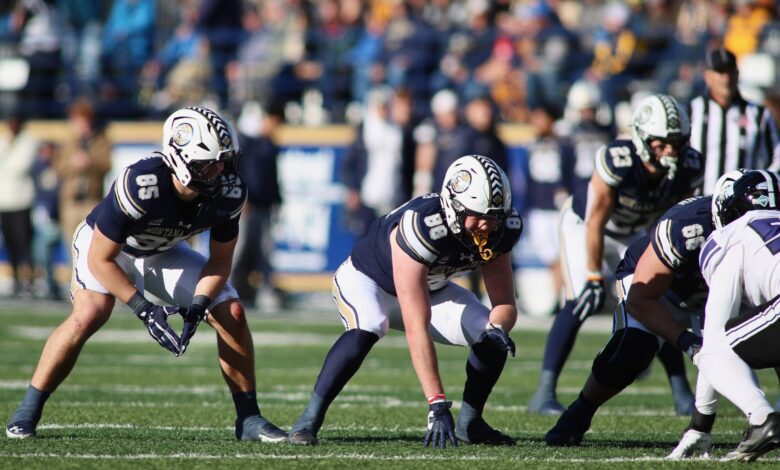
It’s hard to say if MSU offensive coordinator Pete Sterbick is just having fun or if his offensive sets are put in place from a purely practical standpoint. Whatever the case, the Bobcats are scoring points and entertaining fans all the same.
The Bobcats have run multiple plays out of multiple-tight end (sometimes as many as four) and two-running back sets over the last couple of weeks to help run their record to 8-1 overall and 5-1 in the Big Sky Conference. The formations accentuate MSU’s offensive versatility, if nothing else.
“Well, you’ve got to have versatile players — players that not only are athletically versatile but are mentally willing and able to take on more and more — and I do think we have that,” head coach Brent Vigen said. “Trying to keep things in a small little box for the five guys up front is part of our philosophy.”
The formations allow the Bobcats to build new plays, which forces defenses to figure out the new looks the MSU offense puts on the field.

“But then, how can we present as many different pictures for the defense as possible, and then try to have plays build off of plays week in and week out?” Vigen asked. “So, have a good consciousness of what you’ve shown out of 14 personnel — four tight ends — and how can we continue to build upon that as the season goes along? The two-back stuff, with two tailbacks in there — how can we build off what we’ve done in the past and each week add another element, while again keeping it as similar for the guys up front as possible? And I think our quarterbacks, both Justin (Lamson) and Patrick (Duchien), are not limited in what they can do, and that part lends itself to being able to run a lot of offense from the vantage point of the fan, or hopefully the opposing defense, while on our side of things, it’s just continuing to tweak a few things here and there.”
Offensively, the Bobcats have a solid foundation to work from. Under Vigen, MSU has been running multiple-tight end sets and has worked its quarterbacks into the run game since Tommy Mellott burst onto the scene during Vigen’s first season at MSU.
Sterbick joined the coaching staff as offensive coordinator last season. That addition coincided with Lamson transferring in and taking over at quarterback. Lamson, a gifted passer, also has the instincts and speed to use his legs whenever pass plays break down or on designed running plays.
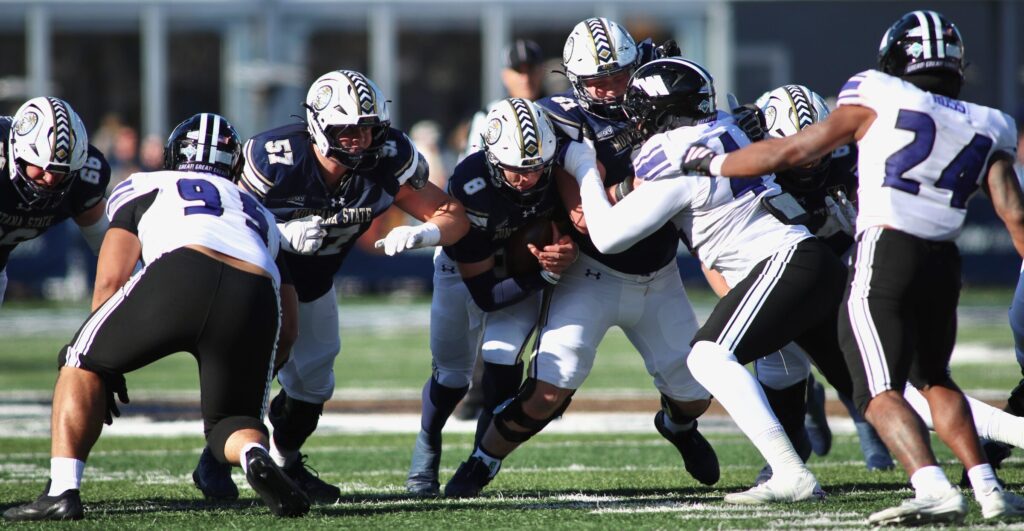
“I think we still live very much within the core of our base offense, and I think Pete’s done a really good job of then fine-tuning: OK, this is really what we do best,” Vigen said. “This is what our players do best. And our staff on offense has done a great job of saying, how can we continue to present this in as many ways as possible?”
That mentality leads to getting more players involved in the offense. While only 11 players are allowed on the field at a time and five of them are offensive linemen, who typically don’t rotate in and out of a game much, the running backs, wide receivers and tight ends see heavy use down the depth chart. A four-tight end set might involve an empty backfield and one receiver. A two-back set could involve three tight ends, three receivers or some combination of both.
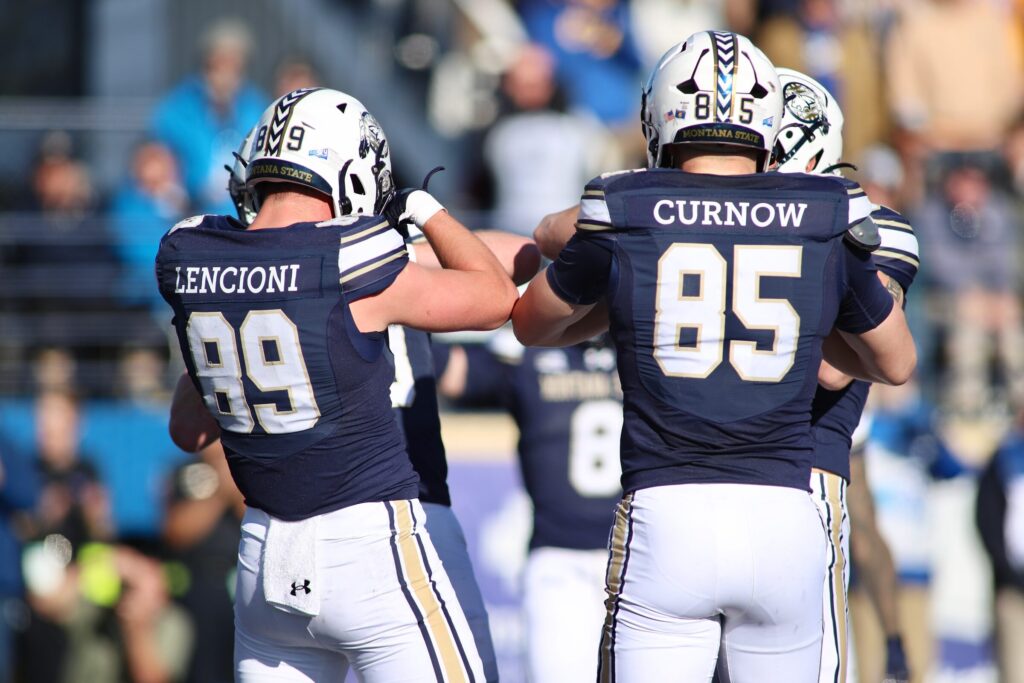
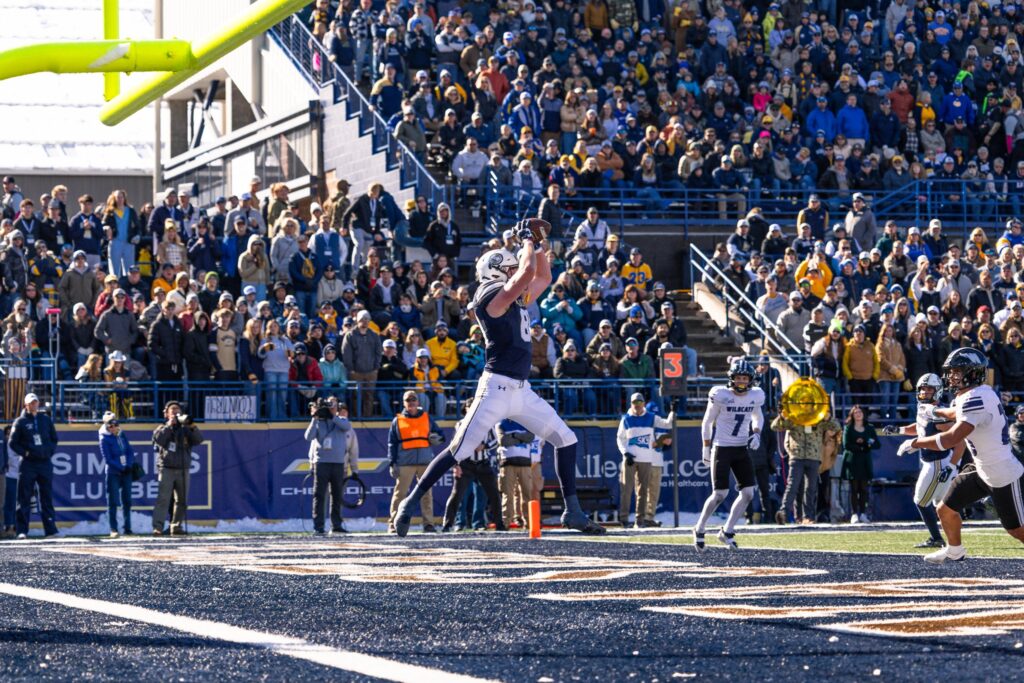
The Bobcats have used five tight ends extensively this season: Rocky Lencioni, Rylan Schlepp, Carter Curnow, Luvens Valcin and Bruin Fleischmann. All five have caught passes, and three — Schlepp, Lencioni and Valcin — have caught touchdown passes.
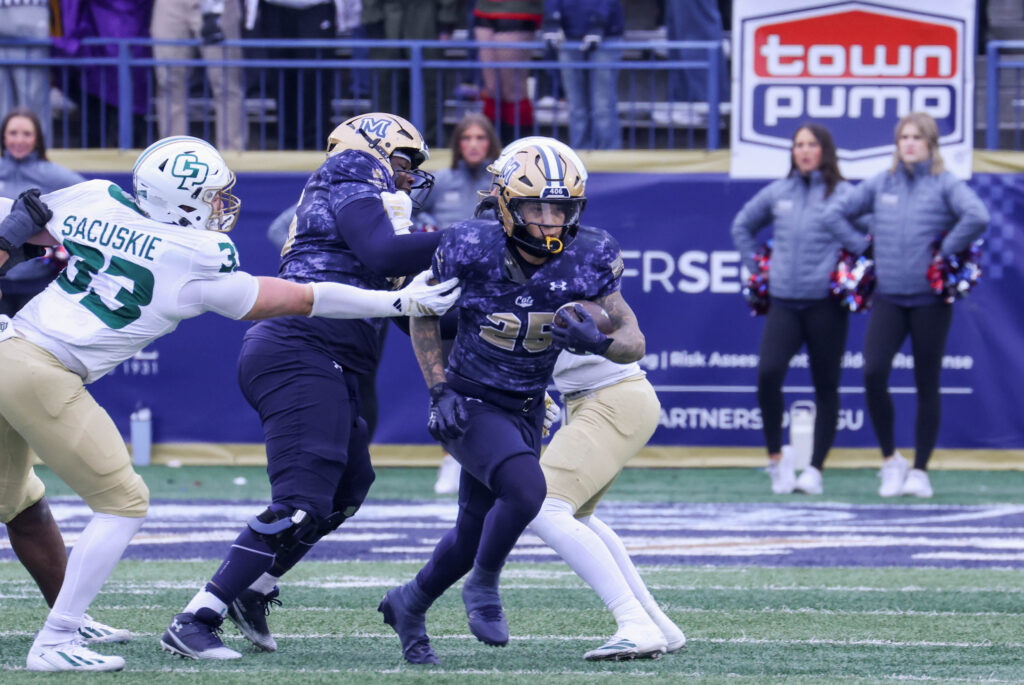
MSU has four running backs — Adam Jones, Jared White, Colson Coon and Cale Breslin — with at least 22 carries, and they average 6.1 yards per carry combined. Jones, White and Coon all have more than 300 rushing yards this season, and all four have scored touchdowns.
White has been one of the biggest beneficiaries of playing in two-back sets, mostly next to Jones. White has scored touchdowns in five straight weeks, including ripping off runs of more than 40 yards five times in the last six weeks, mostly out of two-back sets.
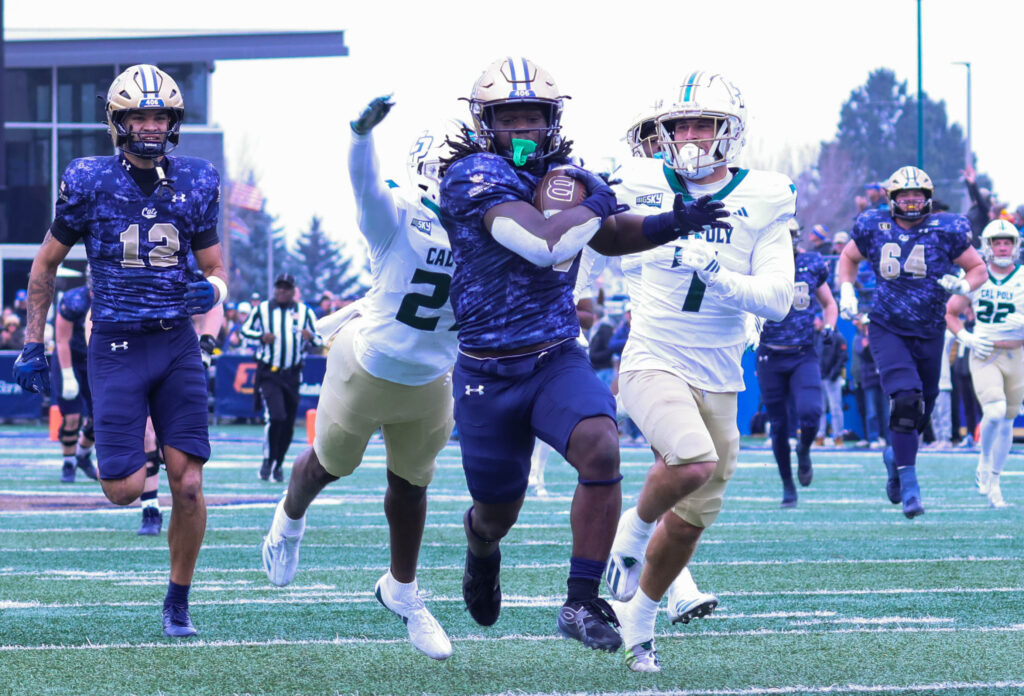
Six wide receivers — Carter Dahlke, Dane Steel, Taco Dowler, Jordan Reed, Parker Mady and Jabez Woods — have made five or more receptions, and true freshman Maxwell Hendrick hauled in his first three catches of the season this past weekend against Cal Poly. Only Mady and Hendrick have yet to catch a touchdown pass.
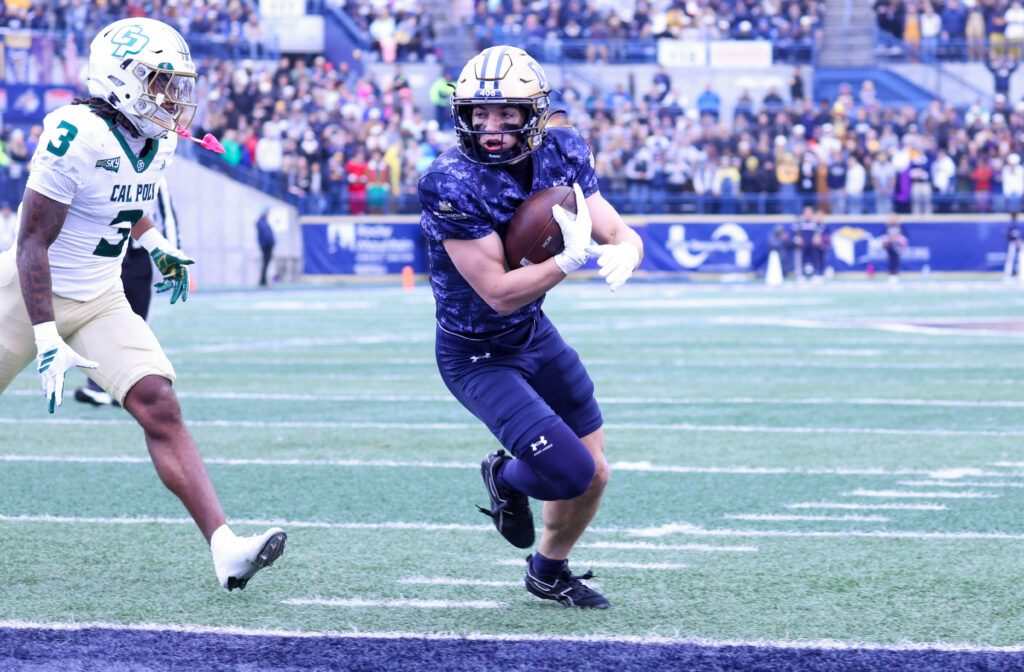
“And it does wonders for keeping guys engaged when you start talking about using four tight ends and multiple backs, because both those position groups are really deep, and finding expanded roles for those guys is really important,” Vigen said. “Both those groups, along with our receivers, have really done a good job of allowing us to be what I’d say is really multiple — not just multiple.”

Sterbick came to MSU from Colorado School of Mines, where he was the offensive coordinator for three seasons and then the head coach for two more. Mines compiled a 37-6 record with him as offensive coordinator, and he was named the Division II offensive coordinator of the year in 2022. As head coach in 2023 and 2024, he led the Orediggers to a 22-4 record and a national runner-up finish in 2023, when they went 14-1 and he was named regional coach of the year. Before Mines, he was the offensive coordinator and quarterbacks coach at Montana Tech from 2014 to 2018.
The Bobcats were a heavy running team before Sterbick’s and Lamson’s arrivals. MSU had spent more than three seasons with Mellott, one of the most prolific running quarterbacks in Football Championship Subdivision history, at the helm. Mellott was backed up by another strong running quarterback in Sean Chambers, who had played under Vigen at Wyoming and came to MSU after Vigen landed the job.
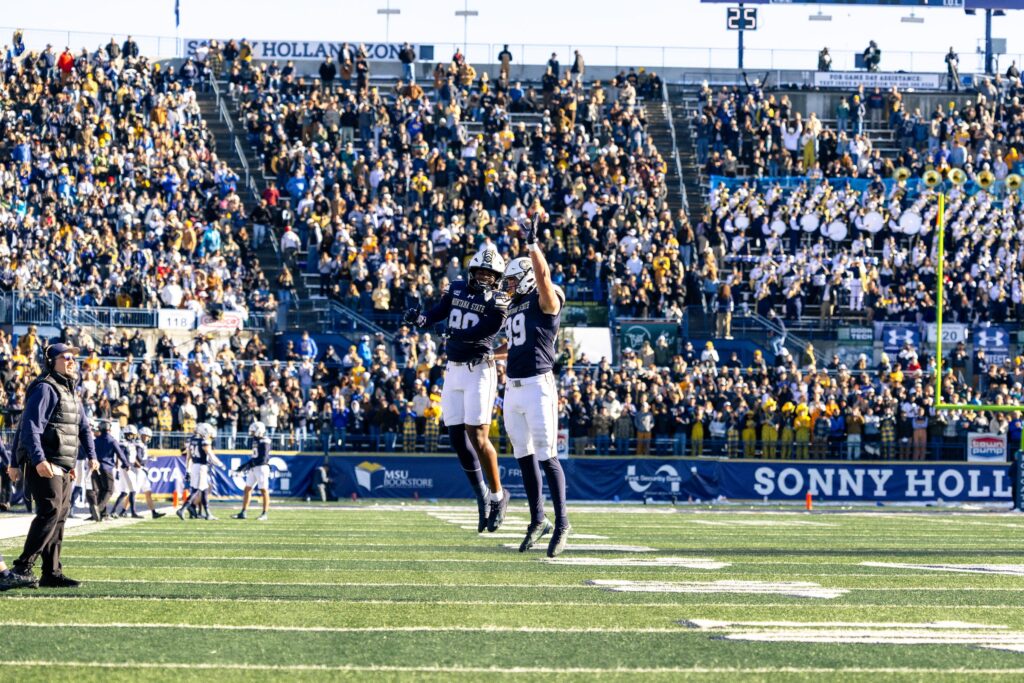
The transition to Lamson and a more passer-friendly offense was seamless under the Sterbick-Lamson combination. MSU won its first national championship in 41 years in their first season together and just had a school-record 19-game winning streak snapped last month. The multiple-tight end and two-back sets are adaptations Sterbick has made since arriving from Mines. He kept most of what MSU does in its run schemes basically the same.
In 2025, the Bobcats played a stout non-conference slate that included Oregon and South Dakota State, but they led the league in conference-only stats in every major team category (scoring, total offense and pass efficiency) except rushing, in which they finished second behind Sacramento State. This season, MSU leads the league in all games in scoring, total offense per play and pass efficiency, and it is second in rushing to Southern Utah. In conference-only games, MSU is first in scoring, rushing per carry and pass efficiency and second to Montana in total offense.

The offense started a little slow over the first four games but has steadily regained form over the last five and is coming off back-to-back 500-yard performances against Weber State and Cal Poly. The Bobcats’ run game has been especially sharp, gaining more than 220 yards in each of the last five games and averaging 6.8 yards per carry over that span, up from 4.6 through the first four.
This week’s opponent, Idaho State, poses a stiffer defensive challenge than MSU has seen since playing Nevada in the third week of the season. The Bengals come into the game having held all but one opponent — Northern Arizona — to 27 points or fewer. ISU ranks second in the Big Sky in points allowed (24.8), total yards per play and pass defense efficiency. The run defense is in the middle of the pack, ranking sixth in rush yards per play and seventh in rush yards per game.
The Bobcats and Bengals will kick off at 4 p.m. Saturday in Pocatello.
