Football freaks the world over are always trying to figure which teams are the best, in part, by factoring their strength of schedule. Almost everyone concurs it’s a good variable in the equation for determining greatness.
With that in mind, it bears asking: does Montana State’s 8-2 record against Montana over the past ten games stack up to UM’s 16-0 record against MSU from 1986 to 2001? On its face, the answer seems simple. But when you look at how good the opposition was, (their strength) it makes you wonder.
The Grizzlies began their incredible 16-year run on the heels of seeing the Bobcats win 22 of 30 games from 1956 to 1985. MSU took home three national titles and eight Big Sky Conference titles with five post-season appearances (two Camelia Bowls) that added up to a 7-1-1 record to just three BSC titles and three post-season games (two Camelia Bowls), all losses, for UM during the stretch. The combination of winning the Cat-Griz Game, winning national titles and winning Big Sky Conference titles stuck in the craw of the more ardent Griz fans during the dawn of the Big Sky Conference (founded in 1963) and Division I-AA (founded in 1978).
So, when Montana embarked on its 16-game winning streak, the Griz were primed to unload on Montana State. And UM did just that. The public address announcer in Missoula would regularly repeat “if we’ve told you once, we’ve told you seven…”, then nine, 11, 13, and 15 times.

Don Read was named the head coach of the Grizzlies in 1986, and his hiring was just one year ahead of the Bobcats placing Earle Solomonson behind the wheel at MSU. While Read came to UM without much of a resume – he bounced around for 16 seasons as a head coach at three different Oregon schools ranging from the University of Oregon to Portland State and Oregon Tech – Solomonson had experienced a great deal of success in his much shorter career that comprised of just two seasons as a head coach at North Dakota State, each of which resulted in NCAA Division II national titles for the Bison.
What followed was nothing short of heading in completely opposite directions.
Montana won two national championships and seven BSC titles to go along with 11 trips to the playoffs. Montana State won none of any of those. The winning streak hit its heartbreak high point in 1997 when the Grizzlies broke the collective heart of the Bobcats with a 27-25 win in Bozeman. The Bobcats scored with 0:22 to play and looked poised to snap the winning streak at an already painful 12. UM’s Kris Heppner kicked a field goal as time expired after UM’s Brian Ah Yat found an open Justin Olsen with a long bomb to the MSU 19.

The Bobcats were a mere shell of their former (and current) selves at the time. Montana’s “Streak” started during the final year of the Dave Arnold era with a 59-28 win over a 3-8 MSU crew. The run of drubbings would continue as the Bobcats would go 1-10 under first-year head coach Earle Solomonson. MSU followed with three straight 4-7 seasons before Solomonson’s woeful five-year stretch ended with a 2-9 mark in 1991, finishing with a 15-40 record that included an 0-5 mark against Montana.
The Bobcats did no better than 4-7 in a season during the first seven years of “The Streak” and compiled a measly 22-55 record that included three wins over Division II teams and a loss to Mesa State, which was an NAIA team at the time. UM was 51-29 during the same timeframe between 1986 and 1991.
Cliff Hysell would follow Solomonson, and he’d take MSU to four winning seasons in his eight years at the helm (1992-1999), including overseeing the 1997 heartbreaker. Hysell had the Bobcats turned around in just his second season in 1993 as MSU got off to a 7-2 start and needed just one win over either Eastern Washington or UM to get into the I-AA playoffs. The Eagles and Grizzlies both took wins in Bozeman, however, ensuring MSU’s best shot of breaking a nine-year playoff hiatus went by the boards.
The Bobcats had another decent shot at the playoffs in 1998, needing a win in Missoula in the season finale only to see it slip away after holding a 21-20 lead in the fourth quarter and falling 28-21.
Hysell would be gone a year later and replaced by Mike Kramer leading into the 2000 season. In Kramer’s first season, the Bobcats didn’t win a game. Two years later he’d be the coach that snapped the seemingly inhumane string of wins by the Griz.
The 10-7 win in 2002 also gave MSU the BSC title tiebreaker and sent the Bobcats to the playoffs for the first time since 1984. MSU was 42-57 over the final nine years of the streak, which was a vast improvement over the 22-55 of the first seven years, but still nothing compared to UM’s teams, which were 101-22 over that same timeframe.
During their 16-gam run, UM only beat four MSU teams that finished over .500 on the season, the best mark being 7-4 (1993, 1998). MSU barely managed to win a third of its games during those 16 years, while Montana won around three-quarters of its contests.
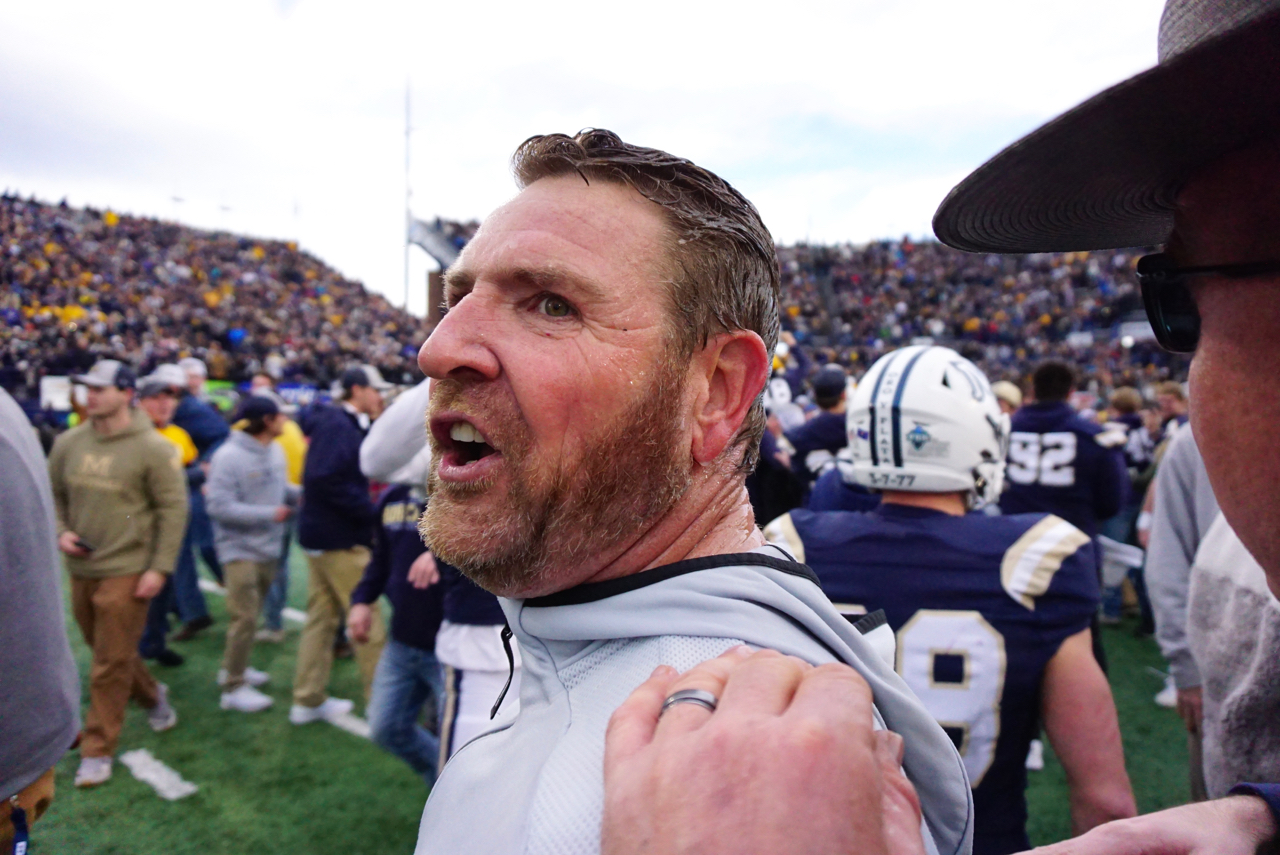
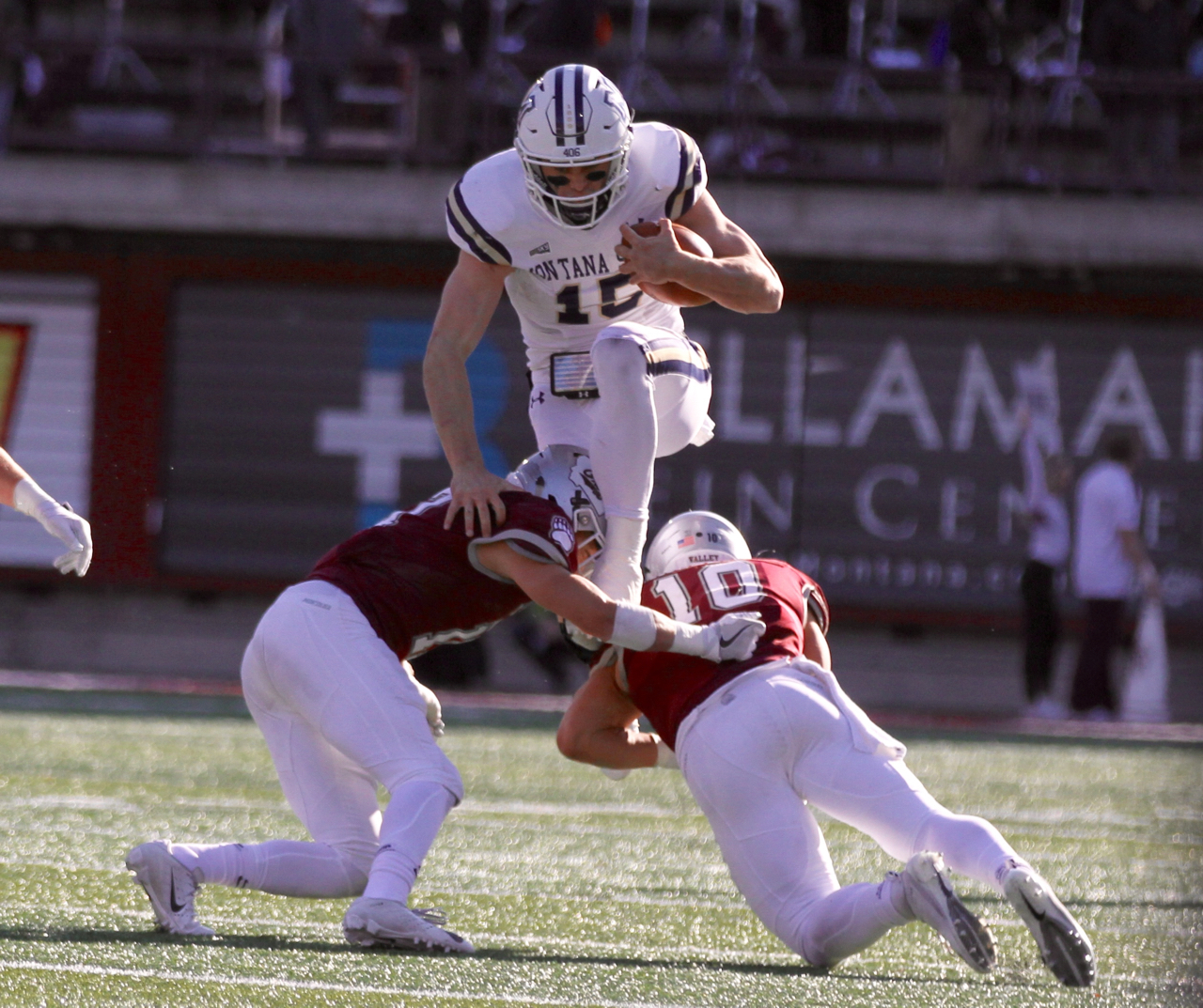
Jump forward to 2025 and the scene has shifted mightily. The Bobcats are riding a string of eight wins in 10 rivalry games. On paper, how that compares to 16 in a row is up for debate. But one must consider what Montana State has accomplished, particularly when it comes to the quality of rival thieve defeated when evaluating 8-2.
The run started in Missoula in 2016 under first-year head coach Jeff Choate. A team that started 0-6 in Big Sky Conference play and sat at 3-7 looked like a playoff tune-up for the Grizzlies into Washington-Grizzly Stadium. The Griz had extra motivation, needing a win to get into the playoffs. That UM team had scored 60 points in three different games that year. MSU also dropped 54 on the Cats the year before fans. So it was stunning when Montana State completed two passes yet still gutted out a 24-17 win in Missoula. UM missed the playoffs for the second time since 1992 with a 6-5 record.
Montana State’s rivalry win over Montana in Bozeman in 2017 cost Bob Stitt his job as it ensured the 7-4 Griz missed the playoffs for the second season in a row.
Choate’s teams would push the win streak to three rivalries, including one of the most amazing comebacks in series history when the Bobcats erased a 22-0 second quarter deficit on the way to an unforgettable 29-25 win. The “Miracle in Missoula” was sealed with a forced fumble on the own goal line with just seconds remaining in the game that boosted the Bobcats into the playoffs for the first time since 2014 and held UM out of the FCS playoffs for the third season in a row.
Choate’s final rivalry win was a resounding 48-14 triumph that represented the biggest margin of victory in the Cat-Griz game since 1999 and the biggest win by MSU over UM since 1966. The four-game winning streak marked MSU’s first of that length since Sonny Holland stalked the sidelines in the 1970s.
UM came into that 2019 game with a 9-2 record and despite the rivalry loss, the Griz were seeded in the playoffs, drawing a bye and advancing to the quarterfinals of the FCS playoffs.

Two years later, the Griz would exact some revenge for that overwhelming loss with a beatdown of their own, handing the ‘Cats a 29-10 loss, ruining MSU’s opportunity to win a league title. Nevertheless, MSU that made the most noise in the playoffs, advancing to the FCS championship game as the No. 8 seed. UM lost out in the quarterfinals again, this time as a No. 5 seed.
MSU blasted UM by 34 points in 2022, advancing to the semifinals for the third time in four years. That Griz team started 5-0 and was ranked as high as No. 2 in the country only to suffer a three-game losing streak and four regular-season losses overall. The Griz won a first round playoff game before getting drilled by No. 1 North Dakota State to finish 8-5.
UM capped its best season in Hauck 2.0 with 37-7 win over MSU to cap its first Big Sky championship team since 2011 and its first official since 2009. That Griz team advanced to the FCS title game.
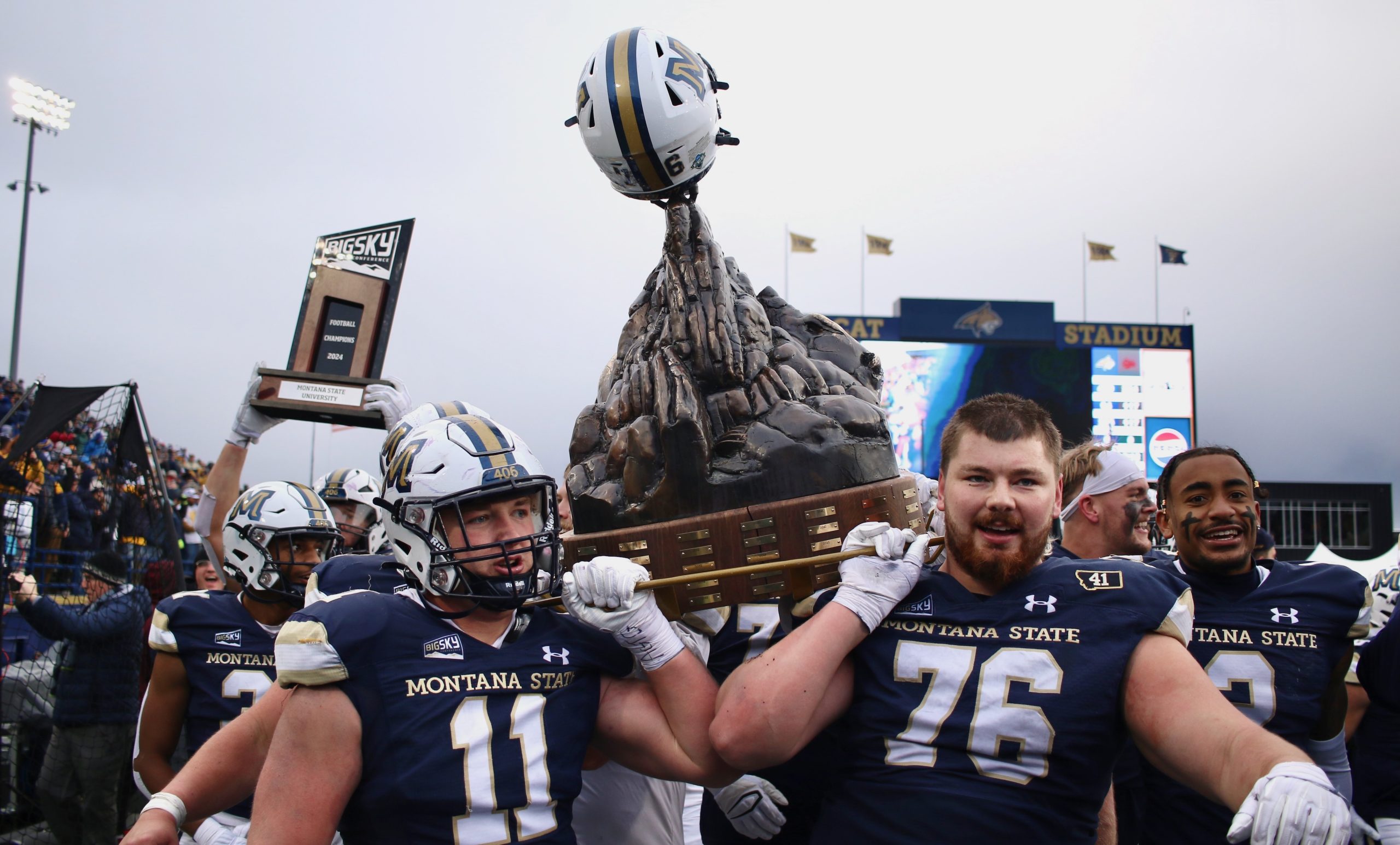
The next year, the trend continued as the home team – the Bobcats this time – won going away and went into the national title game with an undefeated 15-0 mark only to be stopped by North Dakota State.
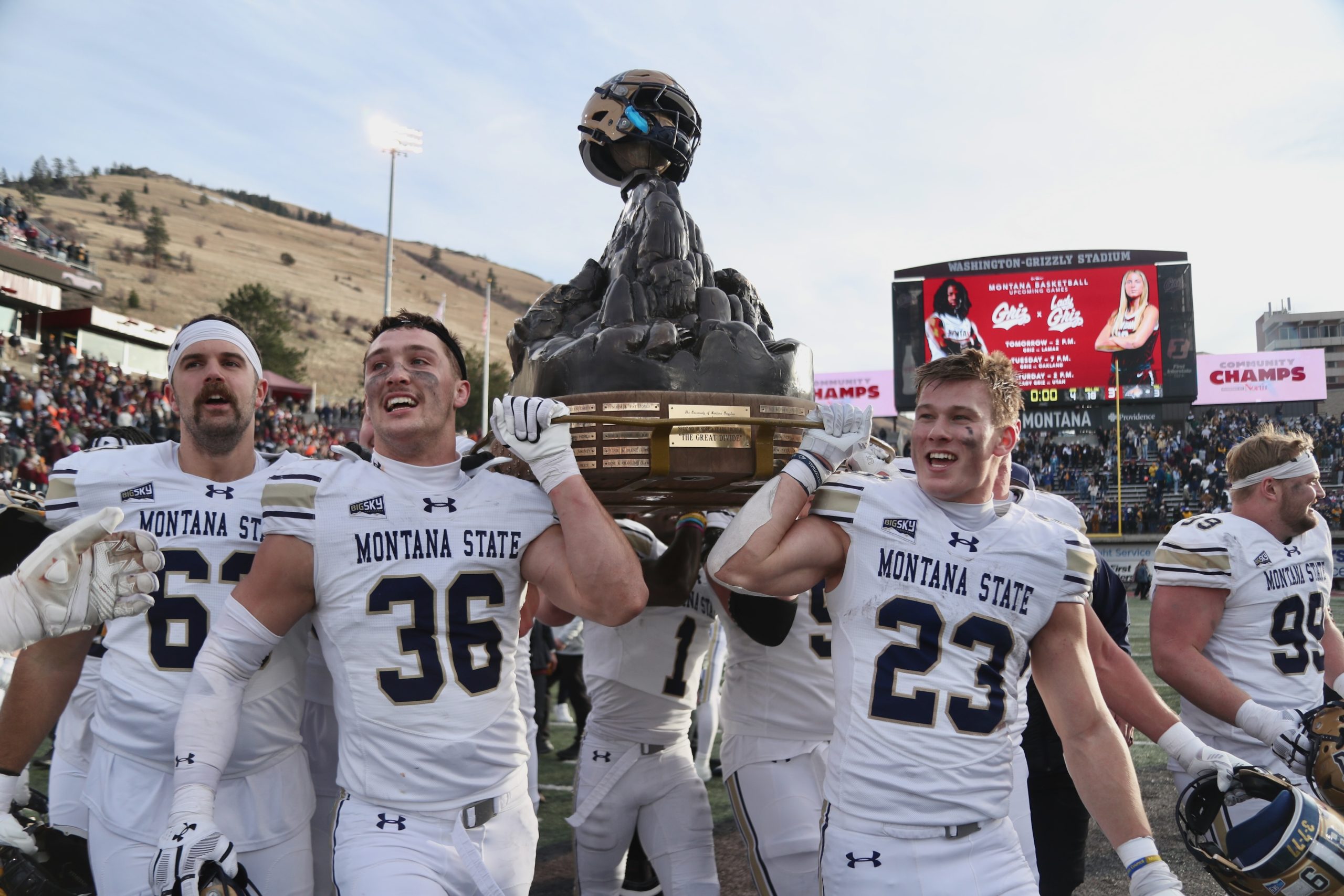
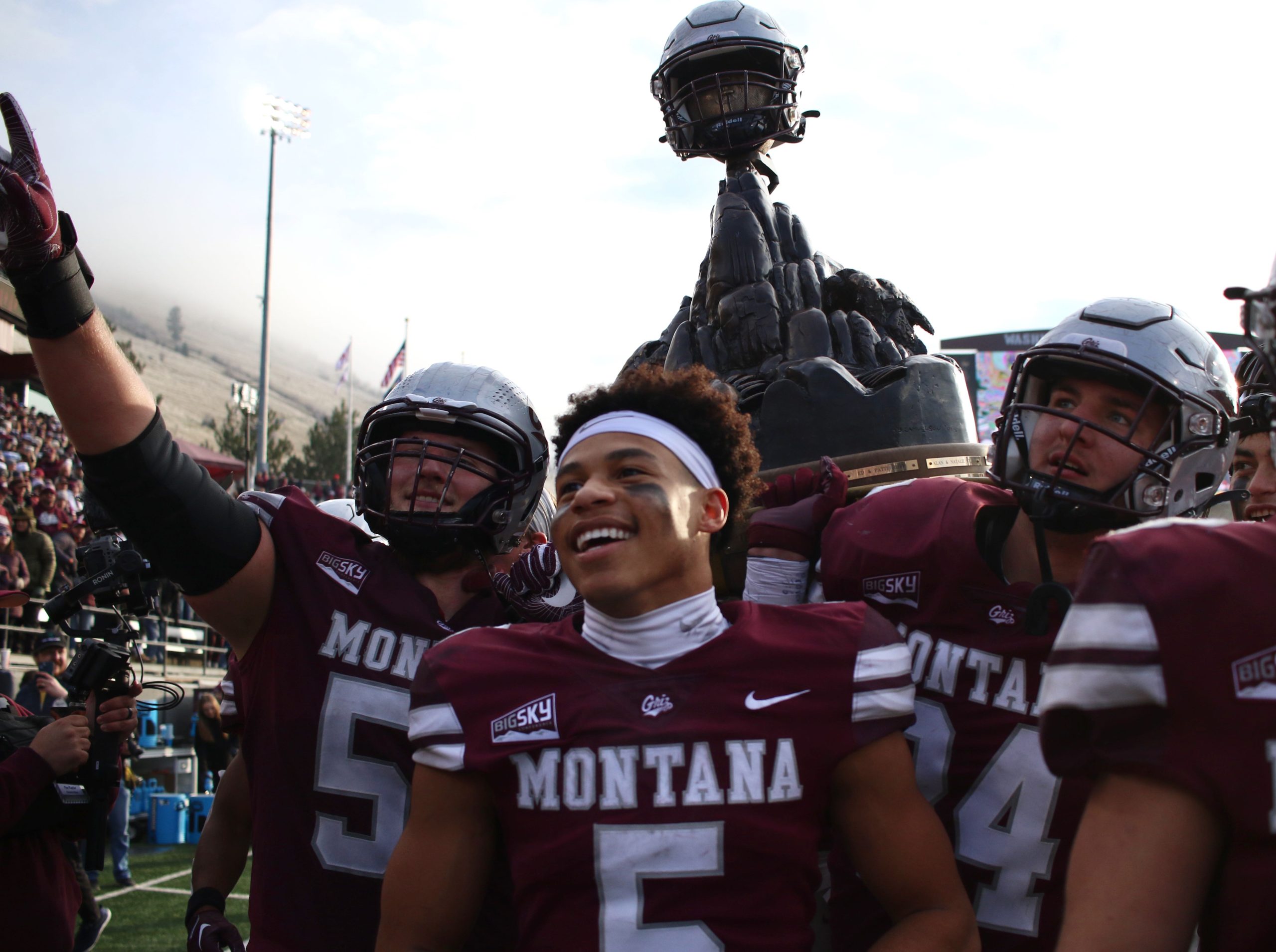
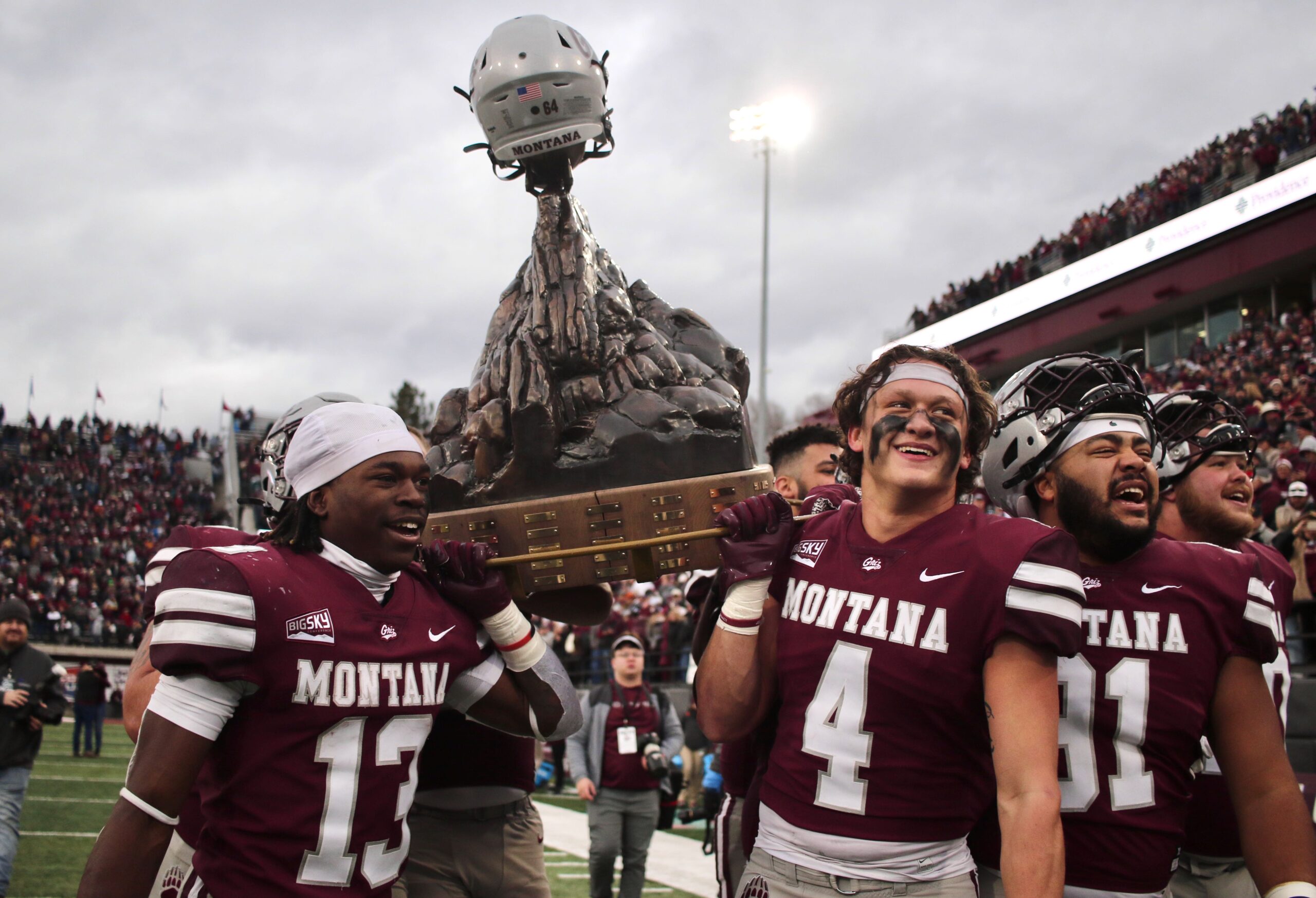
In 2025, the Grizzlies started their season 11-0 and seemed ready to go undefeated as their showdown with MSU was set for Washington-Griz. The Bobcats, 9-2 entering the game, would claim their fifth win in the venue in the last eight attempts to not only win the league but also get the No. 2 seed in the FCS playoffs.
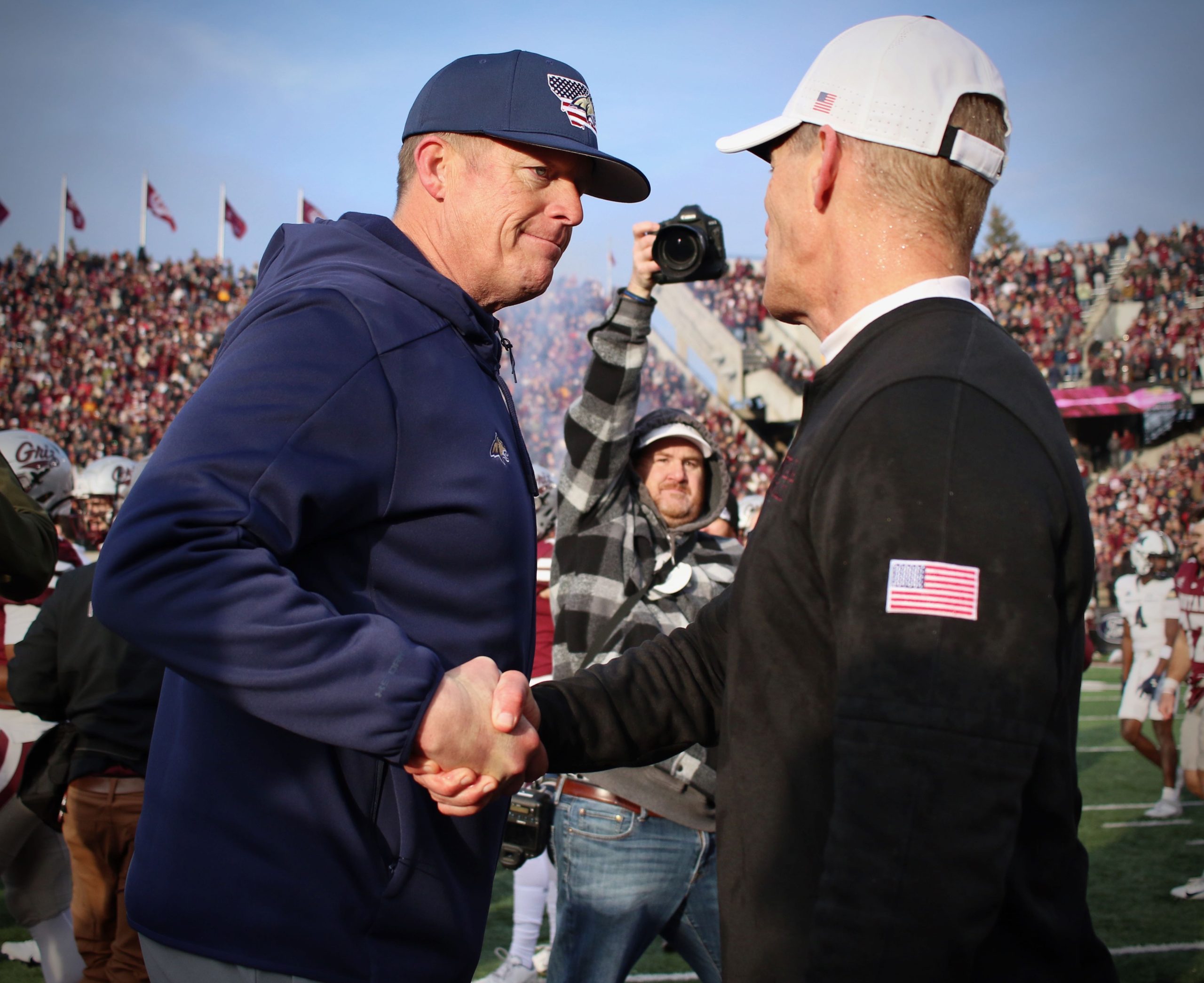
That proved to be very worthwhile as UM would eventually win its way into another game against the Bobcats, only this one would be in Bozeman – a place UM hadn’t won since 2015. The trend continued as the Bobcats scored 28 points in the last 17 minutes of play to turn back the Grizzlies and book a ticket to the national championship game for the third time in five seasons under Vigen.
Not only did MSU beat UM eight times in ten games, but it also finished the season even or ahead of the Grizzlies nine of the ten years. The Bobcats beat a semi-final team (2025) twice, a quarterfinal team in 2019, with the only two losses to a national runner-up and a quarter-finalist.
Two years after Choate led the Bobcats to consecutive wins over UM, the Grizzlies hired Bobby Hauck to replace Bob Stitt. Hauck’s second stint at Montana came with the expectation that he would lead the Griz back to where they once were during his first trip through the Big Sky. Hauck went 5-2 against MSU from 2003 to 2009, taking UM to the national title game three times. Before “retiring” on February 4, Hauck saw his record dip to 2-6 in 2.0 and 7-8 overall following two losses to MSU in the span of 28 days, doubling as UM’s only two losses in 2025.
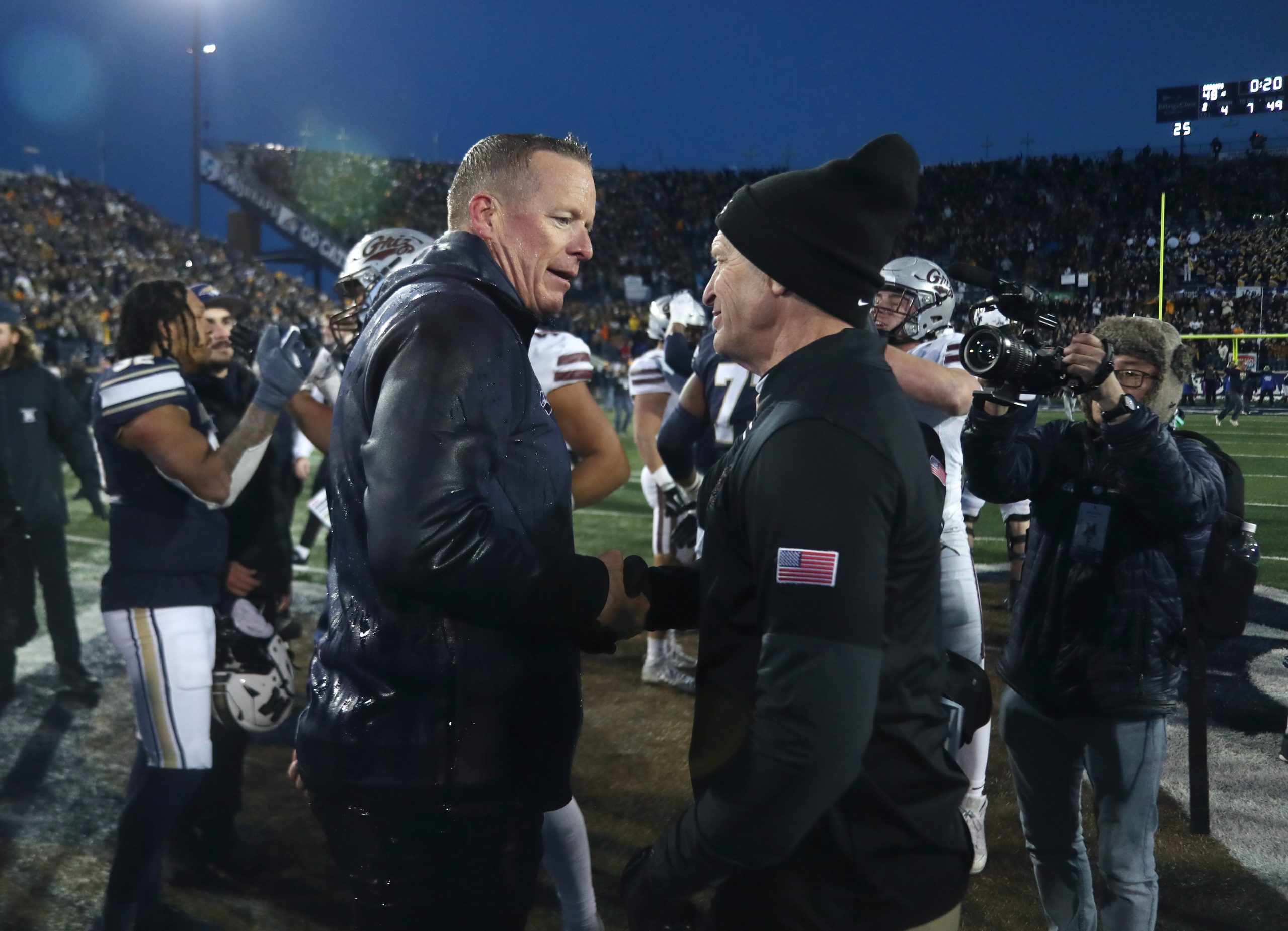
Over Montana State’s 8-2 rivalry stretch of success. the Grizzlies never had a losing record. UM had one team advance to the championship, five make the playoffs, and four make it to the quarterfinals. UM held an 84-23 record going into the rivalry games, collectively, to MSU’s 81-32, which included a 9-13 mark the first two years – both Bobcat’ wins – of the stretch. The degree of difficulty/strength of schedule that the Bobcats had to endure was considerably higher what UM navigated over the last years.
Does that make MSU’s 8-2 mark more impressive than UM’s 16-0 record? Just winning any game is a challenge, so taking 16 straight is something to behold. UM’s streak of 16 straight wins may have come against an MSU squad that was arguably going through the worst stretch in its history. But the Bobcats are a program that has won a conference title in nine of the last 10 decades, 23 conference titles overall and four national titles. The streak of 16 wins is a big reason MSU didn’t have a league title in the 90s and an even bigger reason the Bobcats were at such a low level over their history.
I’d have to give the edge to UM based on that. But the Grizzlies had better go about slowing down the juggernaut that is the current phase of Bobcat’ football because another win or two might tilt things fully in MSU’s favor.