

Preface
To me and many others, football is just a game. Who wins and loses is of little importance, except to the few people — mainly coaches and gamblers — who make their living based on wins and losses. For the media, fans and players, football is about social interaction and, aside from some good-natured ribbing, learning to accept losing and be gracious in victory.
When a mistake is made in sports, one of the most important things to do is admit that a mistake was made. That doesn’t mean anyone has to be wrong. Mistakes happen for a variety of reasons, and you can explain why one occurred without necessarily assigning blame. It’s much easier to do that when you remind yourself that it’s just a game.
After conducting several interviews over the past three days, here’s what I’ve pieced together about what happened in Moscow, Idaho, on Oct. 2, 2026.
The reason there’s a problem in the first place
“You have pointed out the ultimate logical contradiction of this rule. From a purely practical standpoint, they don’t actually need to move the chains if there’s only one second left and it’s the final play of the game.
“However, they’re forced to stop the clock because the rulebook doesn’t allow for situational common sense.”
According to the NCAA rulebook, stopping the clock to administer a first down is a procedural requirement, not a tactical choice. Officials must follow a prescribed sequence of events when a first down occurs, including in the final two minutes.
- The play ends: A team gains a first down.
- The clock stops: The clock operator stops the clock when the official signals the first down.
- The chains are moved: The chain crew resets the markers, and the officials ensure the ball and chains are ready for play.
- Play resumes: The referee signals for the clock to restart according to the applicable rules.
Why this creates a potential loophole
Because the clock stops to administer a first down, the offense receives a brief procedural pause.
With only one second remaining, that stoppage can give the offense an opportunity to line up for another play. Once the referee signals for the clock to restart, the quarterback could theoretically snap the ball and spike it before time expires, although whether that is possible depends on the precise timing and circumstances.
In other words, even when moving the chains has little practical value for the final play of a game, the rules governing first downs can create an additional opportunity for the offense.
The real-world scenario
The wild ending of Idaho’s 35-34 upset over the No. 1 Montana State Bobcats provides a real-world example of how these complicated rules can intersect.
Trailing 34-27 with eight seconds remaining and no timeouts, Idaho quarterback Joshua Wood completed a pass to Noah West-Baranco for a first down. By the time the play ended, the stadium clock had reached 0:00, and it appeared Montana State had won.
However, the sequence that followed highlighted the complexities of the rules.
1. The officials put one second back on the clock
The game clock operator allowed the clock to reach 0:00. According to the account of the incident, three on-field officials were monitoring the timing and determined that West-Baranco had been ruled down before time expired.
Using Rule 3, Section 2(c), the referee relied on what the rulebook describes as “positive knowledge” of the elapsed time to reset the clock to one second.
Under this interpretation, the on-field crew could make the adjustment without the replay booth first initiating a review.
2. The chaos and the controversial timeout
Once the referee restored one second to the clock, Idaho’s offense had to scramble to get set. Because the Vandals had no timeouts remaining, the clock was expected to restart on the referee’s ready-for-play signal.
Idaho needed to execute a live play before the remaining second expired. A spike would not have advanced the ball and could have exhausted the final second.
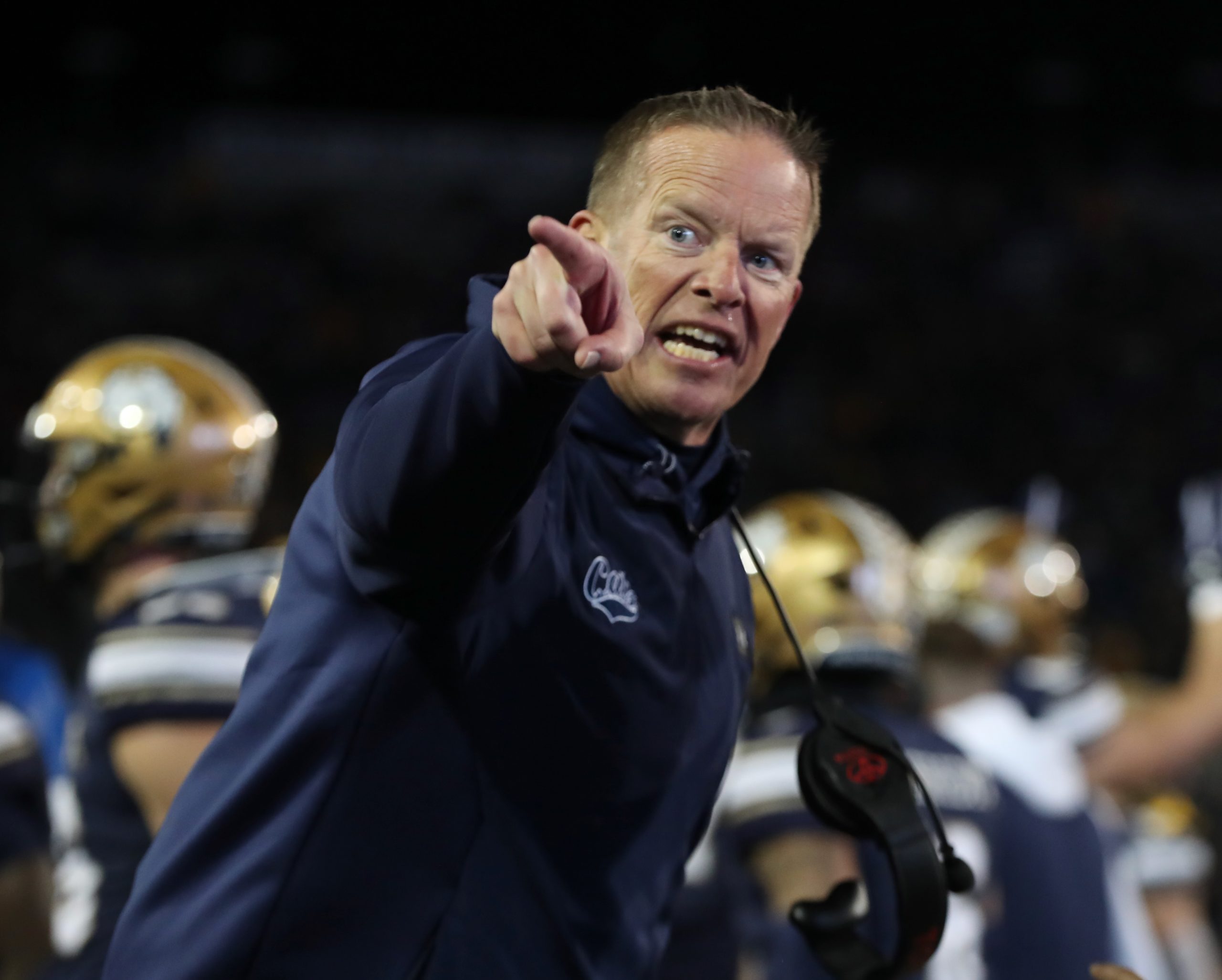
Then Montana State head coach Brent Vigen called a timeout to regroup his defense.
3. The additional opportunity
Rather than having to snap the ball immediately in a chaotic scramble, Idaho was given time to regroup and prepare a final play.
When play resumed, Wood threw a 25-yard touchdown pass to Ryan Jezioro. Instead of kicking an extra point to tie the game, Idaho went for two. Wood ran the ball into the end zone to complete a stunning fourth-quarter comeback, handing the defending national champion Bobcats their first loss of the season and snapping their 19-game winning streak.
The McAulay factor
National rules analyst Terry McAulay argued that the officials erred because college football’s replay rules are designed to prevent the clock from being reset to one or two seconds in this specific situation.
McAulay, a veteran NFL and college football referee, outlined two central concerns in his social media commentary.
Not going to comment on the timeout aspect, but it seems the officials reset the clock to :01. They are not supposed to do so.
— Terry McAulay (@tjmcaulay) October 3, 2026
Replay rules only allow the clock to be reset when the clock starts on the ready for play and there are 3 or more seconds remaining and the offense has… https://t.co/Li28ssKL4C
1. The physical-impossibility argument
Because the Idaho receiver was tackled in bounds, the clock was supposed to restart on the referee’s ready-for-play signal.
McAulay explained that the NCAA’s replay rules reflect the principle that an offense cannot reasonably snap the ball with only one or two seconds remaining when the clock restarts on the referee’s signal.
The sequence involving the referee’s signal, the clock operator restarting the clock and the center snapping the ball takes time. In McAulay’s view, restoring one second in this situation effectively gave Idaho an opportunity that the rules were designed to prevent.
2. The replay-protocol question
McAulay also argued that when the stadium clock reaches 0:00 at the end of a game, officials should not manually reset it on the field. Instead, they should allow the replay booth to handle the timing question.
Under his interpretation, replay would have reviewed the video, determined that only one second remained and applied the three-second restriction, which limits the restoration of time when the clock must restart on the referee’s signal.
Had that procedure been followed, McAulay argued, the game would have ended without another play.
By intervening on the field and restoring time based on their own knowledge of the play, McAulay contended, the officials bypassed a safeguard intended to prevent precisely this type of ending.
The strict instruction
The distinction between what the rulebook permits and what officials are instructed to do is central to this debate.
The text of NCAA Rule 3, Section 2(c), gives on-field officials the authority to adjust the clock when they have positive knowledge of the elapsed time. The rule does not categorically prohibit officials from resetting the clock.
The stricter instruction McAulay referenced concerns the mechanics and procedures officials are taught to follow in end-of-game situations.
The officiating directive
When the stadium clock reaches 0:00 at the end of a half or game, the standard procedure described in this interpretation is for the on-field crew to defer the timing question to the replay booth.
The reasoning is twofold:
- Reducing human error: On-field officials must monitor forward progress, boundaries, player safety and other aspects of the play. They cannot necessarily track the stadium clock to the millisecond while doing so.
- Protecting the intent of the three-second rule: Replay restrictions limit the restoration of one or two seconds when the clock must restart on the referee’s signal, reflecting the principle that there may not be enough time to snap the ball.
The relevant officiating mechanics are addressed in the College Football Officiating (CFO) Mechanics Manual and the CCA football mechanics materials, rather than solely in the text of the NCAA rulebook.
The rulebook establishes the boundaries of what officials may do, while the mechanics manuals describe how crews are expected to administer those rules on the field.
This distinction is why McAulay argued that the officials erred in the Idaho-Montana State game. In his view, the crew should have allowed the game clock to expire and left the timing question to the replay booth.
The loophole
The interaction between the on-field authority to adjust the clock based on positive knowledge and the restrictions governing replay creates the central question in this case.
If the on-field crew can independently restore one second under Rule 3-2(c), but a replay review would be subject to the three-second restriction, the method used to correct the clock could determine whether another play is allowed.
In the Montana State-Idaho game, the officials restored the clock to 0:01 on the field. Under one interpretation, that adjustment was permitted by the rulebook. However, McAulay argued that the crew should have followed the established mechanics and allowed replay to determine whether time could be restored.
The result is a conflict between the authority granted to on-field officials and the safeguards built into the replay rules.
That’s why the controversy extends beyond whether the officials correctly judged the final second. It also raises questions about whether the appropriate procedure was followed and whether the rules should be clarified to eliminate conflicting interpretations.
The conclusion
I think the best way to understand this situation is to compare it to the three-second rule in basketball.
The intent of that rule is to prevent offensive players from gaining an unfair advantage by remaining in the lane. If a player is moving out of the lane but is still there when three seconds elapse, officials may consider whether the player is actually gaining an advantage.
Players sometimes remain in the lane longer than three seconds, but officials may exercise judgment when a player is actively trying to leave and is surrendering that advantage.
If a referee incorrectly calls three seconds on a player who is clearly leaving the lane, the official has made a mistake. In my view, the same principle applies here: If the football officials failed to follow the intended procedure, they made a mistake.
The rules governing when the clock runs after first downs changed in 2023. The rules governing when the clock continues running after a player goes out of bounds changed in 2008, with exceptions during the final two minutes of each half.
These procedures are not brand-new, but one could reasonably wonder whether every officiating crew has received consistent training on how to apply them in unusual end-of-game situations. Perhaps this exact scenario has rarely occurred in the Big Sky Conference. If officials were not regularly reminded of the updated procedures, the details could have been overlooked.
The NCAA has an interest in keeping trailing teams competitive late in games, which is one reason the clock stops in certain situations. But it also recognizes that some clock stoppages can create unrealistic opportunities, as we saw Friday night.
The NCAA needs to clarify the interaction between these rules so that the intended outcome is not undermined by conflicting procedures.
There are plenty of analogies in everyday life. Consider turning right on red after coming to a complete stop. Although the practice became widespread in the United States during the 1970s, it took changes in traffic policy to establish it more broadly. What once seemed unusual eventually became standard procedure.
Officials should understand both the letter and the spirit of the rules. In this case, they should have known whether the situation required them to defer to replay, even if their on-field judgment suggested that a second remained.
Just as a basketball referee must understand the intent of the three-second rule, football officials must understand how the timing and replay rules are meant to work together.
It’s a mistake a referee can make and perhaps temporarily get away with. But you can bet the Big Sky Conference is reviewing the situation and reminding its officials of the proper procedures behind closed doors.
Big Sky Conference commissioner @BigSkyCommish came on Tootell & Nuanez on Wednesday morning for our @1029ESPN Roundtable. @Colter_Nuanez ask Wistricill about Friday night's ending in Moscow and the scenario gave Idaho enough time to secure a 35-34 win over No. 1 Montana State. pic.twitter.com/jdkGlKD78r
— Skyline Sports (@SkylineSportsMT) October 7, 2026
