“With great power comes great responsibility” — Uncle Ben, Marvel Comics, probably.
Much has been said about what transpired at the end of the Idaho Vandals vs. Montana State Bobcats football game one week ago. The vast majority of that discussion has focused on the timeout that was called by Montana State head coach Brent Vigen. As far as this author is aware, there has been only one published effort to break down the rules surrounding the finish of the game: the Skyline Sports opinion piece, “Stuber — The Idaho-Montana State clock controversy: Did officials get the right ending?”
I believe a rebuttal is in order because the answer to that question, simply put, is yes.
The NCAA and the Big Sky Conference both have an obligation to treat each of their member schools fairly. The clearest way to uphold this responsibility is to follow the letter of the rules. Unfortunately, Mr. Stuber’s analysis introduces subjectivity that is not grounded in a plain reading of those rules.
FACTS THAT ARE NOT IN DISPUTE
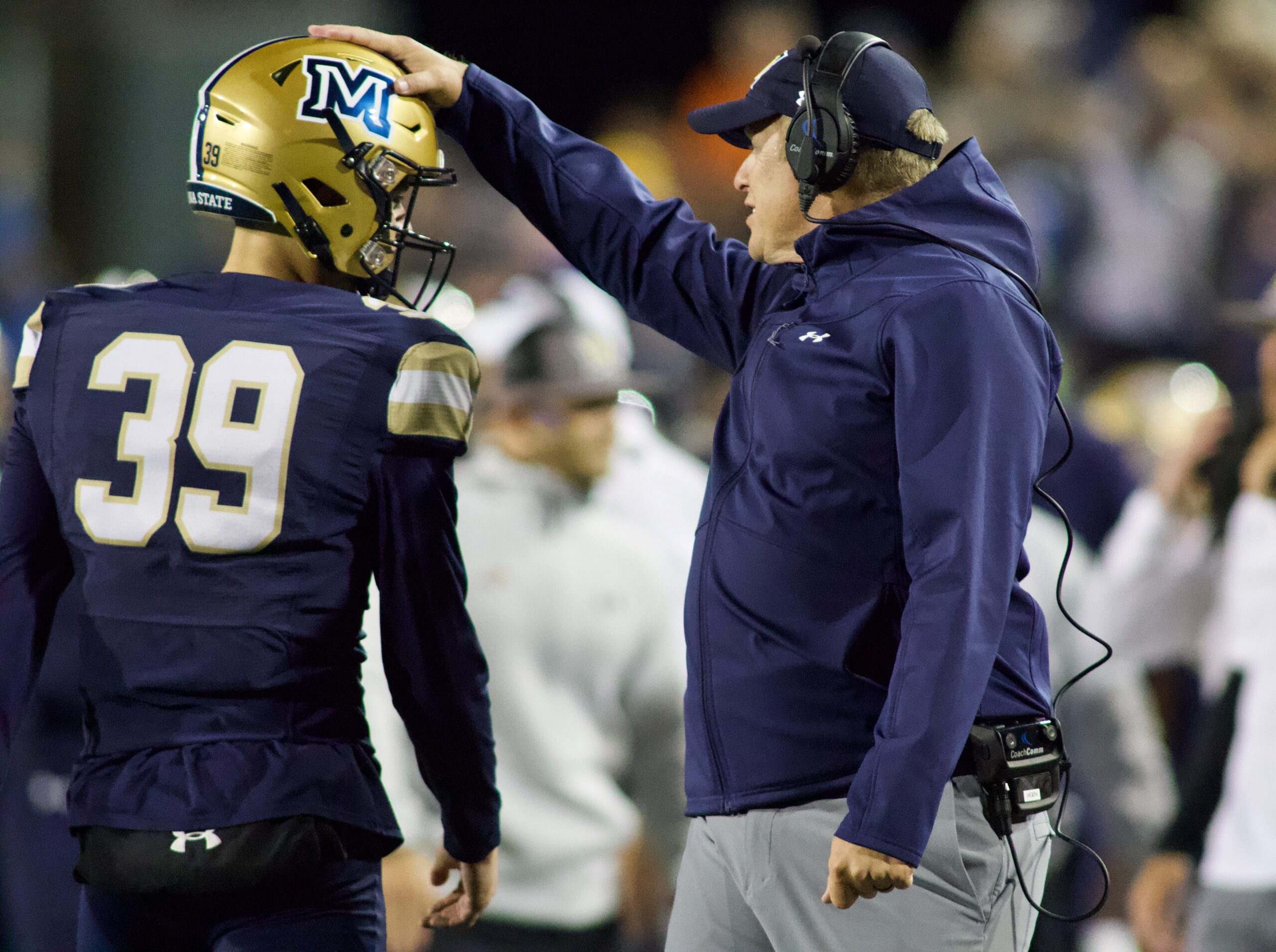
During the final seconds of the game, an Idaho Vandals receiver caught a pass and was down. The clock ticked to zero just after the receiver went down. The referees on the field immediately ruled that one second remained and that the clock should be reset. Anyone who watches the tape can see that the player was down with one second remaining. As the referee reset the ball and the chains were moved, Idaho rushed to the line. Just before the referee restarted play, Montana State head coach Brent Vigen called timeout, halting the clock with one second remaining. Idaho would go on to win the game when play resumed.
THE NCAA RULES
The written rules are clear on this matter. According to the NCAA rulebook (PDF, page 57), Rule 3 covers timing issues. Rule 3-2-2-c states, “If the referee has positive knowledge of the elapsed time, they will reset and appropriately start the game clock.” Under Rule 3-2-2-c, the referees, having positive knowledge of the elapsed time, were within their rights to reset the game clock.
Mr. Stuber relies heavily on longtime official Terry McAulay to argue that if the clock is stopped with fewer than three seconds remaining and the play is reviewed, the game should end. However, a rule in the NCAA rulebook directly addresses this scenario. On page 59, Rule 3-2-5 states: “If the game clock is stopped and will start on the referee’s signal with three or more seconds remaining in the quarter, the offense may reasonably expect to throw the ball directly to the ground (Rule 7-3-2-f) and have enough time for another play. With two seconds or one second on the game clock there is enough time for only one play.”
This language is unequivocal: If the game clock is stopped and will start on the referee’s signal with two seconds or one second remaining, there is enough time for one play.
UNNECESSARY AND FAULTY ADDITIONAL INTERPRETATION
Mr. Stuber’s analysis relies heavily on an uncited mechanics manual. My contention is that introducing this additional layer of analysis is subjective and could lead to unfair application of the rules. The NCAA rulebook is unequivocal on this matter. Idaho had an opportunity to run a play if it could get lined up in time to snap the ball. Without Mr. Stuber or Mr. McAulay citing the mechanics manual in question, it is impossible to evaluate their interpretation directly. Citing sources is important, as this author has endeavored to do. Regardless, I will explain why I believe the NCAA rules are clear on this matter.
Rule 3-3-e states: “Starts on the Referee’s Signal. For each of the following reasons, the game clock is stopped on an official’s signal. If the next play begins with a snap, the game clock will start on the referee’s signal: (when) Team A is awarded a first down, either through play or by penalty anytime after the Two-Minute Timeout in the 2nd or 4th quarters.” (NCAA rulebook, page 60.)
Mr. Stuber’s opinion article includes anonymous quotes from individuals arguing that the rule is illogical and lacks common sense if there is time for only one more play, because a first down would not matter. While reasonable sports fans can debate whether that should be the case, the reality is that it is not what the rule says.
Furthermore, Mr. Stuber’s article conveniently ignores NCAA Rule 3-2-5 entirely. His interpretation does not cite any instructions in the rulebook or written guidance suggesting that a mechanics manual—which provides general guidance to referees on interpreting the rules—could override an unequivocal NCAA rule. For his interpretation to be correct, Rule 3-2-5 would effectively have to be disregarded.

Lastly, both Mr. Stuber and Mr. McAulay reference guidance concerning what happens when time is restored to the clock following an official review. Simply put, that did not happen in this case, making that guidance irrelevant. No review took place until after the timeout was called, as can be seen by watching the end of the game.
INTERPRETATION OF THE ACTUAL AUTHORITIES ON THE MATTER
Why should you listen to either Mr. Stuber or me? When the actual authorities on the matter have been clear, you should probably listen to them.
The Big Sky Conference’s statement was unequivocal: “Both the Big Sky Coordinator of Football Officials and the NCAA Football Secretary-Rules Editor have reviewed and approved how the crew administered this game.” Notice that it was not just the Big Sky Conference that reviewed and approved the decision, but also the NCAA Football Secretary-Rules Editor.
Last Wednesday, the Big Sky commissioner appeared on Tootell & Nuanez to discuss the ending of the game. He stated, “Our officials are certainly not perfect … We got it right in that situation.” Again, unequivocal.
CONCLUSION
Rules exist to be followed, and both the NCAA and the Big Sky Conference have a responsibility to apply them as written in every case. In this situation, they did.
Mr. Stuber’s article does a great job of creating confusion by introducing a vague, uncited mechanics manual and a tweet from someone who analyzes rules on television. What it does not do is clearly lay out the rules governing this situation. Simply put, the referees were correct, and even a cursory review of the NCAA rulebook makes that clear.
We give those referees great power, and they have a responsibility to enforce the rules without subjectivity. They did exactly that, and no amount of obfuscation after the fact can change it.