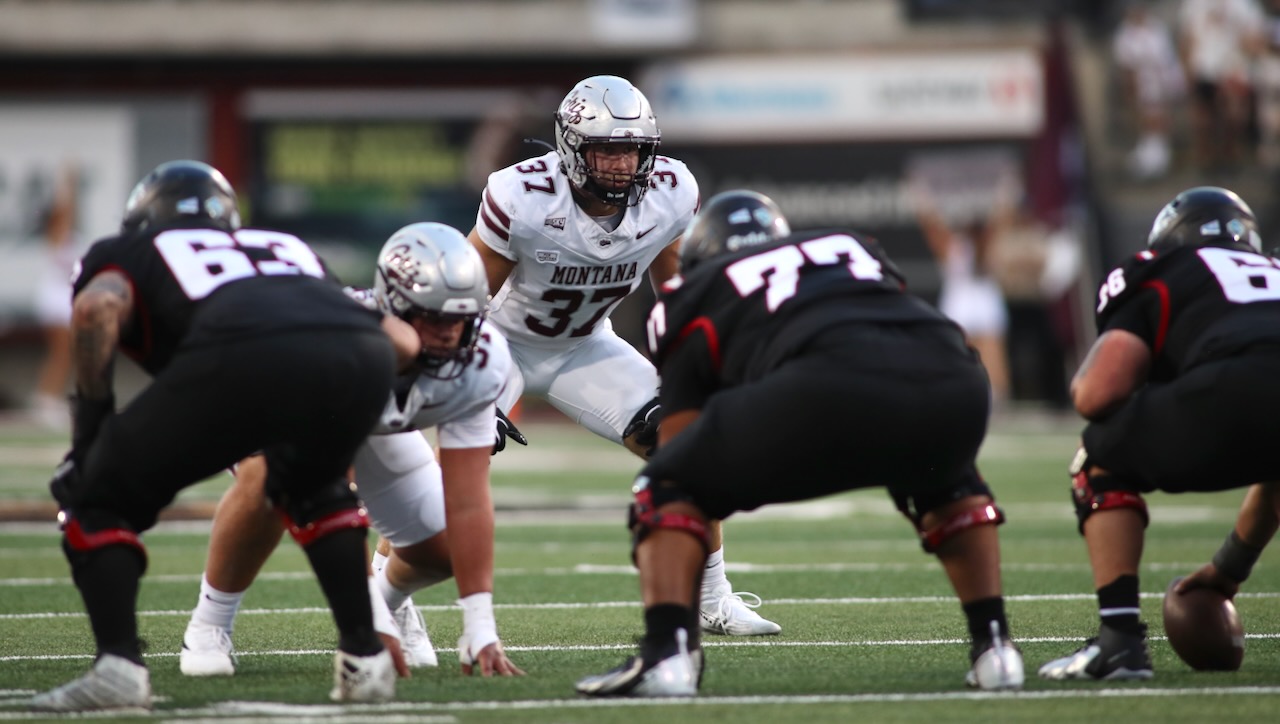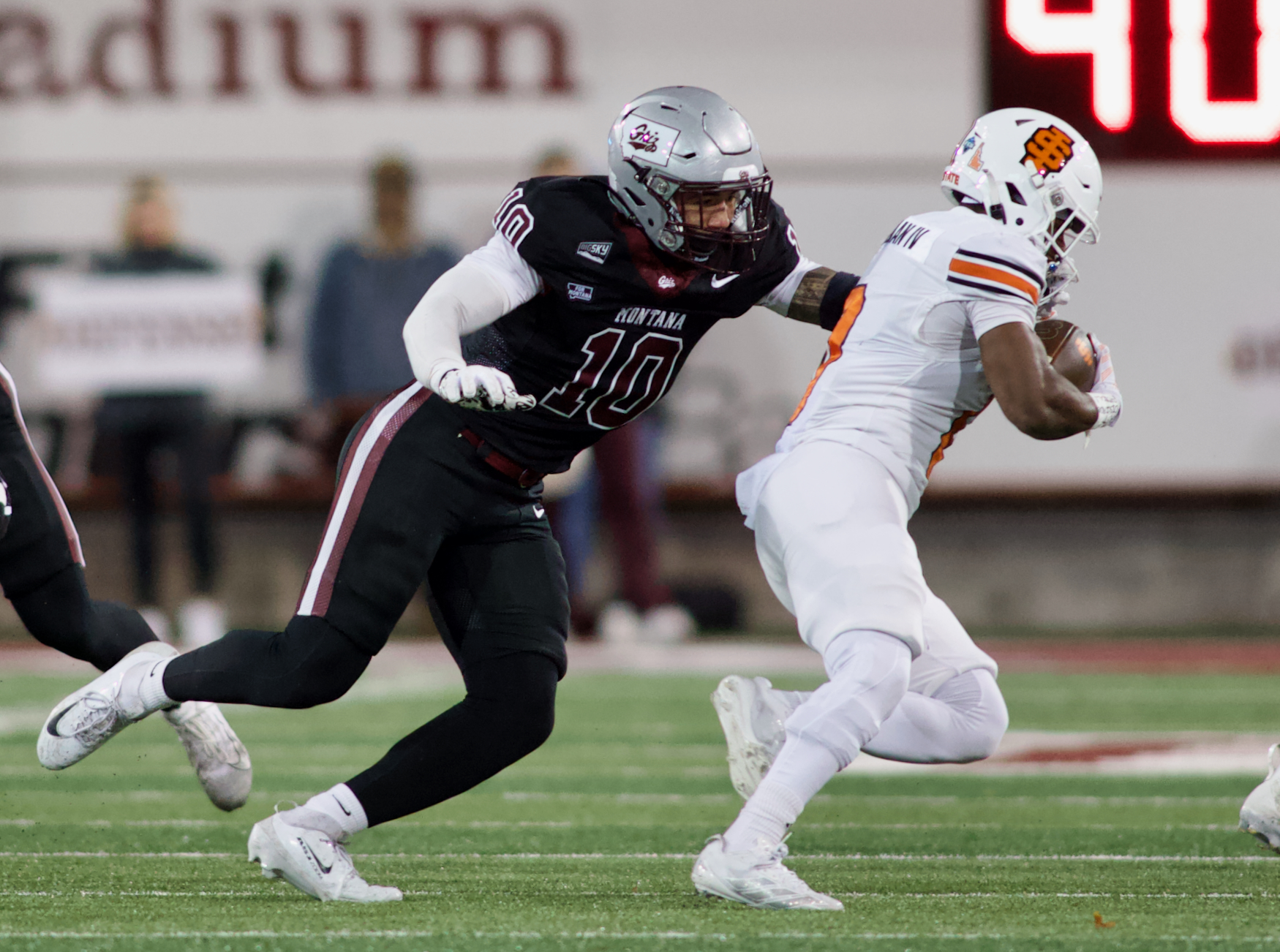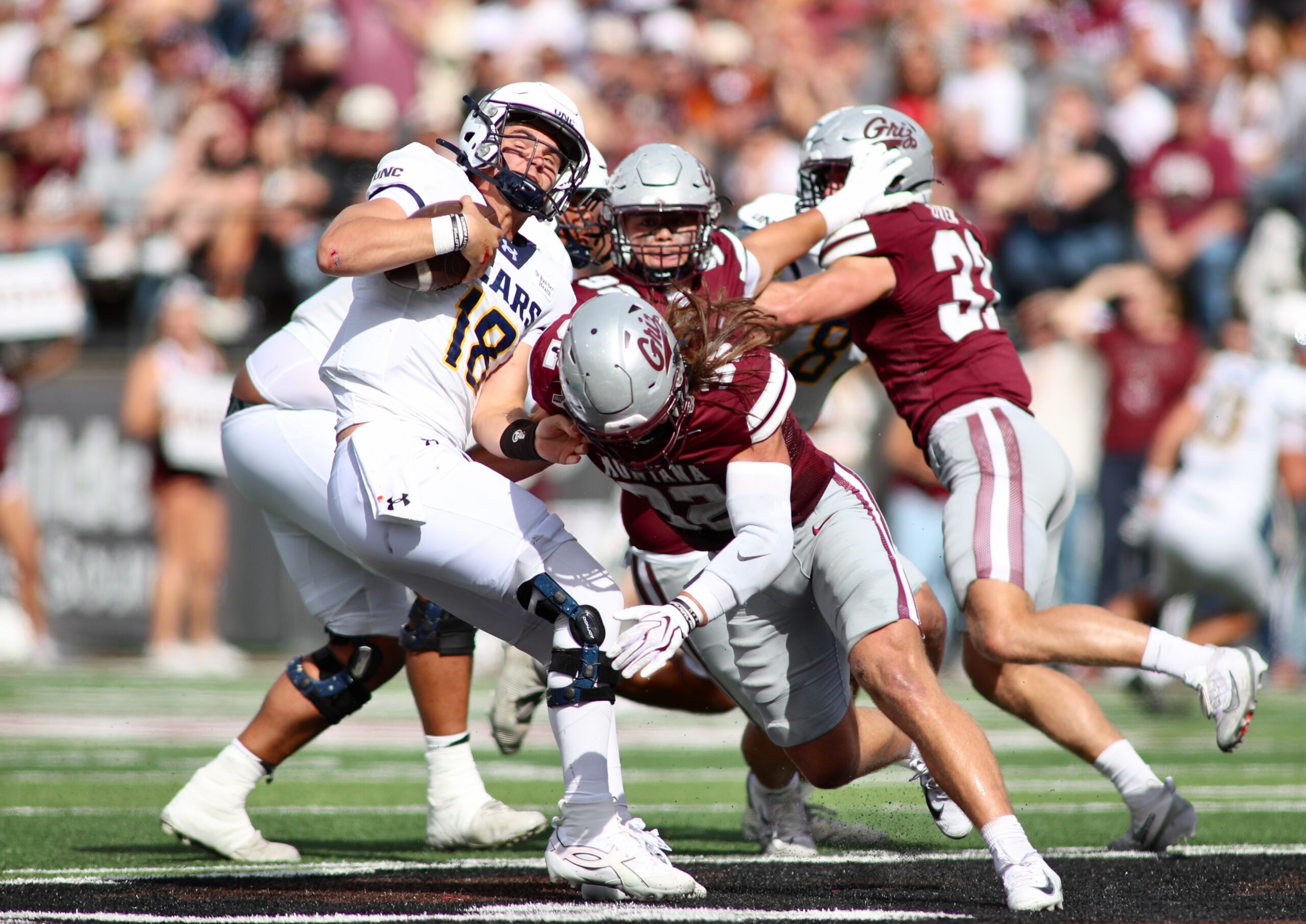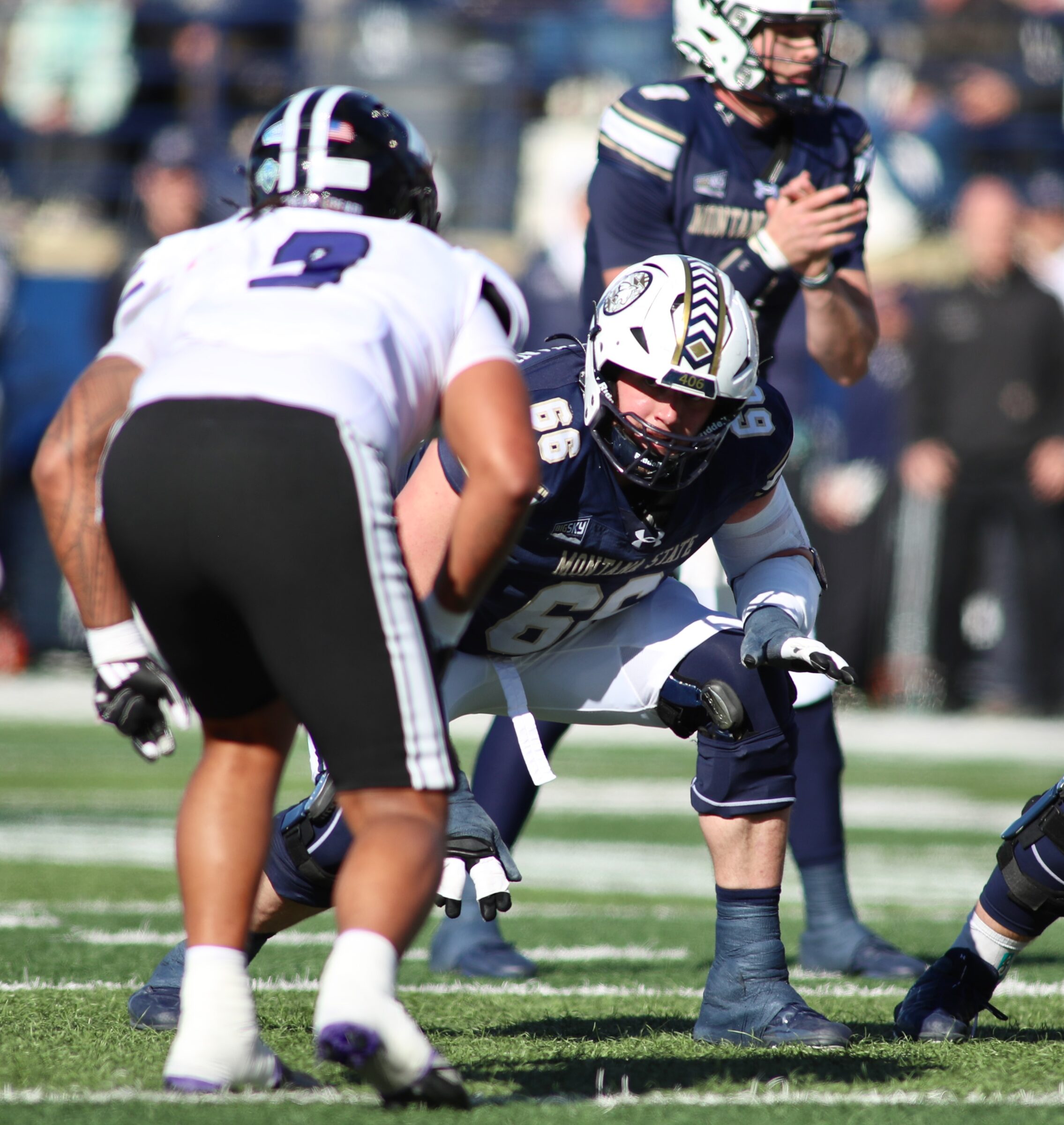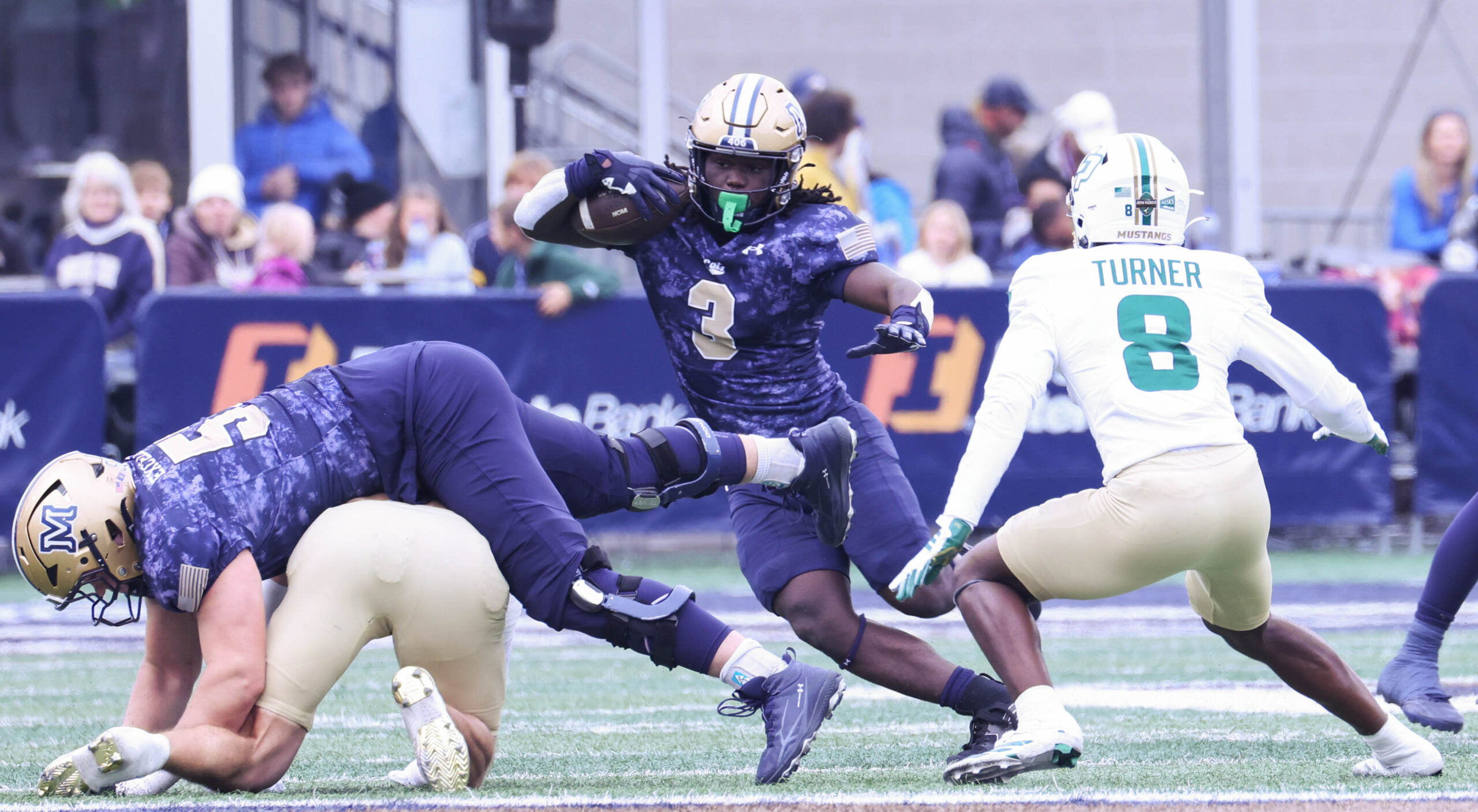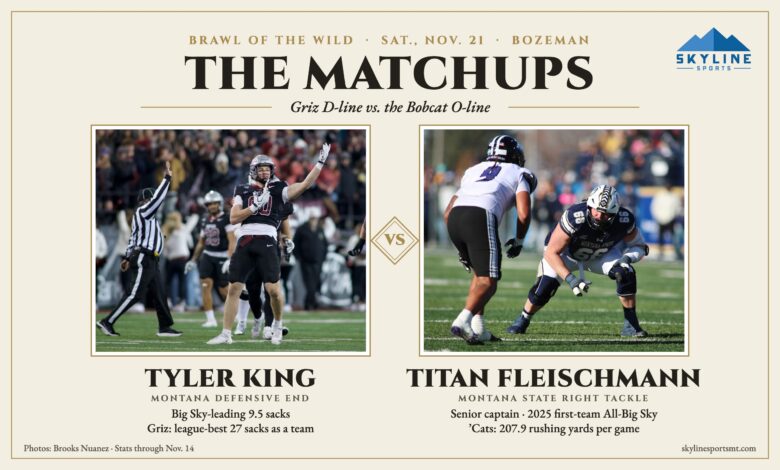
Four games into the season saw questions abound as the University of Montana’s defensive line had been cratered by injuries and Montana State’s offensive line still hadn’t reached its usual road-grading form. Cut to the season finale’s 126th Brawl of the Wild and those areas have normalized, somewhat, for both programs.
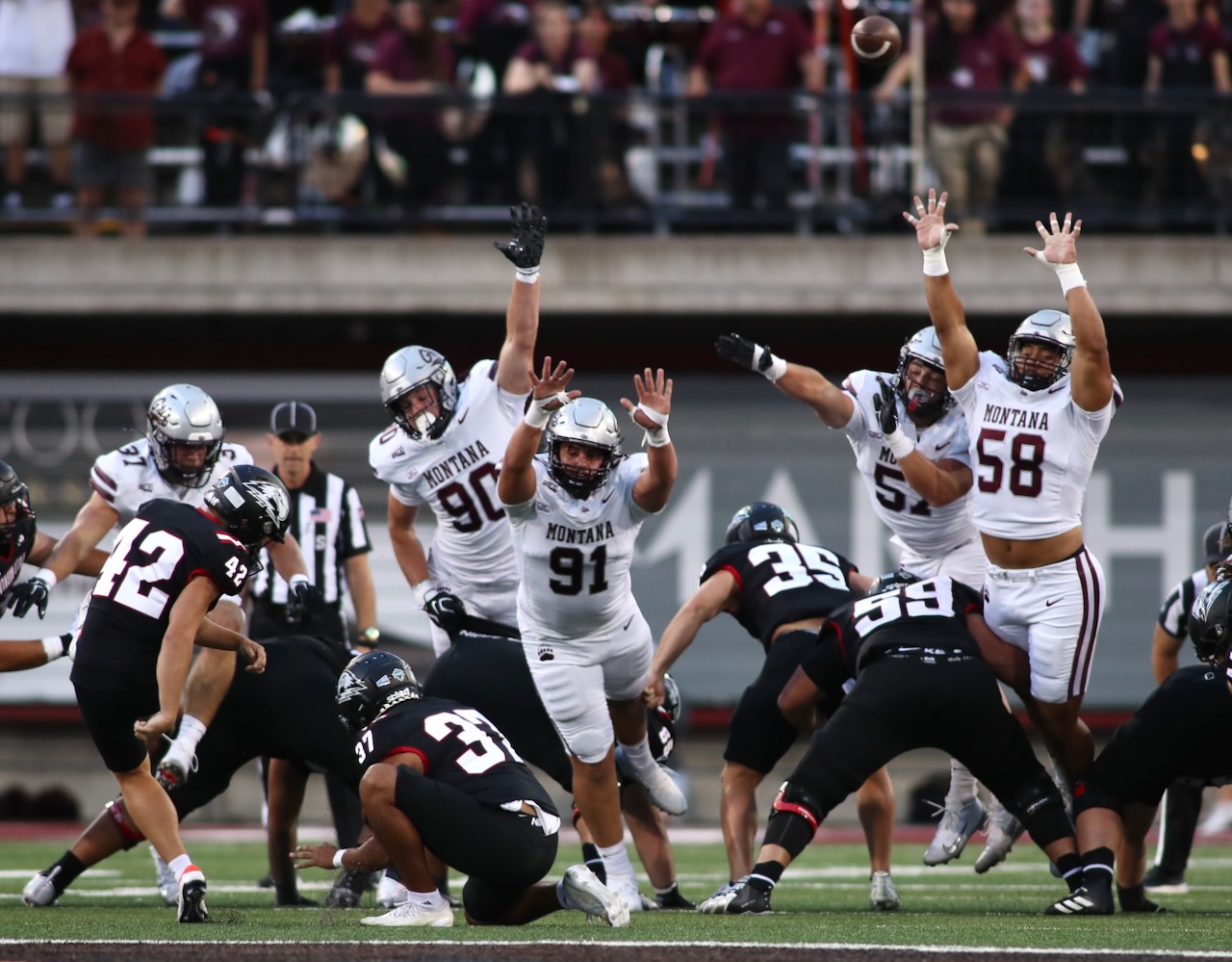
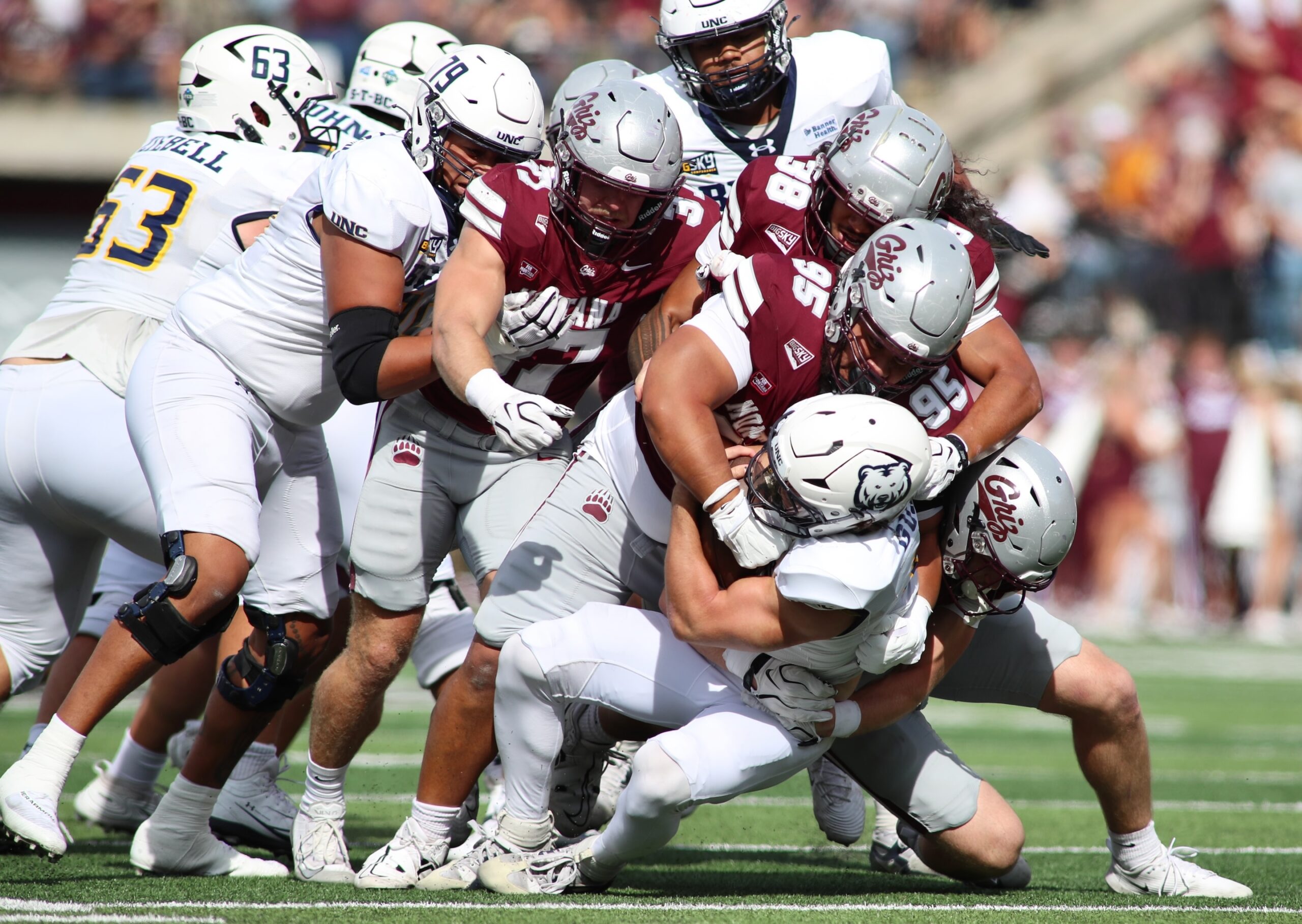
The Grizzlies have essentially lost half of their defensive line over the course of the year as four players that were expected to either start or rotate into games are now out for the season or temporarily. Senior defensive tackle Jake Mason broke a bone in his lower leg against Utah Tech – just the third game of the season. Senior defensive tackle Braydon Bailey suffered a torn ACL in 2025, then right after returning from that injury was re-injured. Senior defensive end Hayden Schwartz injured his shoulder prior to the first game of the season and junior defensive tackle Manase Tupou has been in and out with an undisclosed injury.
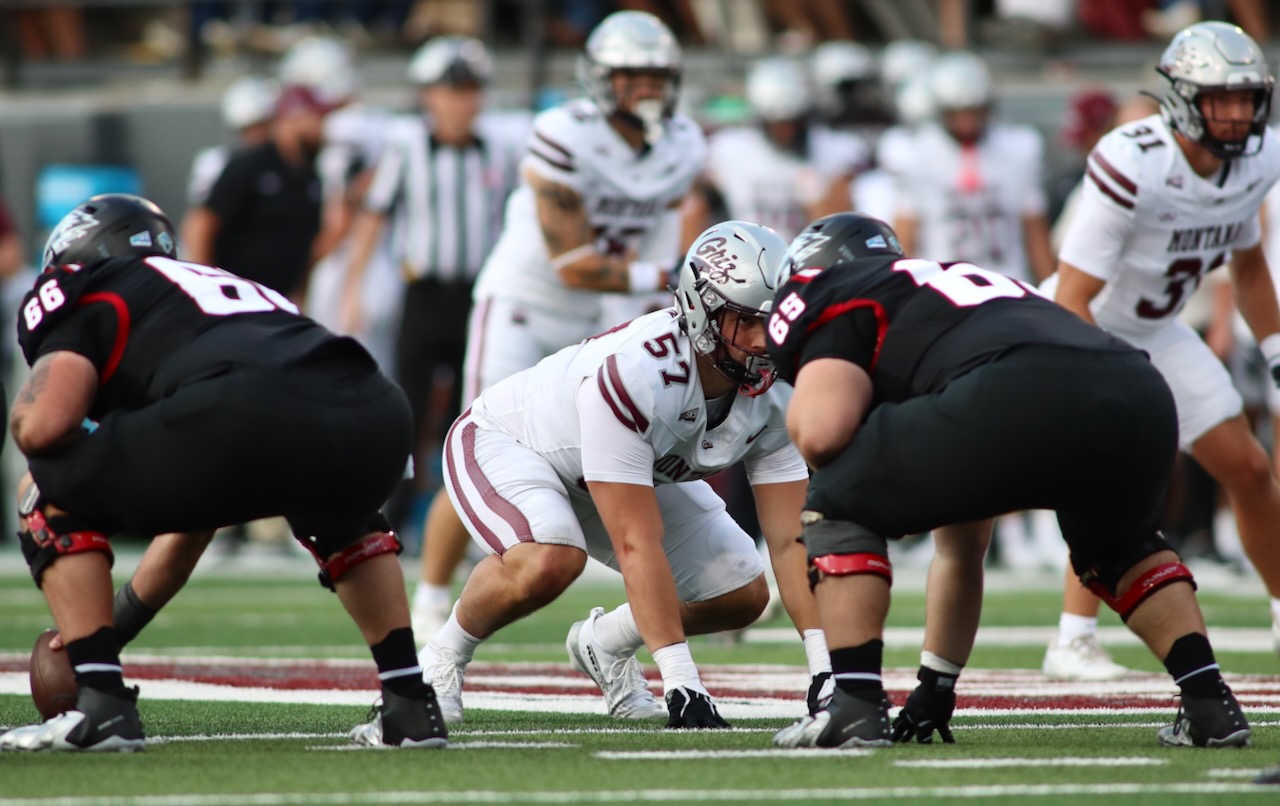
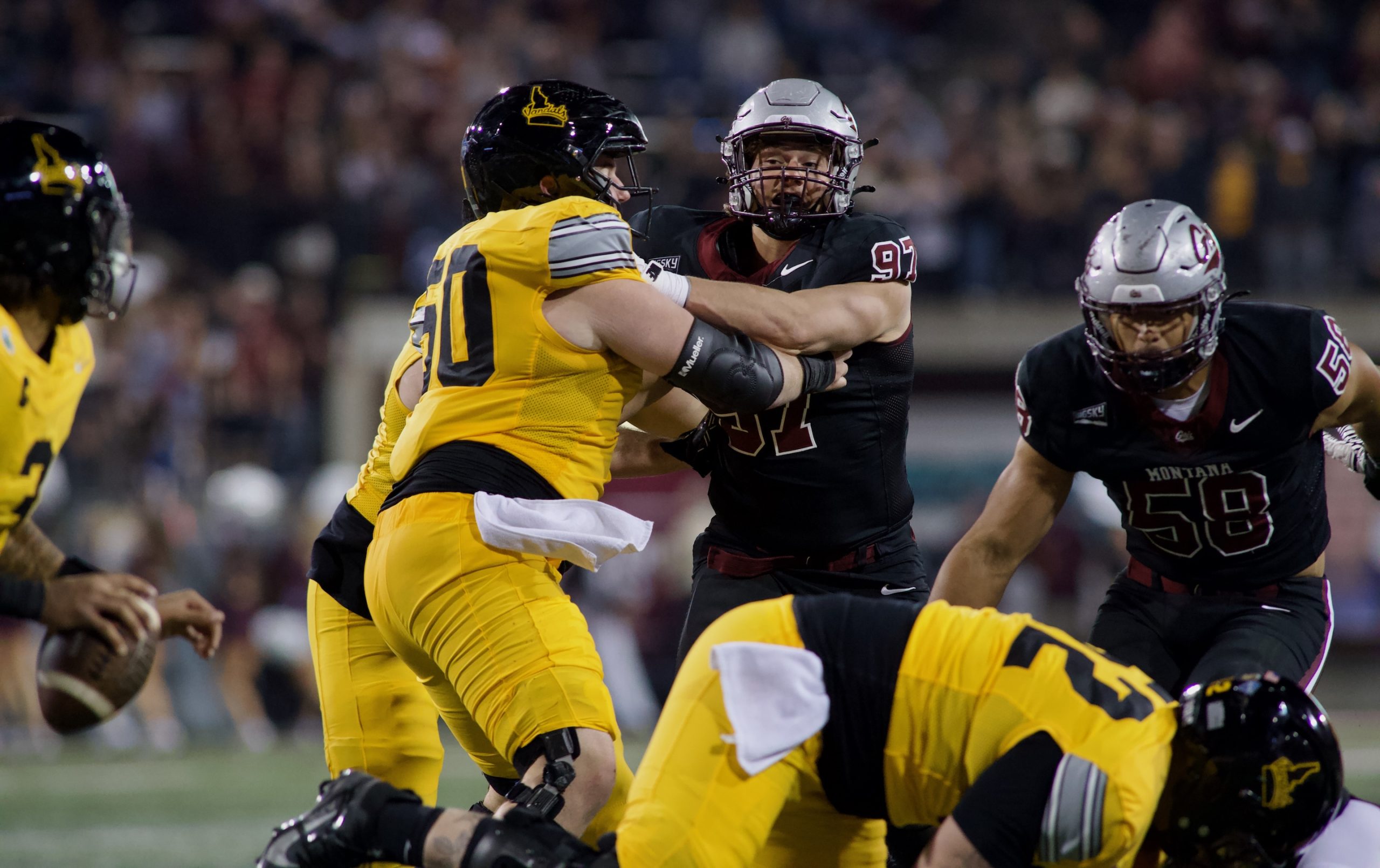
Without those four, UM has primarily run with budding star Cooper Buffington, who as just a sophomore has displayed excellent play in the middle of the line from his defensive tackle spot. The Winfield, Iowa native played eight-man football in high school and now finds himself in the mix of the biggest game of the regular season. Senior Zeke Seumalo, who played in all 15 games last season, has also looked good at defensive tackle giving the Grizzlies a solid base to defend the run, where they rank second in the Big Sky Conference in both yards per game (128.0) and yards per play (3.8).
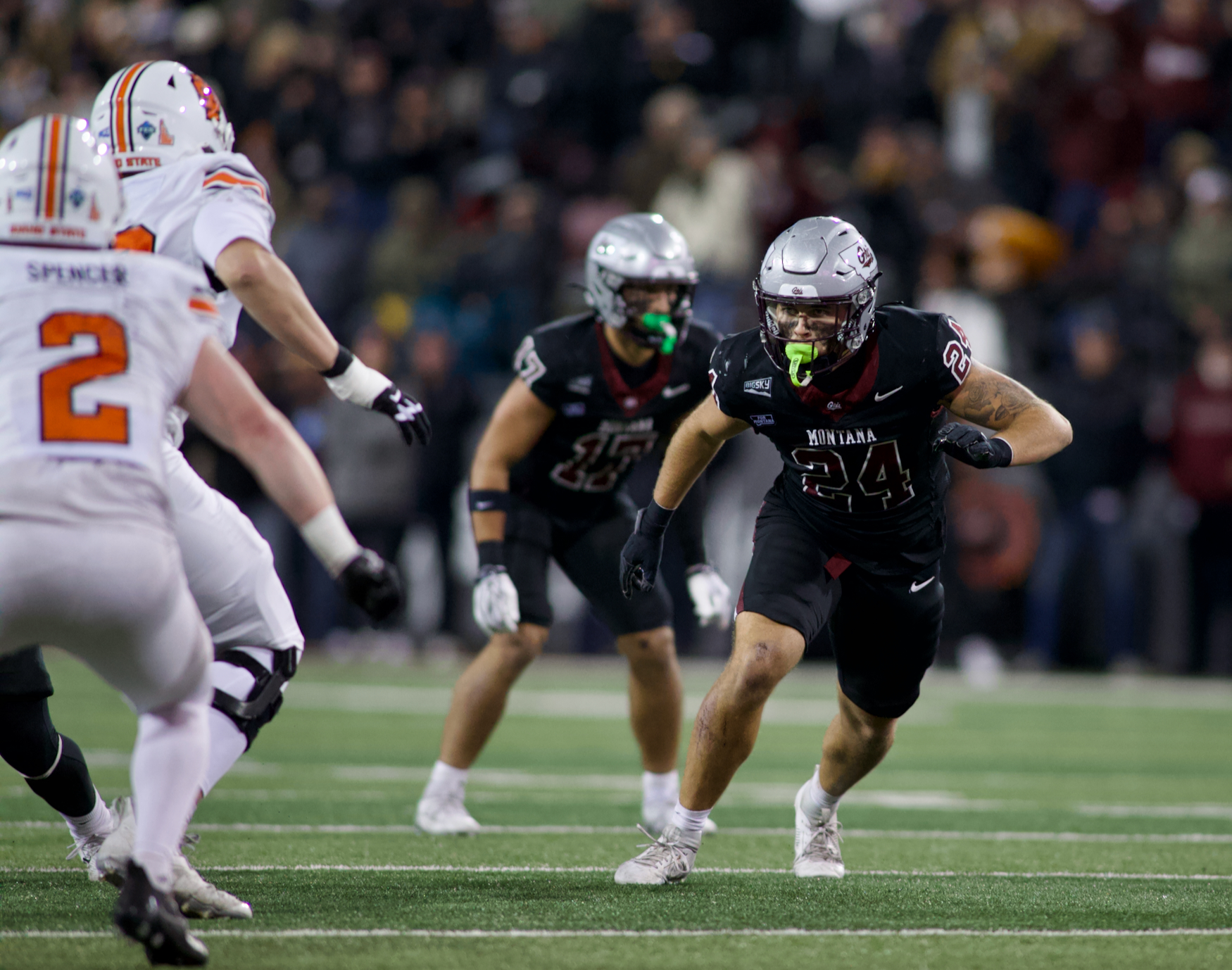
The defensive ends are Tyler King, a Central Washington transfer who leads the BSC in sacks with 9.5. He’s complemented by buck end Solomon Tuliaupupu, a senior who is back after a six-week departure on personal leave. Senior Justin Eklund and Clay Oven, who wears the legacy No. 37, have also played on the edge but Eklund has played more inside linebacker as of late and Styles Goodman has emerged as a disruptive force at buck.
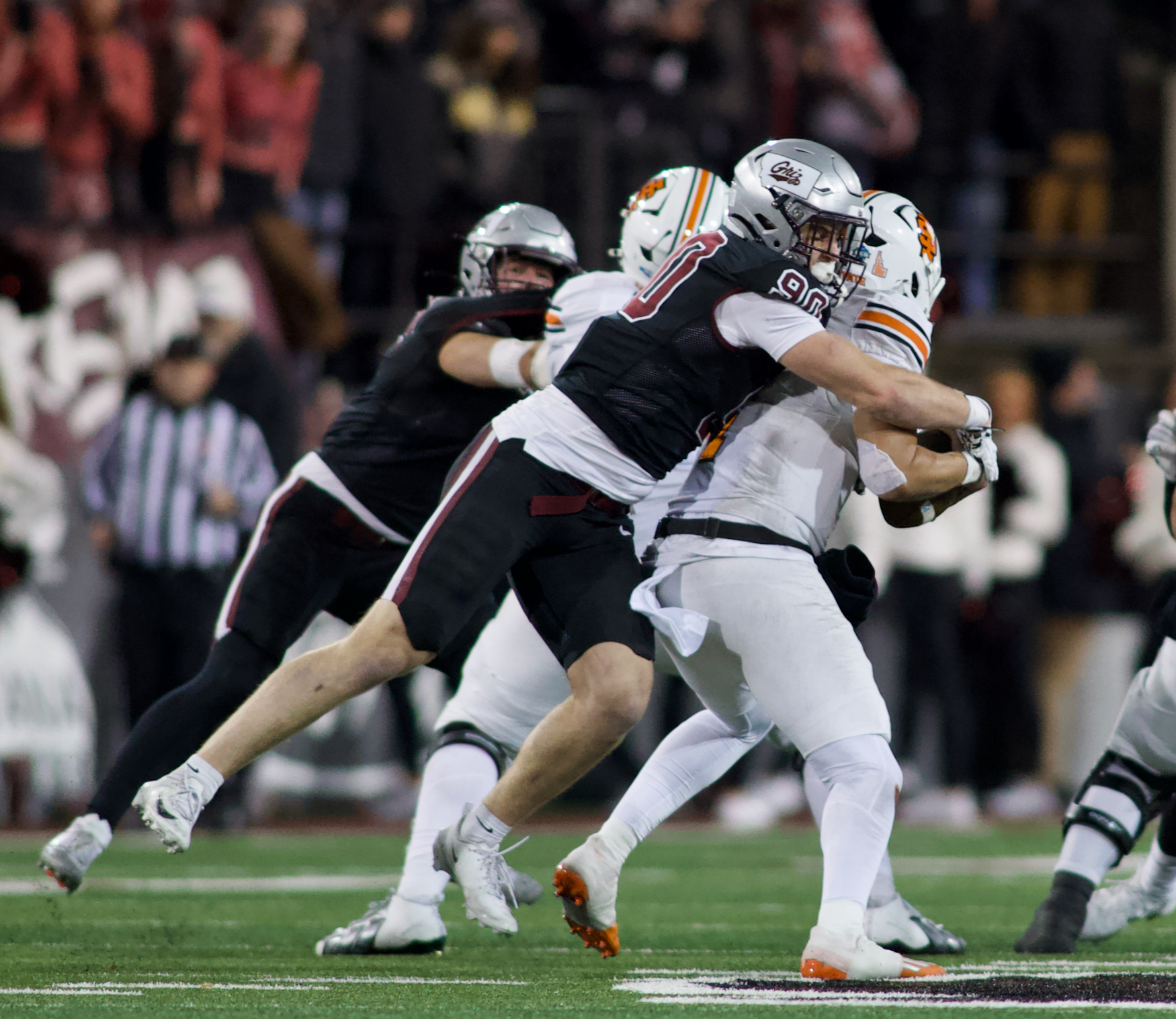
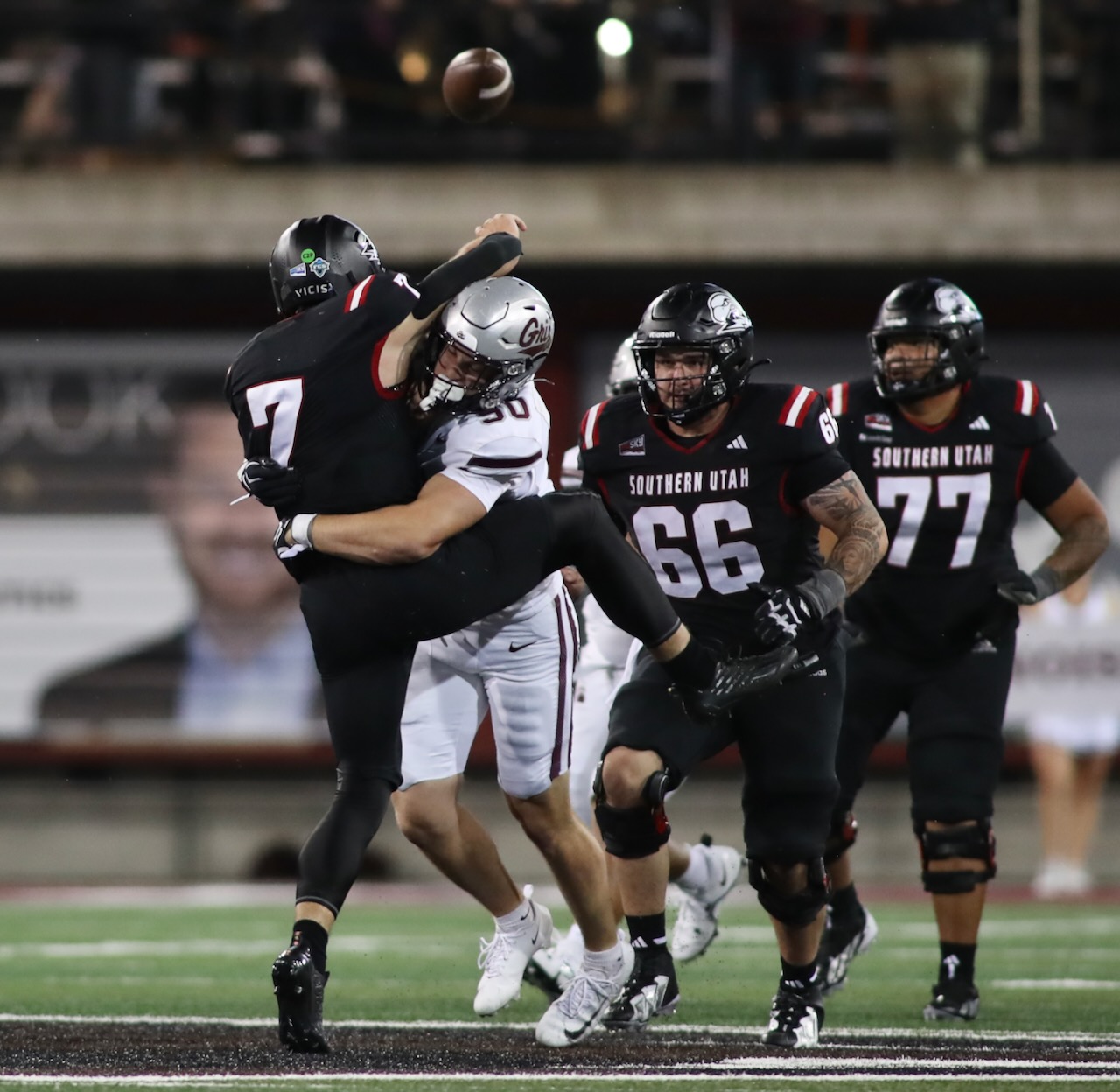
The Grizzlies lead the BSC in sacks with 27 primarily on the heels of King’s efforts and a philosophical change during their open (bye) week. They have had numerous players from multiple positions record sacks due to their varied style of blitzing, which is an area of confusion that MSU’s coaches and players are wary of.

“It’s challenging at the very least, but I think the bye week was a little bit of a transition for them,” Montana State head coach Brent Vigen said. “I think there are differences, so we got to take that piece into effect. In saying that, the teams that they’ve played these three games post-bye week probably aren’t exactly like us either offensively. You have to be able to lean on rules and principles of our offense and go out there and get it done.
“(The Grizzlies defense) was very chaotic and very aggressive, and you know, in saying that it wasn’t like, okay, they’re going to line up this way every time. So maybe they’ve gotten back to that mindset. There’s only so many things a defense can do, you know, and you haven’t necessarily seen it all, but we’ve seen quite a bit. Eleven games in, each play is its own, and how do you communicate so you’re on the same page each play, and you can play as fast as possible? [That] is ultimately what we need to do.”
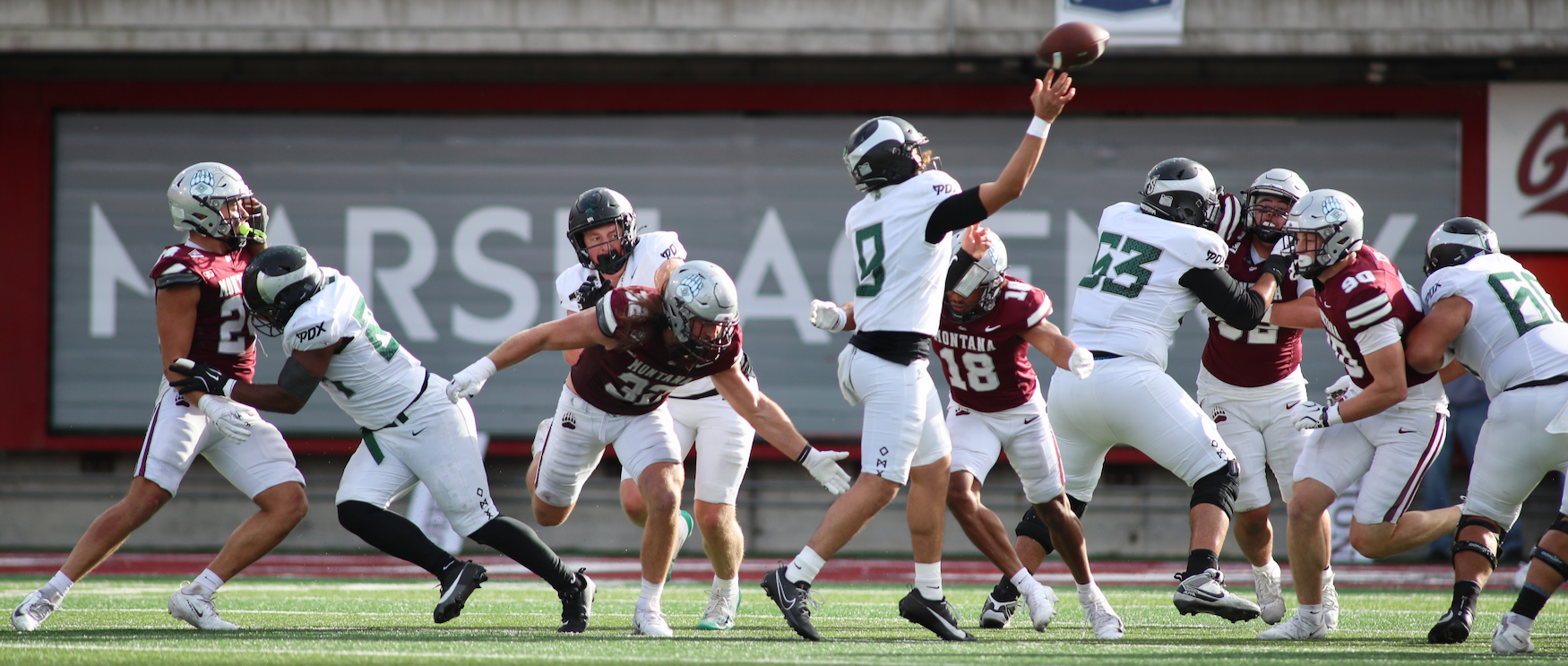
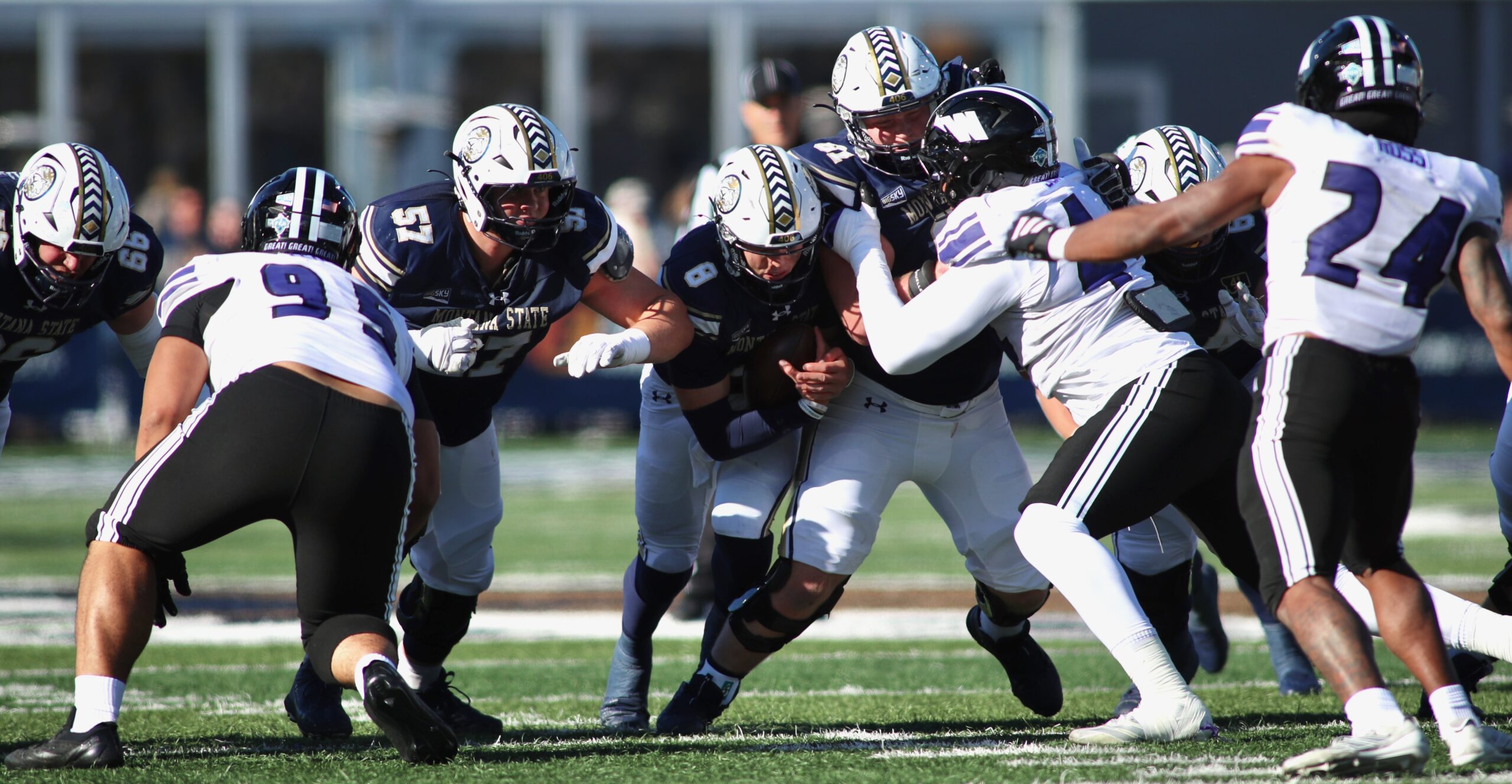
Against Eastern Washington, Montana blitzed over 70 percent of the snaps, rolling up a school record 11 sacks. Montana State’s offensive line has been a work in progress in terms of identifying blitzes pre-snap and handling pressure after the snap.
“I think we’ve gotten better,” MSU tackle Titan Fleischmann said of handling blitzes. “I think it’s been a work in progress, but I think we’ve had our ups and downs. But I mean, like (MSU defensive end) Zac (Crews) said, we constantly have something to work on, and we’re constantly chasing something, right? And so, I think this week especially is going to be a good test of that, and I think we’re going to do a very good job of that test.”
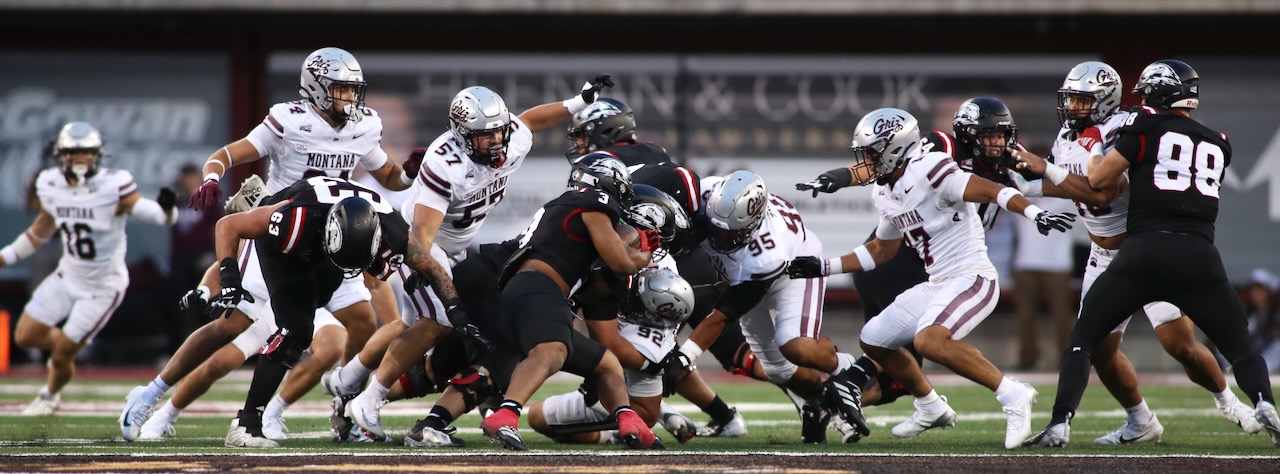
The run game has been a staple at MSU for over a decade, but it took the Bobcats until their fifth game of the season to record a 200-yard rushing game. MSU has averaged over 200 yards per game rushing over the last 11 seasons and sits at 207.9 currently, just one spot behind league-leading Southern Utah. The 207.9 represents the lowest season average during that time span. Over the last seven games MSU has averaged 237.4, which is slightly ahead of 2025’s 226.2.
“They do a great job [with] the outside zone, and then also the split zone,” UM head coach Bobby Kennedy said. “Then when you do think you have them stopped, they do a little boot pass and different things. And so, like I said, they do a lot of things on offense, but their rushing attack is formidable, and just like you had mentioned, their offensive line has done a really nice job, and they’re opening up holes for those backs.”
“Coach BK hit it on the head,” UM linebacker/defensive end Peyton Wing said. “They got a good O-line, good running backs. Just comes down to us having the right eyes and executing at a high level.”
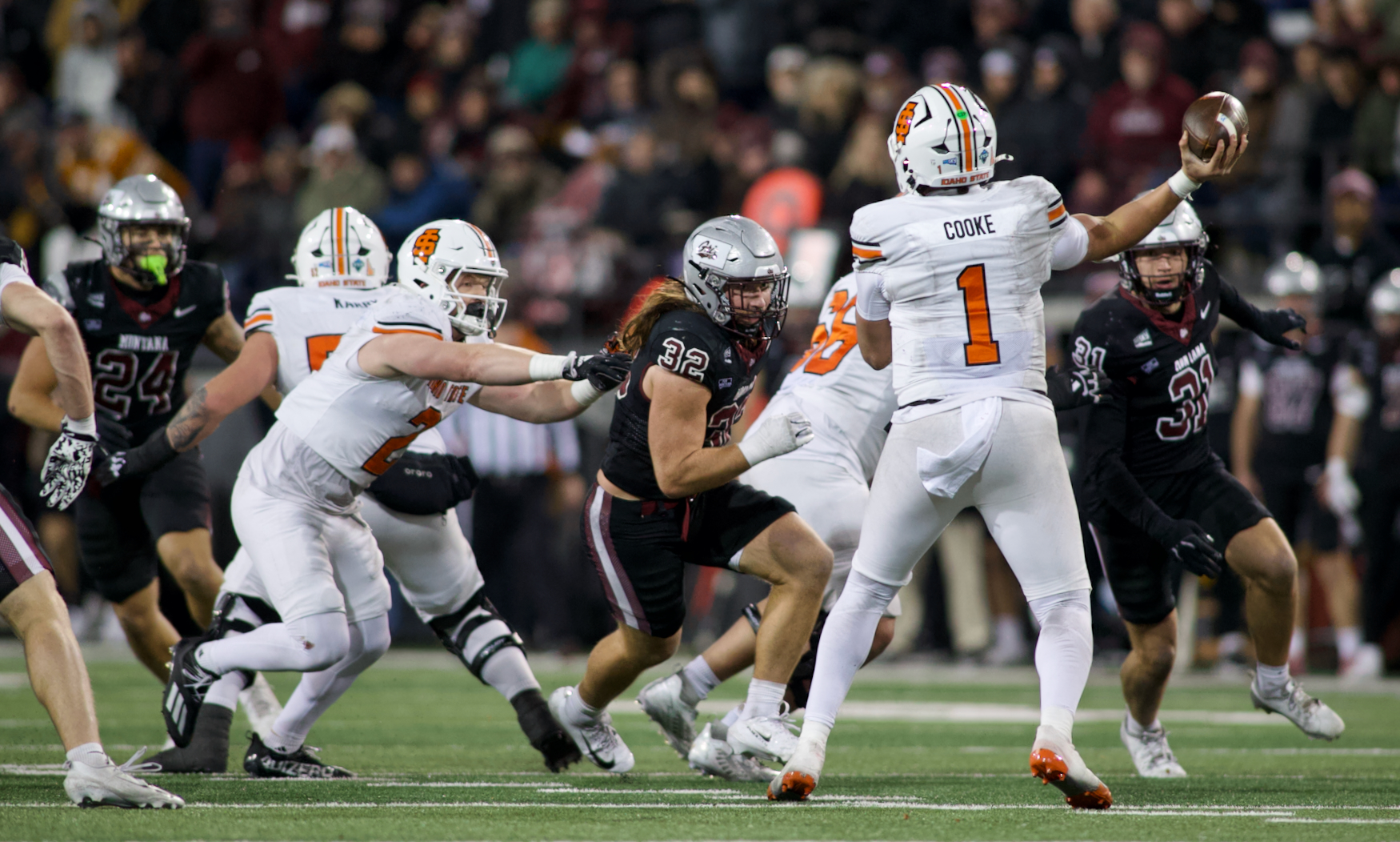
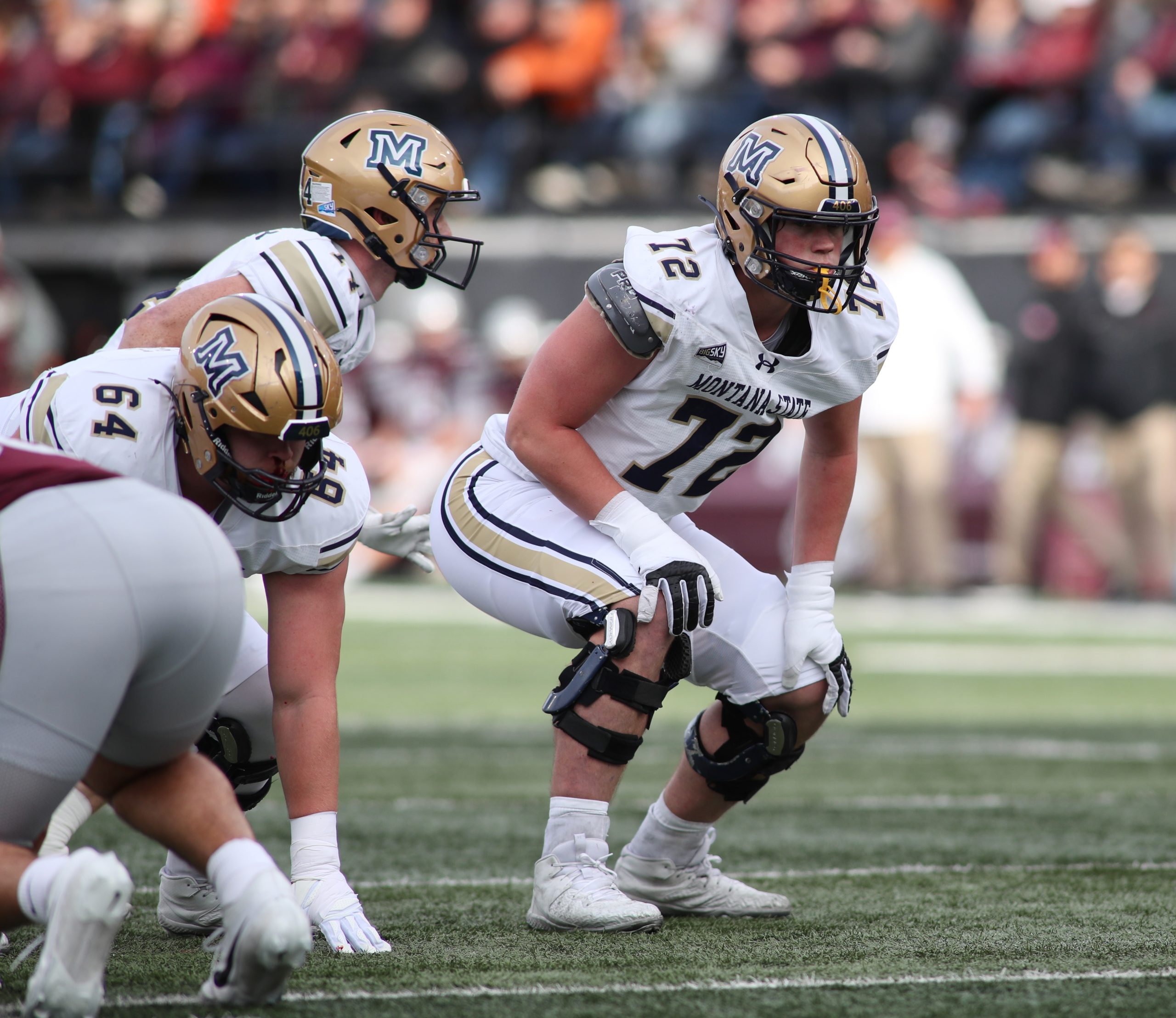
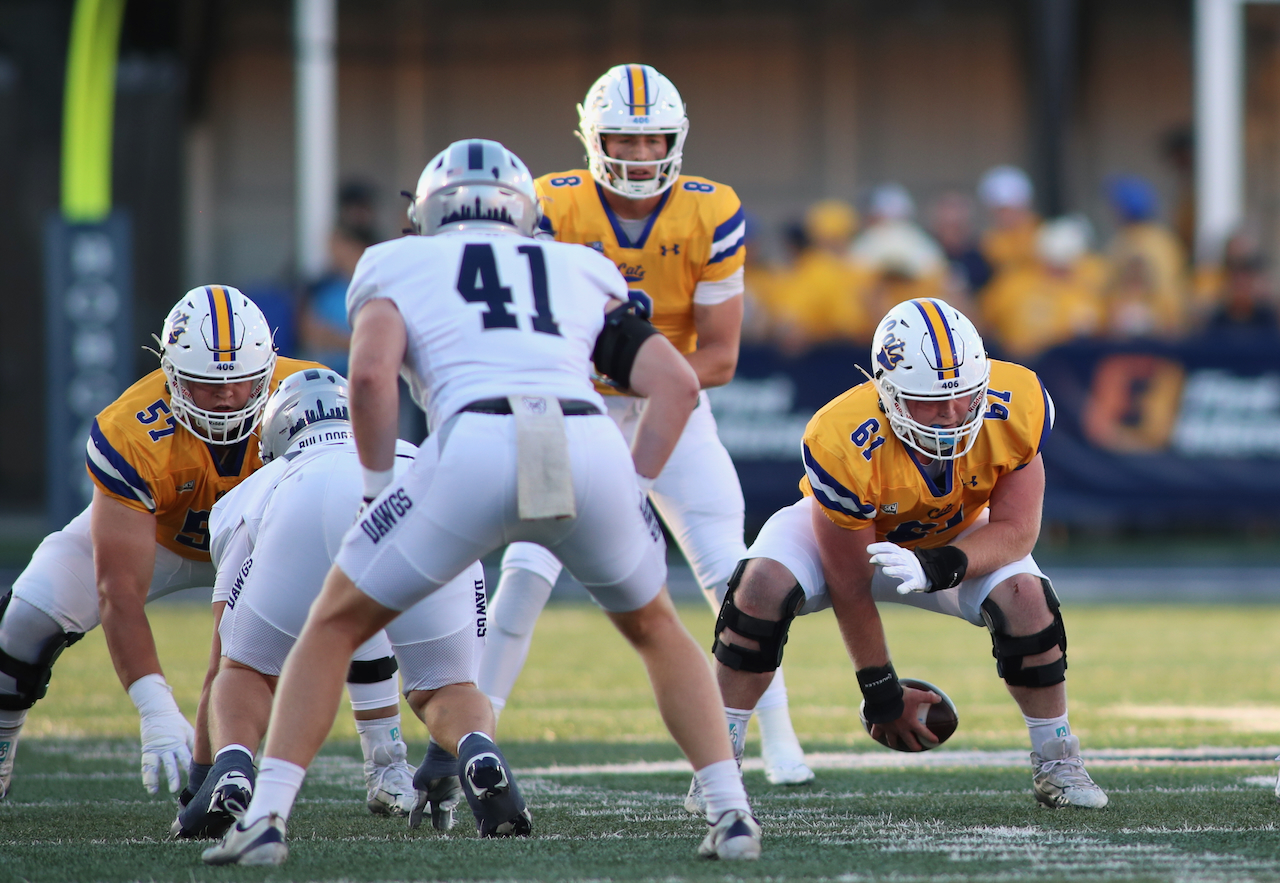
MSU’s offensive line has had little turmoil compared to years past when it either had to replace up to four starters (2022) or had multiple injuries entering the first game that caused serious reshuffling as in 2024 when both tackles were injured.
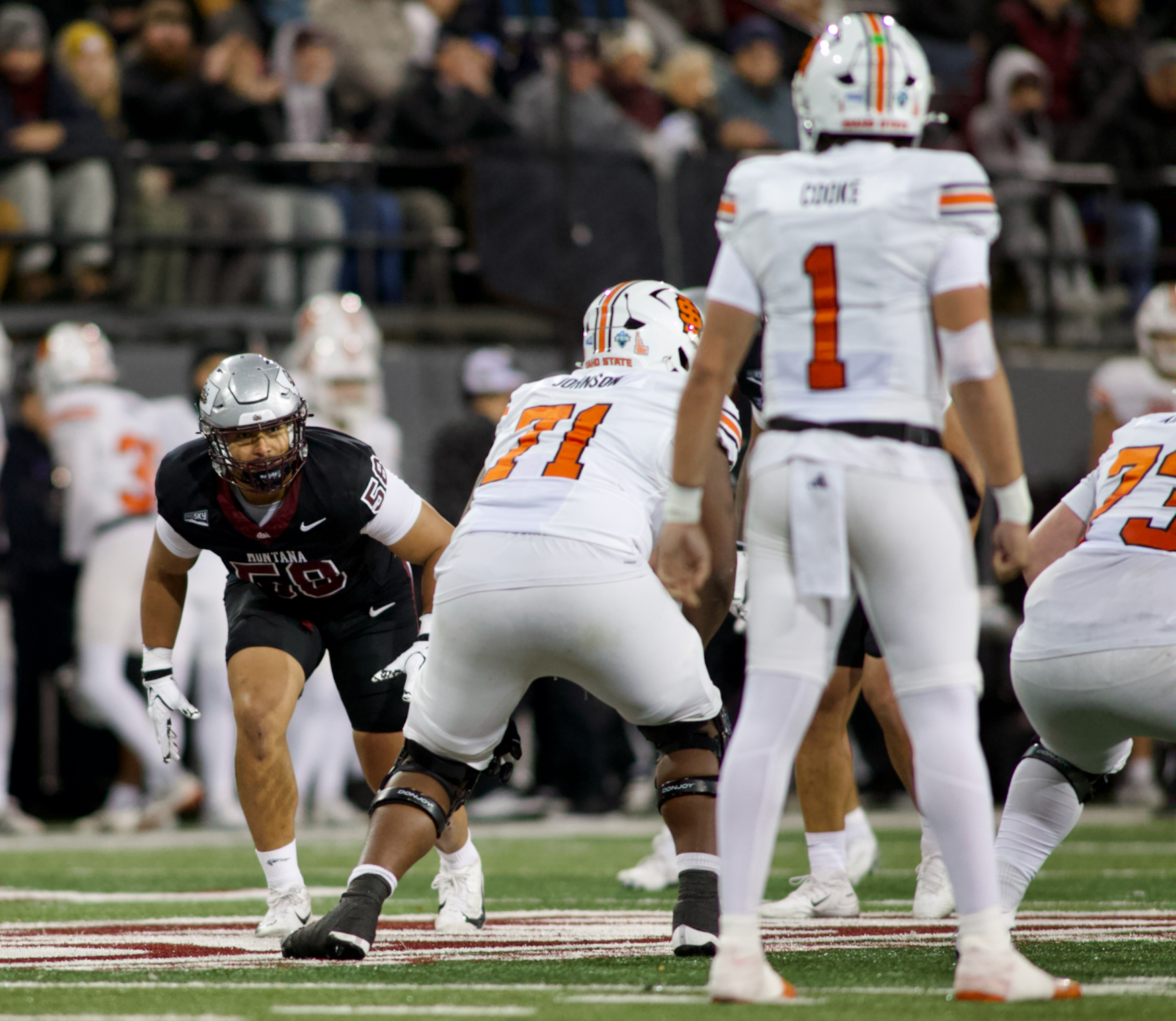
MSU has run with left tackle Braden Zimmer (Billings), a 2025 freshman All-American, left guard Burke Mastel (Red Lodge), a 2025 All-Big Sky second team selection, center Aiden Kaplan (Montgomery, Tex.), right guard Everett Carr (Bozeman) and right tackle Titan Fleischmann (Pocatello, Idaho), a senior captain and first-team All-Big Sky selection in 2025 at guard. Carr was replaced last week by Dylan Rollins (Missoula) against Northern Colorado and this week’s starter will be a game time decision. Fleischmann moved back to tackle when Cedric Jefferson transferred to Utah where he’s a starting tackle for the undefeated (10-0) and No. 2 ranked Utes.
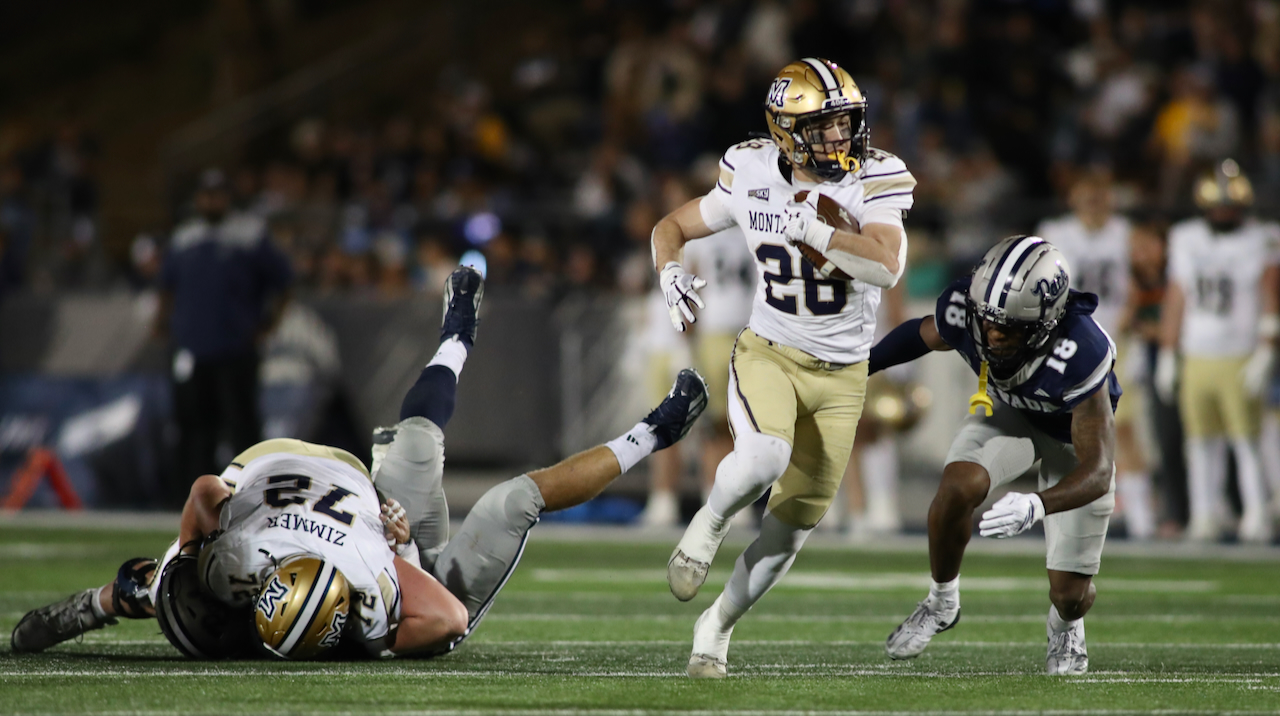

The run game has tapered off from its peak years of 2022-2024 when it averaged 299 yards per game. A big part of that has been due to the transfer of quarterback Justin Lamson from Stanford and the signing of offensive coordinator Pete Sterbick from Colorado School of Mines. That duo has allowed MSU to mix in the pass after seasons where the Bobcats ran the ball 70% of the time. That number dropped down to 63% in 2025 and is down to just 58% to-date in 2026.
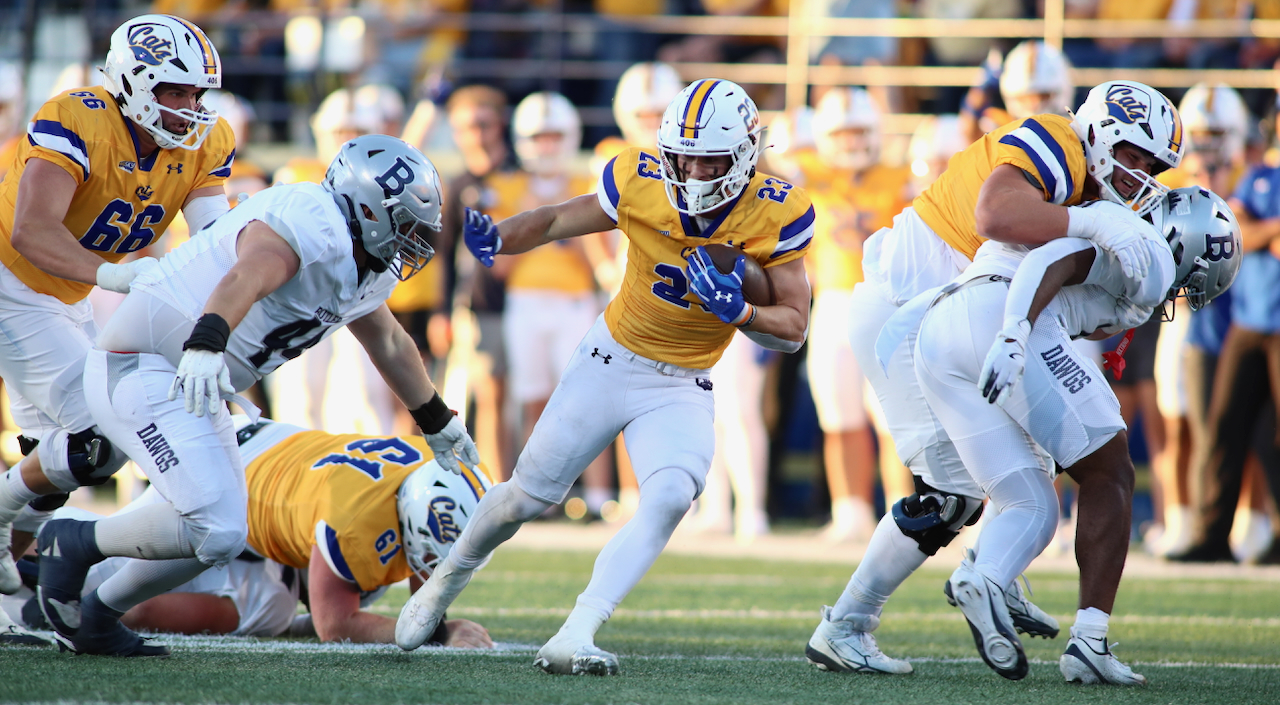
The two main triggers in MSU’s run game have been Lamson and running back Adam Jones. Jones has excelled against UM and in just three games, he’s run for 376 yards – third most by any running back in Cat-Griz games – on just 50 carries. In 2024 he broke the game open with an 88-yard run to set up a touchdown. Last year in the semifinal game he ran for 131 yards and scored twice, including on a jaunt from 54 yards out.

“Well, Adam Jones and Justin Lamson are really good players, great players in their own right, and so they present a huge challenge for us,” Kennedy said. “Our defensive line and linebackers have to step up because their offensive line is very talented. Also, I think about their tackle, Titan. I mean, he’s a big guy and he’s very talented. We talk about the emotions. I think there’s good players on both sides. I just think it’s the team that makes the fewest mistakes and takes advantage of their opportunities [that’s] going to win, but they’re definitely a quality opponent. We have a lot of respect for them.”
The Bobcats had just 56 yards rushing at halftime last week at UNC before turning it on in the second to finish with 227 yards, including all four scores coming on the ground. Backup running back Jared White has been a spark recently and he had 112 yards and a score on just 12 carries in the game. Stalwart Adam Jones surpassed the career 3,000-yard rushing plateau in that game.
“I think that an offensive line is interesting because it’s a team within a team, right?” Fleischmann said. “A lot of other position groups kind of do their own thing. They don’t need to be as cohesive and work well together as an offensive line does, and so I think that when you have an O-line that gets scrambled up each and every year, it’s hard to build that cohesion and trust, right? But once you do form it and once you do figure it out, it’s a pretty impressive, well-oiled machine, right? And so, we’re still trying to figure out how to get there. And as far as the pressure for this upcoming game, pressure is a privilege around here, you know. Like this game, being able to play with these guys, is one hell of a privilege, and I’m so glad I get to be a part of it. So, I think we’re ready to roll.”
Last season, the Bobcats and Grizzlies faced off twice with MSU winning both times, once in Missoula in a game to determine the BSC champion and again in Bozeman to determine who would advance to the NCAA Football Championship Subdivision national title game. Both games had nearly identical results as MSU ran for 240 yards on 44 carries in Missoula, then 241 yards on 42 carries in Bozeman.
“Especially in these high-pressure games, it’s fun to be able to run the rock and be able to do what you want,” Fleischmann said. “So that’s the ultimate goal, and being able to run the ball and stop the run is what we do around here. So that’s what we plan on doing for the rest of the season.”

Since then, the Grizzlies have seen longtime head coach Bobby Hauck retire after his second seven-year stint at the helm. With that, UM has made changes to its defensive approach and its defensive scheme, at least broadly. Gone is the 3-3-5 (sometimes), replaced by a multiple, diverse, sometimes confounding multiple-front, multiple coverage scheme under DC Eric Sanders, who spent the two previous seasons at Eastern Washington before joining Kennedy’s staff in February.
“It’s an interesting question,” Vigen said when asked about those changes. “I think it’s finding themselves philosophically. Quite an overhaul period, both with philosophy and staff, but not necessarily players. They’ve found their way back to a more aggressive style of defense as of late, and I think that reflects, ‘Hey, let’s figure out what our players do best,’ as opposed to, ‘Here’s what we’re going to do, and the players need to figure it out.’
“That does make it a little more challenging when a team isn’t who they are all the way through. We’re 11 games in, so you have that much of a sample size. We’ve got to do the best job we can of predicting how they’re going to play us. They’re not going to play us like Idaho State. We’re quite a bit different. And then there’s some piece that, hey, we’ve got to do what we do, and however they line up, we’ve got to be on the same page. It’s very rare that a team does exactly what you think they’re going to do, especially as multiple as defenses are in our conference. So our ability to adapt and adjust is probably as big as anything in a week like this.”
While Lamson is more of a passer than what the Bobcats had prior to his arrival, he’s still a serious threat running the ball and ran for 51 yards and two long (16 and 17 yards) touchdowns against UNC last week. MSU needs that to be able to deal with the blitzing.
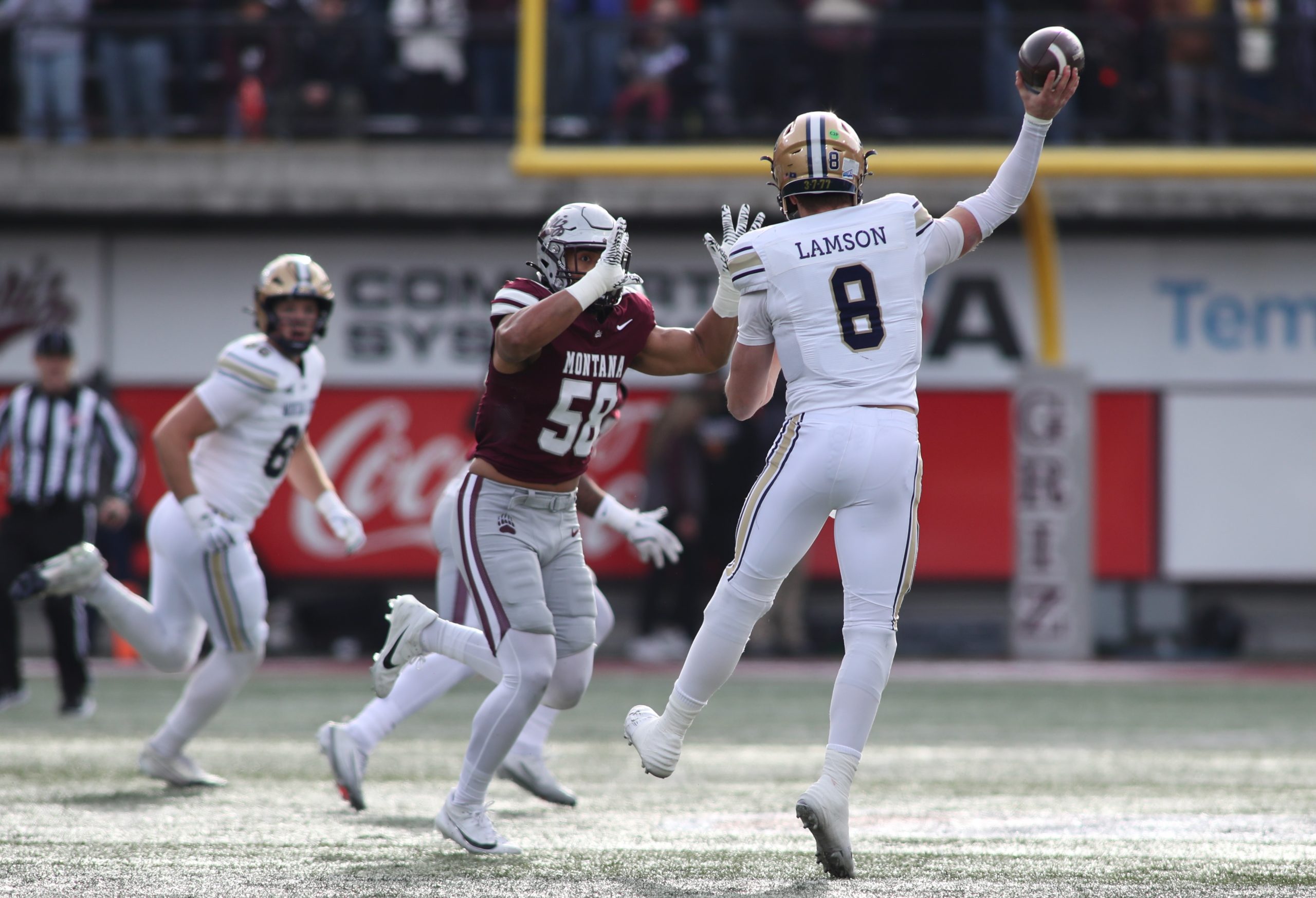
“Ideally, he’s not having to run around with his head cut off or run around for his life or anything like that,” Vigen said. “But if he has to, there is ability to make a play there, and that showed up a couple times this past Saturday. We have to protect him the best we can, but there are the unscripted plays that do come up over the course of a game, and I think he definitely has the capability of making those. I do think that’s a key aspect to us having success.”
“He’s a threat both throwing and then also running,” Kennedy said. “I mean, he’s a big, strong guy. Obviously, he made some plays against us in the past, but he’s kind of a two-headed monster. He does things, and he does them well.”
Lamson also completed 24 of 28 passes for 246 yards against UNC.
Kickoff for the 126th Brawl of the Wild is set for noon this Saturday at Bobcat Stadium.
Cat-Griz gallery