


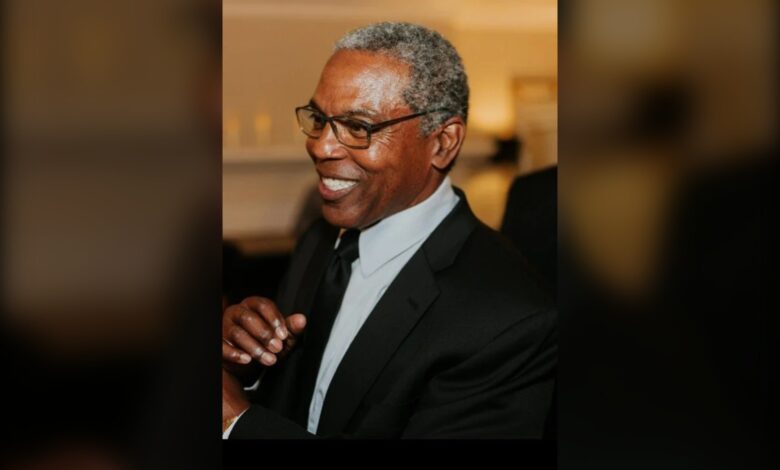
Editor’s Note: This biography was originally written for the Montana Pro Football Hall of Fame Class of 2026. For more information on the HOF, visit https://www.mtfootballhof.com/

Dan Davies remembers the nearly-instant transformation.
“In 1982, when Doug Graber became head coach,” said Davies, Montana State’s receivers coach during Graber’s lone season leading the program, “we became much more focused on the pass game. And Tony (Boddie) was a big part of that.”
Graber arrived at MSU after a brilliant career as a defensive assistant, and he instantly spotted Boddie’s potential as a threat in every area of offensive football.
“It did not take long in spring ball to figure out that Tony could be a walking weapon in the passing game because not only did he have great hands but he had great instincts as well,” Graber said.
Montana State was a program in transition entering the 1982 season, shifting from a decades-long run-oriented mindset to Graber’s pro-style offense. Boddie stood at the intersection of those two philosophies. The senior from Bremerton, Washington, had led the Cats in rushing as a sophomore and junior.
“We had been more of an I-formation team” in previous seasons, Davies said.
Boddie’s ability to transition and show versatility not only led to a huge senior year, but likely extended his football career. Which, in turn, led him to this year’s induction into the Montana Pro Football Hall of Fame.
In the Bobcats’ modernized offense more than four decades ago, Boddie thrived. He rushed for 790 yards, a slight dip from his 824 yards as a junior, but his overall productivity rose drastically as a senior. After compiling 13 receptions in his first three seasons at MSU, he caught 50 passes for 637 yards and five touchdowns as a senior.
“He was a power runner inside and outside,” recalls MSU’s legendary play-by-play broadcaster Dean Alexander, “but he was a good pass-catcher and receiver. He was a strong, efficient, smart runner who read defenses well.”
While Boddie’s physicality as a ball carrier turned heads, Graber saw something more. “He was the classic NFL-style back,” he said, “and he was a great blocker, as well.”
“He was the classic NFL-style back, and he was a great blocker, as well.”
Former Montana State head coach Doug Graber
After consecutive losing seasons in 1980 and 1981, the Cats bounced back to finish 6-5 in ’82. Boddie’s sensational season led the way, as Montana State finished in a three-way tie for the league title.
“Tony was a huge factor in us winning a share of the Big Sky championship,” Graber said.
Boddie parlayed those gifts and a notable work ethic into a productive professional career. The 6-foot, 195-pounder played for the Los Angeles Express of the USFL from 1983-85, rushing for 642 yards and four touchdowns while playing for one of the upstart franchises in an upstart league that abruptly dissolved the following year.
Boddie landed with the Denver Broncos in 1986. He played in just one game that fall, but played in five regular season games in 1987, scoring his lone NFL touchdown in a Week 13 win over the New England Patriots. Boddie also played substantial snaps during the Broncos’ playoff run, which culminated in an AFC championship and their first trip to the Super Bowl. Boddie was a pregame captain in Super Bowl XXII against the Washington Redskins.
Just as he’d seemed to entrench himself in NFL, though, everything changed.
“I injured my back,” Boddie said, which, he said, “just impacted me.” After that career-ending injury, “I couldn’t watch football for four years. I was frustrated that I was no longer part of it. I think it was a mental thing, and I think if you were to ask other players, they would probably say something similar.”
Boddie was in line to be the starting running back for the Broncs before suffering the injury in the 1988 preseason. He was eventually released by the Broncos and never appeared in another NFL game.
During that time Boddie said he felt “hurt” both physically and emotionally, nothing like the player who as a Bobcat seemed indestructible. Earlier in his professional career, coaching legend Sid Gillman told him, “Boddie, you’re the best player on this (LA Express) team,” while Broncos general manager John Beake told him that if he was “a little bigger and a little faster you’d be a star.”
Boddie’s path to the game of football was paved by his mother’s passion for the sport.
“She loved sports,” he said. “I’d never seen my mom do any athletics at all, never saw her run, never saw her play any sports, I don’t think she played any sports as a kid, but she loved watching football. Her love for football led the family to watching it with her on Sundays. We used to watch Gale Sayers and Jim Brown, and at that time whenever I ran against kids in the neighborhood I was always one of the fastest.”
Bringing all-state credentials with him from Bremerton High in western Washington, Boddie starred for the Bobcats. He led the team in rushing for three seasons, earning First Team All-Big Sky and Honorable Mention All-America honors as a senior. His 1,427 all-purpose yards as a senior was third-most in school history to that point, but he became the first Bobcats to record over 600 yards both rushing and receiving in the same campaign.
His speed, versatility and finesse as a pass-catcher notwithstanding, Boddie’s foundational characteristic was power running.
“The best word that describes him is tough,” Graber said. “He was as hard-nosed as any back that I have been around . He was a very good teammate and super competitive. He was just as likely to run over you as put a move on you. He played hurt and was incredibly productive.”
“The best word that describes him is tough. He was as hard-nosed as any back that I have been around.”
Former Montana State head coach Doug Graber
Boddie’s sensational senior season led to an invitation to that era’s version of the NFL Combine, issued by the Dallas Cowboys. But at the same time, a new opportunity emerged in the newly formed United States Football League (USFL). Boddie was star-struck, and the interest was mutual.
“So I flew down to Los Angeles,” he said, “and if you’re 22, 23 years old and you go down to Los Angeles and see Hollywood, the first thing you think is opportunity. Here’s an opportunity to not only play football but maybe something outside.
In Boddie’s mind, though, the decision wasn’t as clear-cut as picking one league over another. His choice traced to a storm that had brewed in his life for some time.
“I’m ashamed to talk about, but when football was over at Montana State, education did not become a priority,” he said. “It was more partying, it was drugs and alcohol, so my grades continued to slip. I didn’t know at the time that I could have left school and still been part of the NFL Draft and invited to the combine, so I thought, I’m going to get myself in trouble with the things I’m doing, I’m not going to class, I’m not studying, I’m using drugs, I’m just not doing the things I should be doing.”
So rather than enter the NFL Draft process, which likely would have landed him as a fourth-to-sixth round draft choice, he went against the advice of his parents and signed with the LA Express. “Since I made that decision,” he said, “all I could do was make the best of it.”
Boddie thrived with the Express in 1983. He carried 109 times for 403 yards, both marks second-best on the team, and scored three touchdowns. He caught 46 passes for 434 yards, and his 837 all-purpose yards led the team. One season later, though, adversity arrived in an unexpected form.
“After the first year, when I started, we had a change in ownership,” he said. “They started bringing in marquee players,” and the addition of UCLA star Kevin Nelson and NFL veterans Mel Gray and Kevin Mack to the backfield forced Boddie into a different role. “I was switched from tailback to H-back, so now I’m the motion guy, catching balls out of the backfield.”
Boddie caught 20 passes and carried just 16 times in 1984. In 1985, Boddie carried 49 times and caught 17 passes. And then, the league collapsed. The lives of USFL players were turned upside down. “Everyone was a free agent,” Boddie said.
The league’s players found teams willing to try them out, and the Los Angeles Raiders were that team for Boddie. The glut of incoming talent created training camps of “135 or 140 players,” he said. “It was unbelievable. There were players that after a few practices were just gone.”
That, as it turned out, was Boddie’s fate. With the Raiders, “I did very, very well” in the summer of 1985, between the USFL’s spring season and the NFL’s fall campaign, “and they let me go” before veterans such as Marcus Allen even arrived for the main portion of training camp. “They told me, ‘We want to give you an opportunity to make another team.’”
The news crushed him. “Mentally I just collapsed,” he said. “Being released by the Raiders was the very first time I’d ever been rejected in the game that I love, football, and when the Raiders (cut him)” he passed on other opportunities to play during the 1985 season. “I told Denver that I don’t want to play that year but that I would come to training camp the next year.”
Boddie calls that “not the only poorest decision that I’ve ever made” with a laugh, but he honored his promise to return in 1986 and made the team. He played in one game that season before earning an expanded role in 1987. He played in five games, carrying three times and catching nine passes. Late in the season, though, he positively impacted the Broncos’ special teams units. His reward was a place in history as the team’s special teams captain for the Super Bowl.
“I was nominated to be the special teams captain for the Super Bowl because of my performance in the AFC Championship Game against Cleveland,” he said. “That was quite the honor.” Broncos owner Pat Bowlan rewarded Boddie and his wife with a trip to Hawaii after the season.
“I was nominated to be the special teams captain for the Super Bowl because of my performance in the AFC Championship Game against Cleveland. That was quite the honor.”
Tony Boddie
He couldn’t have known it then, but Boddie was just months from the end of his career. “One day in the weight room we were doing dead lifts and when I lifted up I heard a snap in my back,” he said. “There was a little pop. The next morning I could hardly move it hurt so bad.”
Broncos publications indicated Boddie was in competition for starting honors at running back as training camp began, but three practices into camp the team released him. “I got calls from a couple other teams, I returned the calls, but I never got invites to other camps and at that point I knew I was damaged goods due to my back.”
At that same time, Boddie visited a neurologist. “He looked at (his back) and the X-rays said, ‘If I were you I probably wouldn’t play any more. One hit could end your career.”
That confluence of events led Boddie to retire. It also led to considerable reflection and self-reckoning. And that led him back to the classroom to finish what he had begun in Bozeman.
“In my mind I was thinking that I need to play (to survive) financially, but I re-thought that because my back was messed up and no team was giving me an opportunity,” he said. “My career’s over, so what am I going to do? So I went back to school. I went to the University of Washington, I had a year-and-a-half to finish my degree in business, and I finished my degree.”
For five seasons as a professional, Boddie displayed the same toughness and resolve he’d shown in the Blue and Gold.
“I watched him once in person in pro ball,” Graber said, “and it was the same old Tony.”
One of the things that eased his path into retirement was that, during his football career, he controlled the things he could control in a positive way. “That is one of the things that I am very proud of,” he said. “When my career ended it was because of an injury, it wasn’t because of talent. One of the things I really took pride in was taking care of my body, my physical condition. I pretty much lived in the weight room.”
He was known as one of the hardest workers in the Bobcat program on the field and in the weight room, and was a team captain as a senior. Years later, he was named the “best-conditioned and pound-for-pound strongest athlete” during Denver Broncos training camp in each of his two seasons with the club. After graduating he applied those traits to the business world, enjoying a successful career as a sales manager with Nestle in the Seattle area.
One regret gnawed at him through the years after his retirement from football, though, and that was letting partying and alcohol and drug use distract him from his education at MSU. Over time, he found a way to turn that negative into a positive by helping young students, particularly athletes, learn from his mistakes.
“I knew I was doing things I should not be doing” late in his time in Bozeman, he said. “When I walked past the podium at the University of Washington graduation, I said to myself that I need to share this message. Every young kid can do this. There are a lot of people to help you if you’re not afraid to ask for help.
“Every young kid can do this. There are a lot of people to help you if you’re not afraid to ask for help.”
Tony Boddie
“You might want to be a professional athlete or whatever your dream is,” he tells students, “but the odds are against you making it to the highest level. But you can do more if you get your education, so I preach the importance of staying in school and finding a way to go to college and get your degree. All four of my children graduated, with two of them (earning) their master’s (degrees) and one is working toward her doctorate in pharmacy, and that makes me prouder than anything.”
LISTEN & WATCH
WATCH: Tony Boddie on his induction into the Montana Pro Football Hall of Fame.
