


Fall CampFootballMontana State

Young, aggressive cornerbacks help diversify Bobcat defense

BOZEMAN — With an efficient and competitive field general moving the sticks, a bruising running back with top-notch vision softening the pocket and a world-class athlete stretching the field, the 2011 Bobcats moved the ball up and down the field with a balanced attack that sparked Montana State to a second straight Big Sky Conference championship.

In 2012, quarterback DeNarius McGhee returned to earn his second Big Sky Offensive Player of the Year award in three seasons and Cody Kirk returned as a 1,000-yard rusher. Although burner wide receiver Elvis Akpla graduated, the Bobcats still had steady possession pass catcher Tanner Bleskin.

Each of Montana State’s last two league championship seasons ended against the same foe. For two straight years in the quarterfinals of the FCS Playoffs, Sam Houston State’s spread option offense, but more importantly, the Bearkats’ long, lean and smothering defense harnessed the Bobcats.

Defensive backs like Daxton Swanson and Darnell Taylor used their length and physicality to smother Akpla and Bleskin at the line of scrimmage. The man coverage scheme allowed the Bearkats to blitz aggressively and stack the box, in turn bottling up Kirk and Tray Robinson, rendering the Bobcat offense stagnant in a pair of season-ending playoff losses.

[restrict paid=”true”]

Prioritization of defensive length showing for ‘Cats

Six years later as Montana State tries to build itself back into a champion under third-year head coach Jeff Choate, the Bobcats are starting to look similar, at least physically, as those Bearkat teams. Although Choate was coaching linebackers at Boise State in 2011 and Washington State in 2012, he and his staff have put a high priority on recruiting length defensively similar to the blueprint Sam Houston used to qualify for the national championship game in 2011 and 2012.

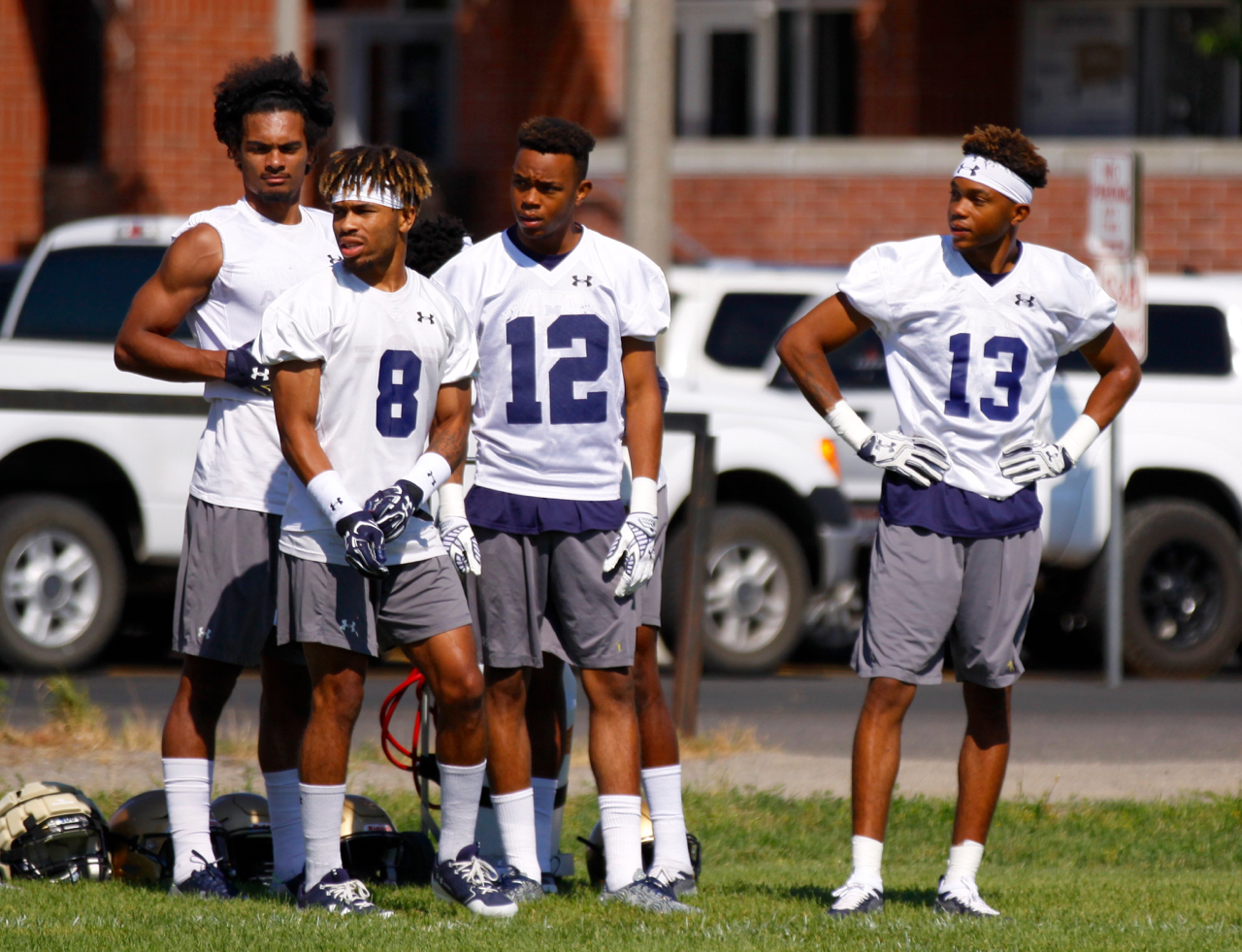
Montana State cornerback Ty’Rese Gibson (13)/by Brooks Nuanez

That recruiting strategy doesn’t stop in the front seven for the Bobcats. It has trickled into the secondary as well. Sophomores Jalen Cole and Tyrel Thomas, two of MSU’s prized recruits in Choate’s second recruiting class, do not fit the mold. The pair of 5-foot-8 former Trinity League standout cornerbacks from Southern California make up for their lack of height with fierce competitiveness and the ability to engage in verbal combat, something Choate relishes in his defensive backs.

This past recruiting cycle, Choate and secondary coach Mark Orphey fervently pursued length, adding Ty’Rese and Ty’Rhae Gibson, twins from the Los Angeles area who stand 6-foot-1. The Bobcats also signed Greg “Munchie” Filer III, a 6-foot-1 press corner out of Compton College.

“We are much more athletic in the secondary,” Choate said. “That was one thing that stood out to me immediately in this camp. Breaking on balls, active, very long. That’s what we want.

“We don’t run a lot of man, or we haven’t in the past but that’s something we feel like we can do now,” Choate continued a few days later. “It should help all aspects of our defense.”

The ability to play man coverage on the back end — partly because of the aggressiveness of the young corners and partly because of moving 6-foot-2 former inside linebacker Brayden Konkol back to strong safety and adding former Virginia Tech transfer Jahque Alleyne at free safety — will diversify defensive coordinator Ty Gregorak’s play calling.

Since Choate took over, the Bobcats have been on a quest to recapture the elite pass rush that led the stout defenses of those most recent championship teams. Caleb Schreibeis, Brad Daly and Zach Minter chased quarterbacks and put up gaudy sack numbers during MSU’s 2010 to 2012 stretch that included three consecutive Big Sky championships. But the savvy play of Mike Rider, Jordan Craney, Joel Fuller, Darius Jones and Deonte Flowers on the back end also spurred on the sack attack.

If the talent upgrades in the Bobcat secondary can turn potential into production, MSU is sure to see its total of 30 cumulative sacks in Choate’s first two years increase.

Montana State cornerback Greg ‘Munchie’ Filer III (1) lined up on wide receiver Johnny D’Agostino (88)/by Brooks Nuanez

“I think playing man is going to be huge for us, especially being able to get into some four to five-man pressures,” MSU junior defensive end Derek Marks, a Belgrade native who led the Bobcats with four sacks, said. “When we are in three-down (defensive line), a lot of it is keeping the quarterback contained, which shouldn’t be an excuse for us up front. We should be able to get there. But it definitely helps when you have more guys to get there and being able to run more man coverage will help us out tremendously.”

Montana State’s wide receivers are a largely unproven group. Junior captain Kevin Kassis has 30 catches in his career entering 2018. Senior John D’Agostino and sophomore Lance McCutcheon, a pair of Bozeman products, are the only other players on the roster with game experience.

The group might be green but they have noticed early on the uptick in competitiveness and hunger to take the ball away from Montana State’s upstart defensive backs.

“They are really fighting for the ball more, which is good to see,’ D’Agostino said. “It makes it harder for us but it makes us better, too.”

Choate has constantly preached that verbal combat — in layman terms, trash talking — is a good thing that ups the level of intensity. The five California corners and Alleyne, who hails from notoriously hard-edged Virginia Beach, Virginia, have set the pace in jawing every day.

“I know we are the Cats but we needed some dog in that room,” Choate said. “We’ve needed it for awhile. You have to have a certain mindset to play specifically corner. Get up and press, let’s go, you beat me.

Montana State cornerback Ty’Rhae Gibson (12)/by Brooks Nuanez

“What you are trying to do is get into the wide receivers’ head. And the wide receiver is trying to get into your head. That’s the game within the game that probably not a lot of fans truly appreciate.

“The greatest programs I’ve been a part of and the most elite players I’ve been associated with, they used verbal combat more than anybody. That got them going. They were trying to intimidate, they were trying to send a message. We haven’t had a lot of that around here.”

Kassis, a tempered and steady leader but not necessarily a trash talker, has noticed the uptick nine days into fall camp.

“They are all pretty good at it,” Kassis said with a smile. “It makes it more competitive and that’s something Coach Choate wants to make us more competitive. Nothing said is personal but it makes it more game-like. People are going to be talking on Saturdays so any ways we can make practice more game like is an advantage for us.”

Alleyne claims he is the pace-setter and “the worst one” when it comes to the war of words. But Choate has seen the young twins set the tone.

“The Gibsons are the ones,” Choate said with a laugh. “They are the inciters. When Jahque is being the peacemakers out there…(laughs) and half the time, the twins are fighting each other. I think it’s awesome. It elevates the level of excitement, competition and energy within both of those rooms.”

Montana State safety Jahcque Alleyne (5)/by Brooks Nuanez

Montana State’s sack numbers have been pedestrian — MSU’s 17 sacks ranked 11th in the 13-team Big Sky — but so have the takeaway numbers. MSU’s 12 takeaways ranked last in the league, as did the Bobcats’ five interceptions, down from 10 picks in Choate’s first season.

Part of MSU’s low interception total comes from the fact that Gregorak’s coverage schemes last season emphasized making other teams “earn it”, Choate said. The Bobcats max dropped often in order to not let receivers get over the top of the secondary. Now with long corners who have the ability to press and play man coverage, big plays might occur more often but pressure up front, smothered opposing receivers and more takeaways could also be byproducts. Or at least the Bobcats hope that’s the case.

“I feel like it’s a lot easier defensive when safeties can play man because I know a lot of safeties who really can’t play man,” Alleyne said. “I think that gives us an advantage. If we can consistently play man, we can be pretty good on defense.”

[/restrict]

Photos by Brooks Nuanez. All Rights Reserved.

Colter Nuanez

Colter Nuanez is the co-founder and senior writer for Skyline Sports. After spending six years in the newspaper industry with stops at the Missoulian, the Ellensburg Daily Record and the Bozeman Daily Chronicle, the former Washington Newspaper Association Sportswriter of the Year and University of Montana Journalism School graduate ('09) has cultivated a deep passion for sports journalism during his 13-year career covering the Big Sky Conference. In August of 2014, Colter and brother Brooks merged their passions of writing and art to found Skyline Sports.
Back to top button