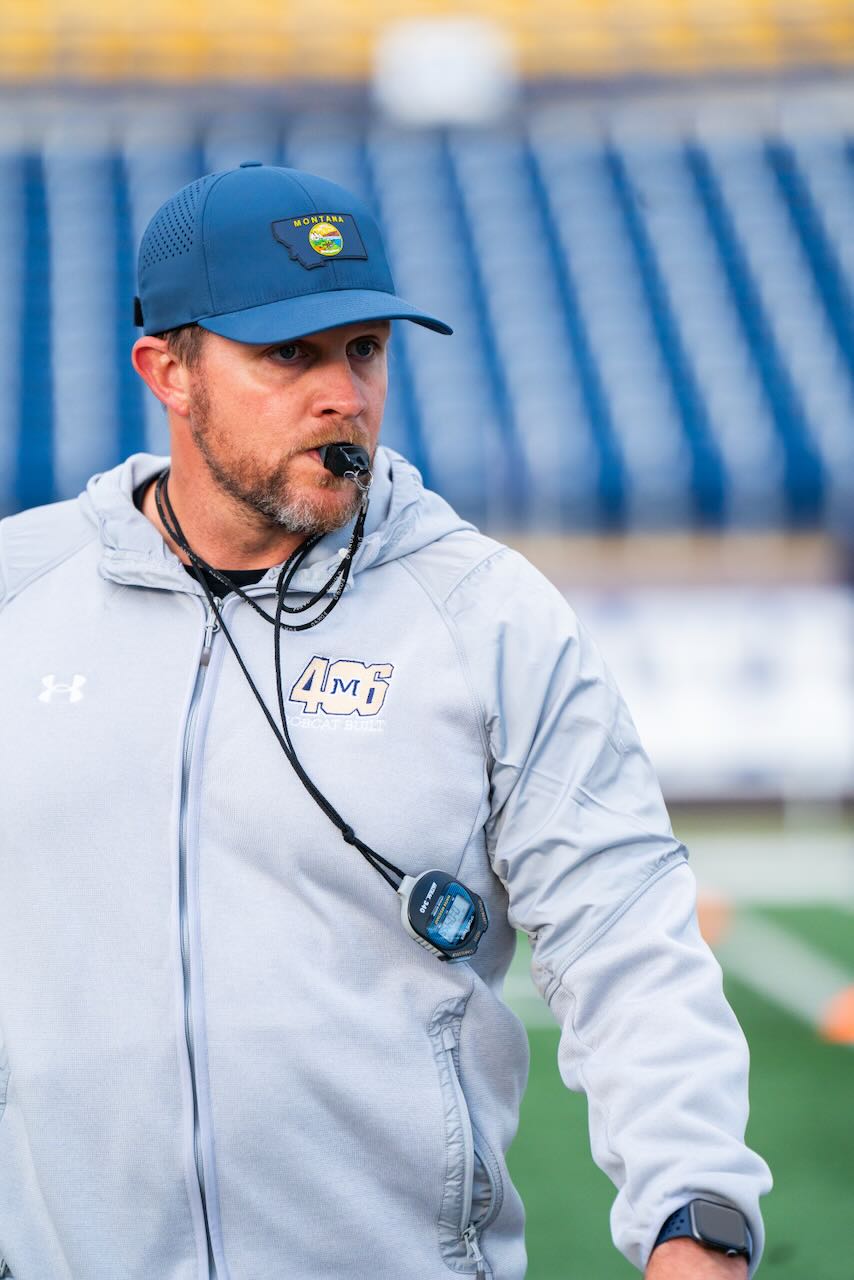
BOZEMAN, Montana — The architect watched and monitored as his collection of protégés turned the heads of NFL scouts from more than half the teams in the most competitive football league in the world.
A kid from Butte soared 42 inches and ran a sub-4.4-second 40-yard dash. A kid from Melstone ran a 4.54-second 40 at 245 pounds while repping 225 pounds 25 times on the bench press. A 300-pound offensive lineman from Billings even hit 34 inches on the vertical leap.
Tommy Mellott, the kid from Butte, was the show, and the architect knew it. He’d touted Mellott as one of the top athletes in college football for years. The architect had seen him work. He’d seen him test. He knew.
So when one of the great running quarterbacks in FCS history ripped off a 40-yard dash like few ever run by a Big Sky Conference football player, most of those same scouts in Bozeman compared the eye-popping times on their stopwatches in real time, awe written across their faces as the numbers consistently flashed in the 4.3s.
As Montana State’s incredibly decorated 2024 senior class showed its stuff, the architect looked on from the shadows of the Bobcat Athletic Complex, admiring his work from behind the scenes. Melstone’s Brody Grebe and Billings Central’s Marcus Wehr ultimately fell short of the league, but Mellott, Butte’s favorite son, is one of the greatest litmus tests for the architect’s tactics.
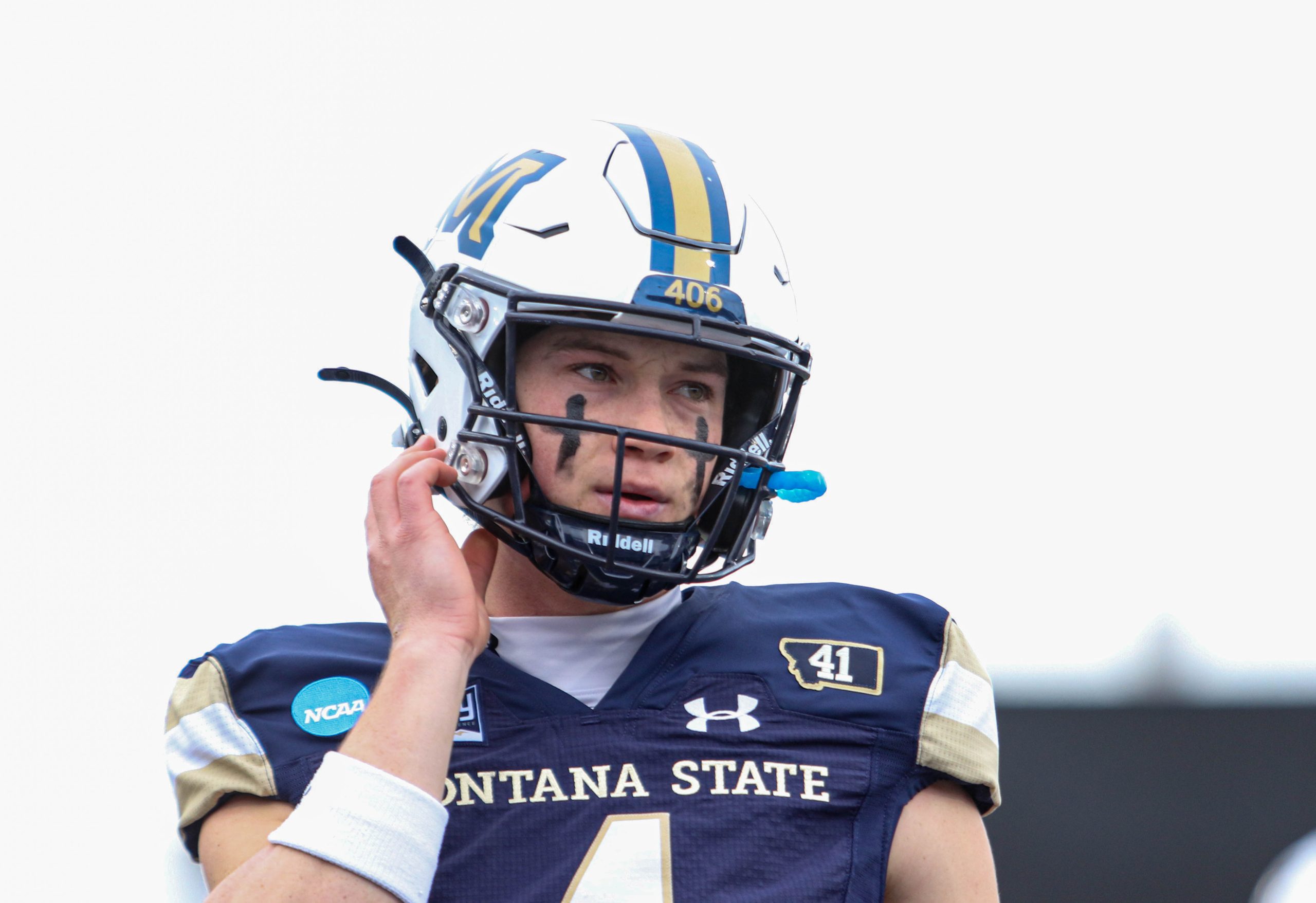
Few thought Mellott could play quarterback in the NFL. It didn’t matter. Mellott transformed from a tweener to an NFL Draft pick after being built into a touchdown-scoring machine at Montana State.
That’s the influence of the architect.
That’s Sean Herrin.
“I trained at a premier facility, and honestly, what Coach Herrin did with us at Montana State was as elite as anybody,” Mellott said after getting drafted by the Las Vegas Raiders as a wide receiver in the sixth round of the NFL Draft.
Hulking offensive lineman Titan Fleishmann felt like one of the busted toys in “Toy Story,” an afterthought who had been cast out to the junk pile. He was broken physically but still had plenty of desire mentally. He was a forgotten man among Montana State’s stockpile of FBS-caliber offensive line talent.
That is, until he wasn’t.
He rebuilt his body and his mind, transforming himself into an All-American.
The architect and the repairman: Sean Herrin.
“There was a point where I was forgotten about, broken, and I was just going to be a backup guy. And Coach Herrin never lost faith in me,” said Fleishmann, a two-time All-Big Sky selection and a team captain. “That means a lot to me. I think he’s the greatest strength coach in America.”
Paul Brott came to Montana State as a 220-pounder who was a project if he wanted to make an impact on the defensive line, even if he stayed at end. To play inside, he would have to put on approximately a small person’s worth of weight.
He did it, and he did it fluidly, getting up to as much as 308 pounds for his All-American senior season. He’ll be the first to tell you that he moved better last fall at more than 300 pounds than he did when he weighed 270 to 275 pounds roughly two years ago.
The architect, the repairman and the mobility master: that’s Sean Herrin.
“I could’ve never gotten on the wall (as an All-American) without Coach Herrin and his belief in me,” Brott said in December.
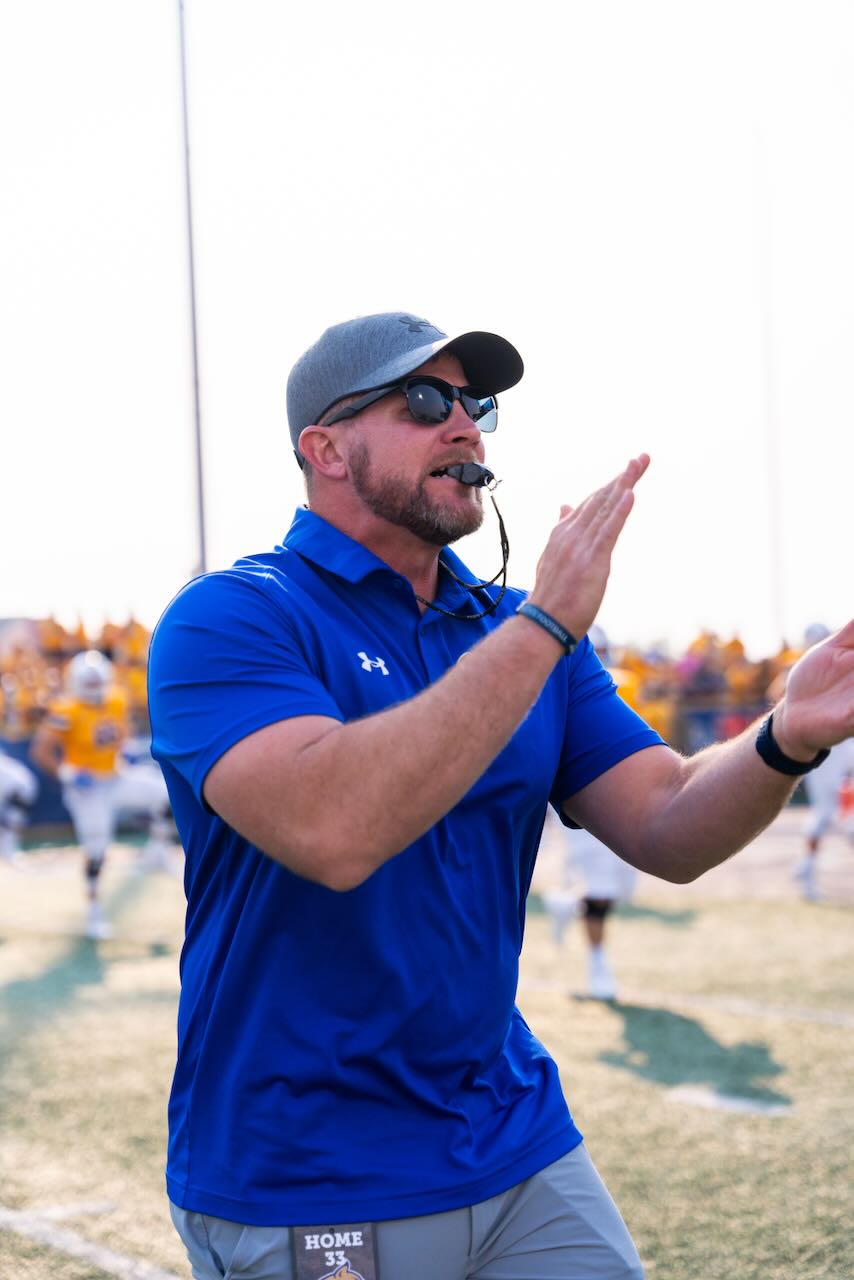
Adam Jones came to Montana State as a slashing scatback who showed flashes of his athletic upside but had struggled with injuries during his high school football career at Missoula Sentinel. He had spent his offseasons playing hockey and baseball, so no one knew how fast he really was. And many wondered if he could endure the grind of being a Division I running back.
After grinding out a stellar freshman season that saw him rush for nearly 1,200 yards and finish as the runner-up for the Jerry Rice Award — given to the top freshman in the nation — Jones had offseason surgery. As a sophomore, he again rushed for more than 1,100 yards and led Montana State with 17 total touchdowns as MSU won its first national title in 41 years.
Jones credits Herrin for helping him build up his armor in order to endure more than 400 offensive touches over the last two years.
“(Herrin) has our respect because of his character as a person, his morals,” Jones, also a captain, said during the 2025 season. “He demands a lot, but he also cares so much about us. He’s willing to do whatever it takes to get us to develop as quickly as we can. It’s easy to see that. When someone cares that much about you, it motivates you to work that much harder.”
Braden Zimmer came to Montana State as a tall, skinny kid whose best prep moments came on the basketball court. He arrived at MSU at about 230 pounds. After a redshirt season that saw him gain more than 60 pounds, he was thrust into the starting left tackle position as a 19-year-old.
Zimmer earned Freshman All-American honors and was the highest-graded offensive tackle in the FCS.
His position coach, Matt Smith, certainly deserves credit for coaching him up. But the physical development that allowed Zimmer to be ready to take the field — that’s all Sean Herrin.

You get the point.
As now-former Montana State defensive coordinator Shawn Howe says, Montana State’s strength and conditioning coach “is our secret sauce.”
Brent Vigen, Montana State’s fifth-year head football coach, does not mince words when asked about Herrin, a Helena native who played on three NAIA national championship teams at Carroll College during the mid-2000s.
“I’m not going to say this lightly: he’s the most important piece. He is,” Vigen said days before the national championship game in Nashville, Tennessee. “I know he’s not out there calling the plays, but without Sean and the work he’s done, we wouldn’t be where we are right now.”
Of course, Montana State summited the mountain a day after Vigen expressed those sentiments, winning its first national title in more than four decades with a 35-34 win over Illinois State on Jan. 5.
And if you ask around, every person who is part of the 150-plus-person organization played a hand in the historic title. But every Bobcat mentions Sean Herrin without hesitation as one of the driving factors.
Montana State has had consistent success, at least within the landscape of the FCS in the West, for most of the 21st century. But playoff wins used to be tough to come by. Mike Kramer won or shared three league titles in four years and ended “The Streak.” Rob Ash won 70 games at Montana State, more than any Bobcat head coach before him, but he won only two playoff games and two rivalry games in nine seasons before he was abruptly dismissed following the 2015 season.
Jeff Choate took over in 2016 and returned Montana State to its bruising, ground-and-pound roots. And while Montana State was able to out-physical many teams, including the rival Montana Grizzlies, butt-whippings awaited every time MSU played a Dakota State squad.
North Dakota State, particularly, is an obstacle MSU has yet to overcome, despite the Bobcats winning the national title last season. NDSU’s ability to pile-drive opponents and dominate games physically helped lead the Bison to 10 national titles in 15 years before their rather unceremonious departure to the Mountain West after bowing out of the playoffs in the second round with a loss to Illinois State.
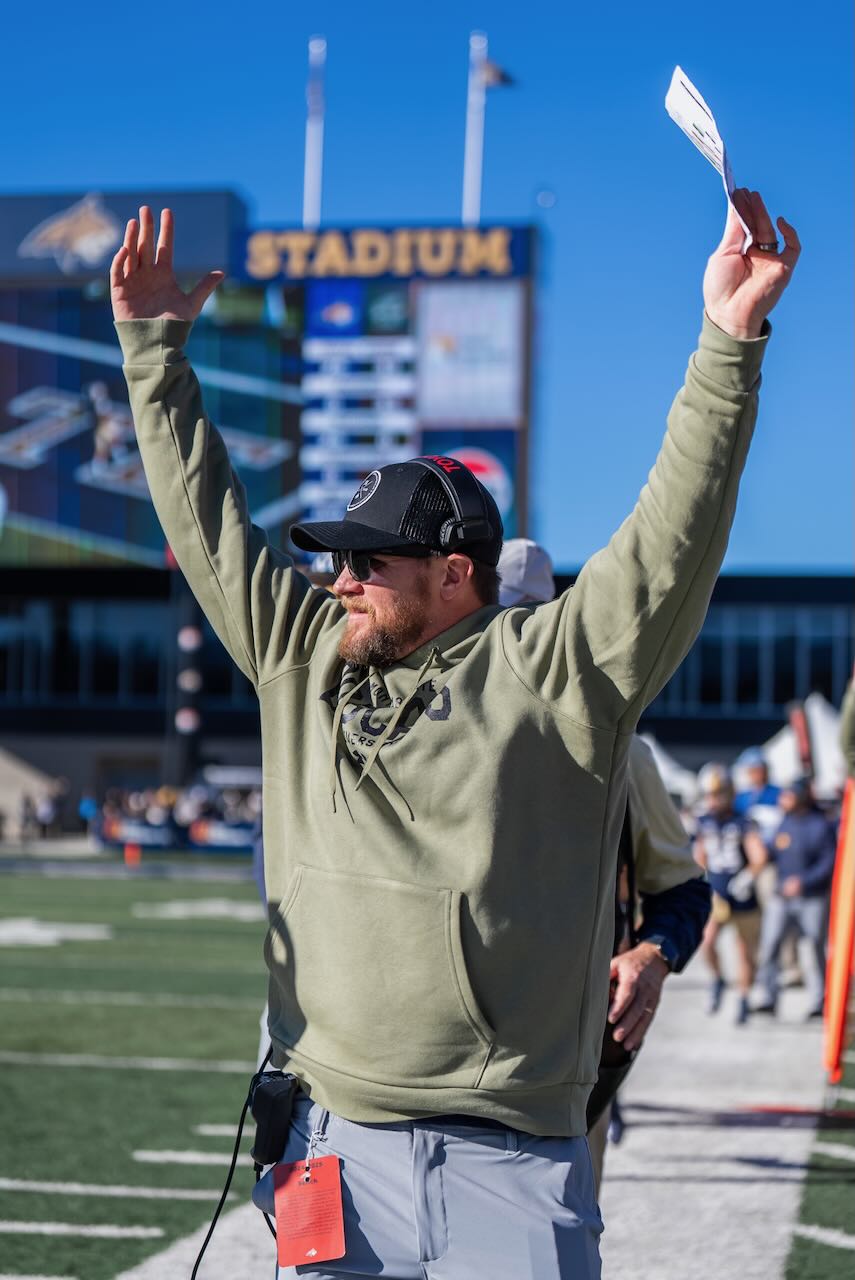
That Bison barometer and measuring stick was on Choate’s mind when he hired Herrin in the winter of 2020. Just a few months later, Choate bolted for an assistant coaching job at Texas. Vigen, an NDSU alum, took over with a mindset and a formula for how to get Montana State to the FCS mountaintop.
Herrin would be a huge part of it.
“There’s a lot of science that goes into strength training. And he’s cutting-edge as far as that goes. But there’s so much art that goes into what he does, too, and the impact he makes on all our guys. He’s the only one who coaches every single one of our guys every day,” Vigen said.
“I can’t tell you how much he means to me and how much he means to our guys. It’s clear to see his impact. I hope it’s visible on Saturdays when we go out there and we look the part a little bit more than we did when we first got here.”
Empowering Herrin, who has a bachelor’s degree in health and physical education, has paid off in spades. Whether it’s players like Mellott, Grebe and Wehr, or defensive end Daniel Hardy, linebacker Troy Andersen and defensive back Ty Okada blowing the doors off their NFL Pro Days; whether it’s players like Fleishmann resurrecting their careers after devastating injuries; or players like Zimmer and Brott packing on an unholy amount of poundage yet remaining fluid and agile, Herrin has been a revelation.
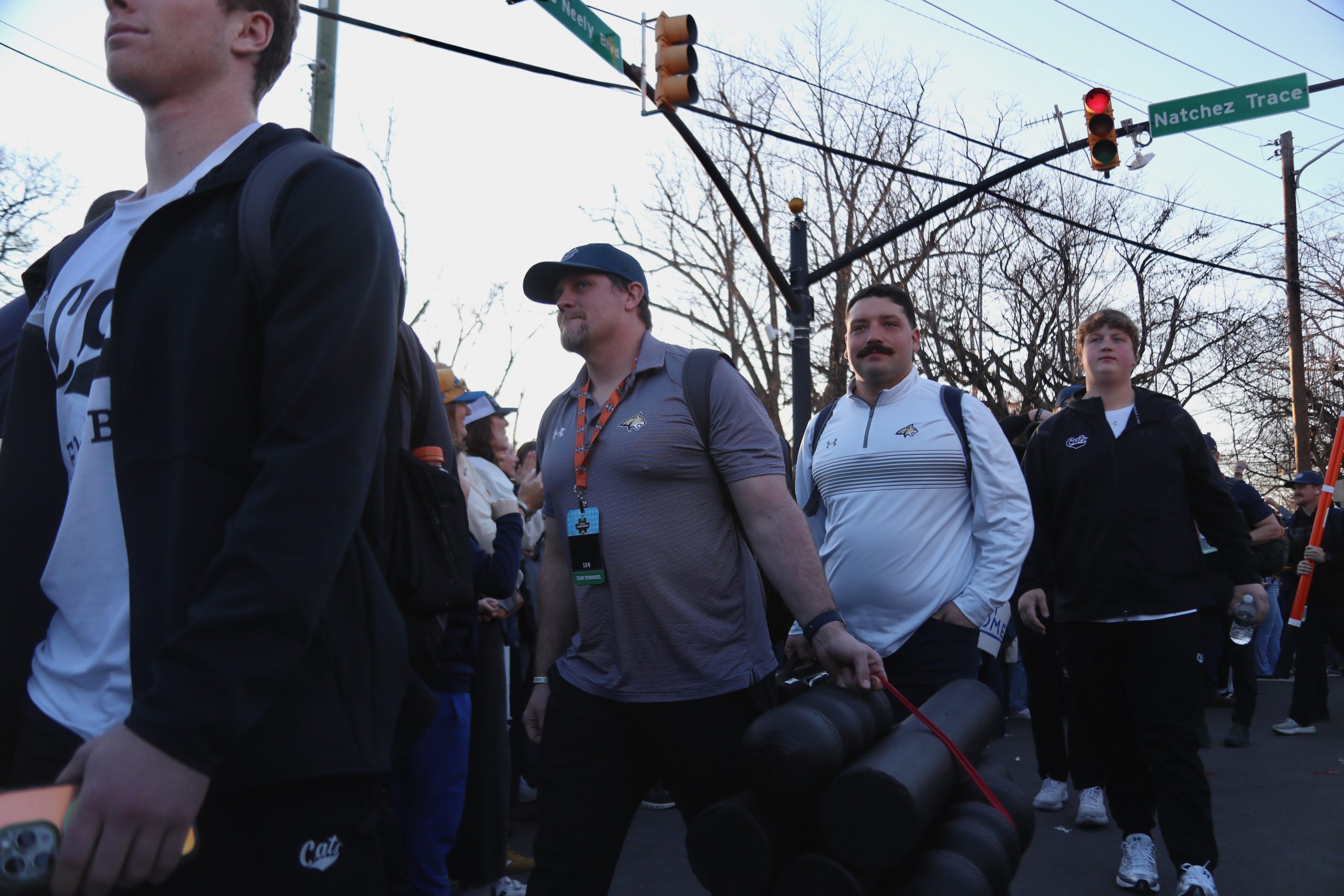
“Sean Herrin challenges everyone mentally. He challenges everyone physically. He’s around our guys all the time. He trains every guy differently to maximize their capabilities. He is a huge part of our program,” Howe said last season.
The diversity of lifting — whether it’s traditional Olympic lifts, explosion-based auxiliary lifts, or lifts where Herrin is measuring the speed and velocity at which each athlete moves the bar — is vast. Yet almost every tactic is readily available to any coach willing to do the research.
Herrin’s ability to personalize programs for every prospect, prioritizing mass demands, explosiveness, agility and health, is a huge part of his success.
But Herrin’s ability to challenge individuals and groups mentally is what makes him arguably the most impactful strength coach in the FCS, particularly now that legendary North Dakota State strength and conditioning coach Jim Kramer has retired after more than a quarter-century in his post.
The culture created in the weight room — “from working in the dark,” as Herrin always puts it — is a culture that carries over to the field. And that culture has helped Montana State get over the top.
It’s a culture honed in Montana’s capital city.
A day before Montana State opened Big Sky Conference play against Eastern Washington in late September, Carroll College honored its greatest four-year stretch as a football program. The Saints won six NAIA national titles under legendary head coach Mike Van Diest, including four in a row between 2002 and 2005.
Herrin, a Helena High alum, played for his hometown Saints, redshirting in 2004 and playing running back in 2005. He also won a national title in 2007. Then the Saints lost in the NAIA national title game in 2008, Herrin’s senior year.
That Friday night last September, the organizers debuted a documentary about Carroll’s vaunted four-peat called “The Book of Saints.” The thesis of the film is that Carroll College dominated not because of facilities or financial resources, but because of the pride and toughness of the players, most of whom hailed from Montana.
“That documentary talks a ton about how prideful kids from Montana are, why they are prideful, how those teams were close,” Herrin said during Montana State’s bye week in October.
Sound familiar?
Montana State’s 2025 roster featured 44 players from the Treasure State, including headlining captains like Brott, Jones, senior defensive end Kenneth Eiden IV and junior safety Caden Dowler, the Big Sky Defensive Player of the Year. Zimmer is from Billings. Stud wide receiver and punt returner Taco Dowler is also from the Magic City. Cole Taylor, a Great Falls product, was one of the breakout stars of the national title season during the linebacker’s first season in the limelight.
That’s just the beginning. Literally dozens of Montanans were among the central figures of MSU’s national title season. Each deserves a chapter in the book of success stories chronicling Herrin’s ability to maximize the development of athletes.
“I don’t think I really recognized how influenced my style and methodology are because of my time (at Carroll College). I see it now,” Herrin remembers. “There’s only been three college football programs in history, all levels, that have four-peated. Well, one of them is Carroll College. One of them is North Dakota State. And I think Augustana did it in Division III.”
(North Dakota State won five consecutive FCS titles between 2011 and 2015. Augustana won four straight Division III titles between 1983 and 1986.)
“Here at Montana State, you have a head ball coach that knows what that feels like and looks like. Vigen was an assistant at NDSU from 1998 until 2013. I know what that looks like. I know what it feels like. And that’s why I think Coach Vigen and my visions align.
“We know what it feels like when you have a good culture and when you have a good team. We also know how hard it is to be a team that, every time you play, there’s a target on your back.
“All of that history influences me big time.”
The championship pedigree also influences Montana State’s players. Although every player on the Bobcats is playing at a “higher” level than Herrin ever played, the fact that he was part of three national championship teams in 2004, 2005 and 2007 resonates with the MSU players, especially when he’s getting after them in the weight room.
There’s an authenticity to Herrin’s teaching methods and to his persona among the Bobcats. It’s why MSU is bought in at a national championship level.
“He’s so real with us and he’s done what we are trying to do,” Fleishmann said in December. “He’s a national champion multiple times over, so when he says, ‘This is how you do it,’ there’s a lot of guys who can go up there and say, ‘This is how you become a national champion,’ but until you’re a national champion, you don’t really know how to be a national champion.
“And he’s done it. Regardless of the size of football or how big the school is — that’s a bunch of bologna, in my opinion, anyways — if you are a national champion, you know how to get it done.”

From the time Herrin first joined the Saints as a redshirt freshman in 2004 until Carroll had a 28-game winning streak snapped with a 23-7 loss to Sioux Falls in the 2008 NAIA national championship game, Herrin was part of 65 wins and just five losses.
Herrin certainly remembers hoisting the trophy after a 17-9 win over Sioux Falls to cap an all-conference junior year with an undefeated national championship in 2007. He certainly remembers many of the wins other than that one, too. He also has sharp memories of the handful of losses, particularly the final one that ended his college career.
But the thing he remembers most is grinding.
He remembers getting up at 5:30 in the morning to endure Van Diest’s “torture tactics” with his teammates in pursuit of the ultimate goal. He remembers the “Saint 600” — players had to run 300 yards in a certain time, rest for one minute, then run 300 more yards, and “if you didn’t average a certain time, you didn’t get your pads,” Herrin said — and all the other drills that Van Diest and offensive line and strength coach Jim Hogan would put the Saints through before sunrise during the offseasons.
Herrin’s most vivid memories are the physically painful challenges he endured with his teammates. He knew that had resonated with the Bobcats during their pursuit of their first national title since 1984. And now that the Bobcats have won the national title, Herrin is back to chasing away complacency.
“There’s value in the grind,” Herrin said. “I know for a fact that our guys can’t stand running Peet’s Hill two or three times in a summer, but I know they are never going to forget it. It’s like a badge of honor you get to wear for the rest of your life.
“We have guys who will hit me up after they finish playing who ask to come watch. They want to be a part of the torture.
“The purpose is to push you to a limit that you didn’t think you had in you. That just gives you confidence. You do it as a group because you get to look around and see who is going to lay it on the line. It tells you a lot about your teammates. That can be a reality check for some guys. They can see if they are letting their teammates down based on how they performed in that finisher, that competition, that dreaded workout, and hopefully it lights a fire under them.”
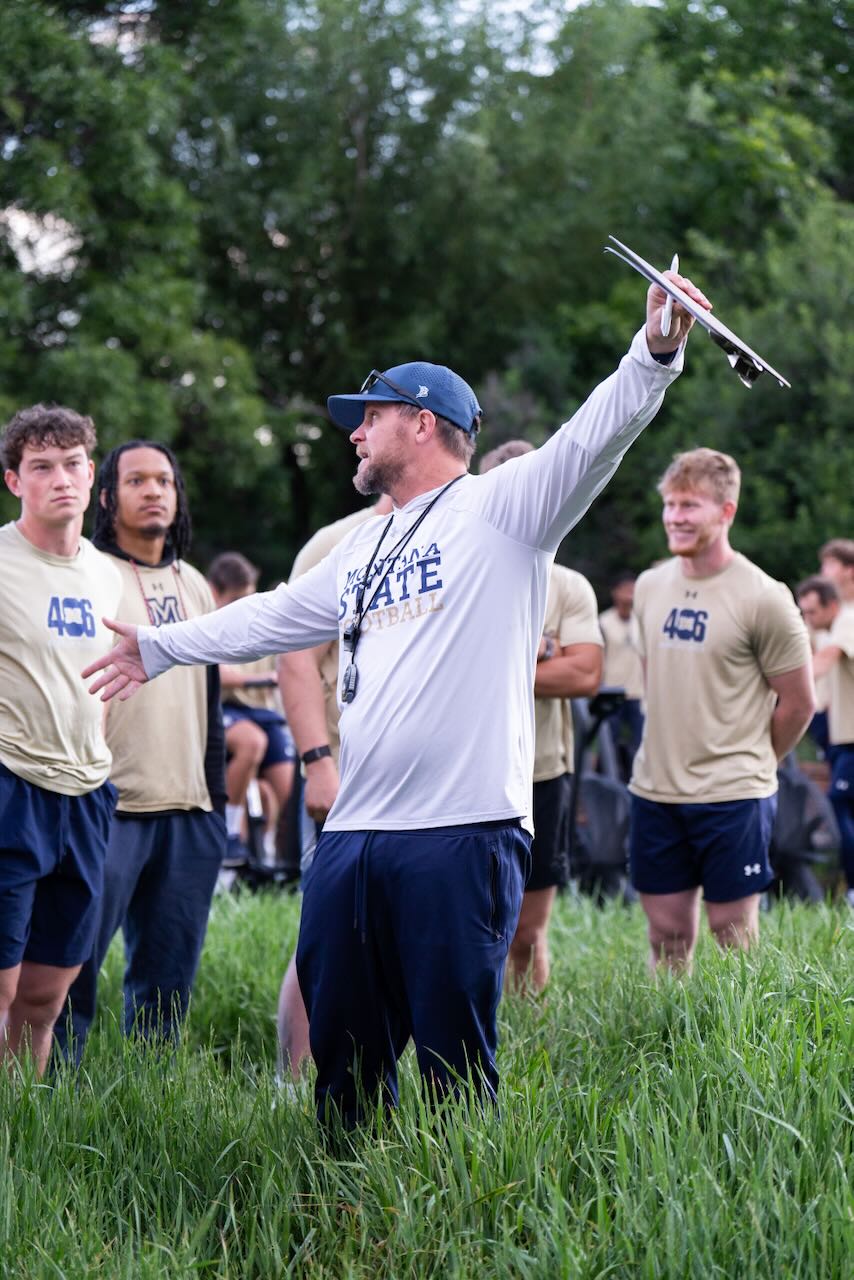
Since his days at Carroll, Herrin has had a handful of influential mentors with whom he developed relationships and from whom he learned.
While earning his degree in human and health performance, Herrin earned an internship at Velocity Sports Performance in Seattle in the summer of 2008. He was one of the first Montanans to work with Rick Huegli, who served as the head of sports performance for six years beginning in 2003 and is widely considered one of the top gurus when it comes to building strong, explosive football players who can run fast.
That sparked the thought that he might want to bring elite private training facilities to Montana.
After graduating from Carroll with a bachelor’s degree in health and physical education and business administration in 2009, Herrin worked as a strength and conditioning specialist at Granite Health and Fitness in Billings from 2009-11. At the same time, he was an assistant coach for the Billings Outlaws arena football team. He completed his master’s degree in human movement with a specialization in sports conditioning in 2012.
After relocating to Southern California, Herrin earned an internship at UCLA, where he worked for revered strength coach Mike Lynn. He also worked in the private sector at Athletes’ Performance before taking over as the sports performance director at Velocity Sports in Redondo Beach, California.
While living in the Golden State, Herrin soaked in tutelage from Ken Vick, the man many consider the godfather of NFL combine-style training. Herrin also worked with Roy Holmes, an expert at Exos Training who claims more than 300 NFL athletes who ran 40-yard dashes in 4.4 seconds or faster, the gold standard for elite speed in the football world.
“I learned so much from those guys,” Herrin said. “But I think, in terms of my approach to the standard, culture and how we do things around here, it’s heavily influenced mostly by Mike Van Diest, Jim Hogan and Nick Howlett.
“To me, the weight room is a vehicle. It’s a vehicle that shows guys the importance of discipline, hard work, pushing through hard things, making the right decisions. You can have the most ideal exercises, but if you weren’t talking about culture, you weren’t talking about what it means to be a good teammate, a good leader, a good man in society, I just think that would be doing these kids a disservice. And I learned that from where I came from.”
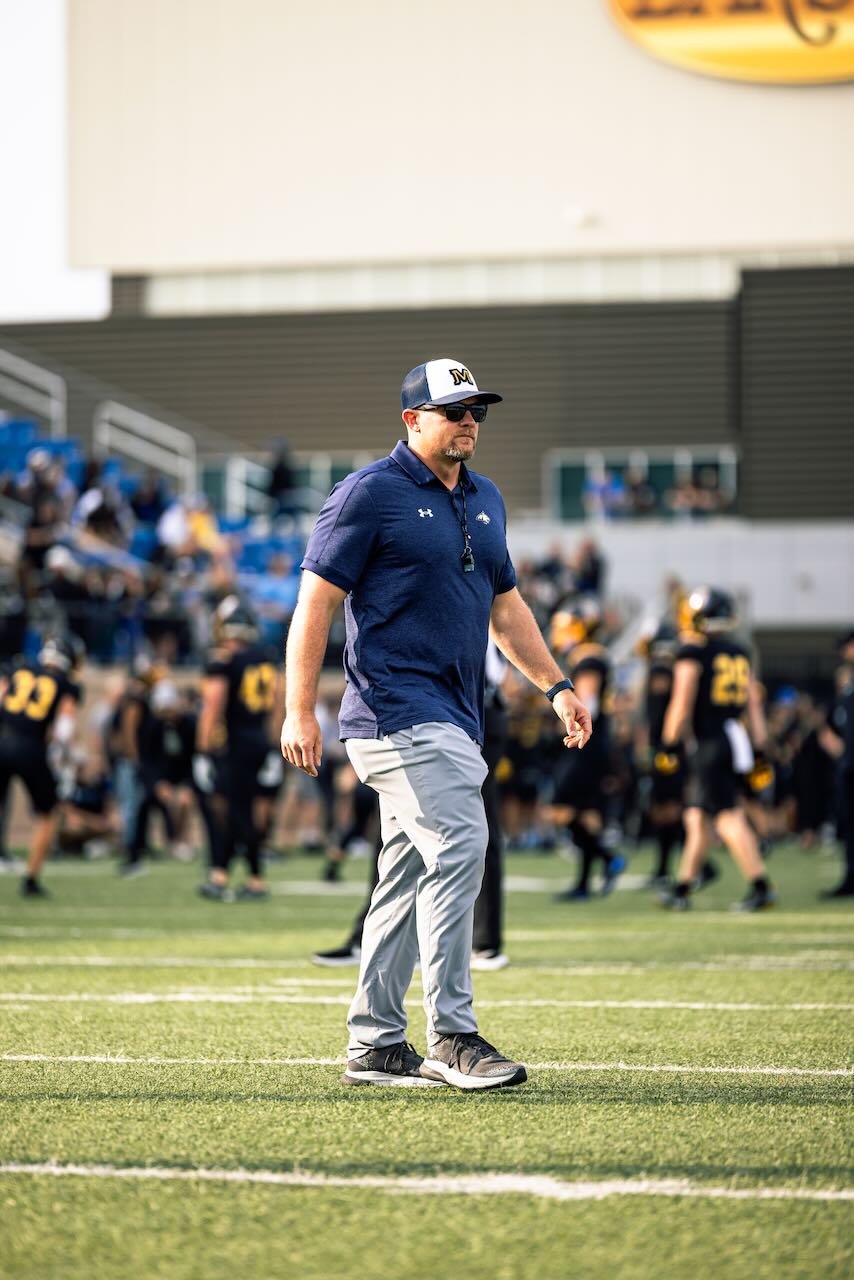
Herrin quickly got burned out training in the private sector. For some of his clients, he could see a massive difference quickly. For others, he would train them for a block or two, see them for a month or two, then they would either quit, move on or just stop coming.
In July 2016, Herrin returned to his native Montana to join the staff at The PITT Training Facility in Bozeman. Herrin held that position until arriving at Montana State.
“I always wanted to bring athletic performance training to the state of Montana, and that’s where the internship came in big. But I also realized during the internship that I didn’t have enough money to get it going,” Herrin said. “I got to see that avenue with Dane (Fletcher) and The PITT.”
Fletcher is a local legend in Bozeman. He was the 2009 Big Sky Conference Defensive Player of the Year before playing for the New England Patriots and the Tampa Bay Buccaneers. He’s competitive, like Herrin, so Herrin liked the collaboration.
But when Choate started bringing the Bobcat football team to The PITT for offseason training, Herrin realized he still longed to be around a team.
“The thing that I missed the most when I was in the private sector was being in the locker room. I missed being out at practice and watching how guys prepared,” Herrin said. “In the private sector, I see them three times a week, if I’m lucky. I can’t travel to all their games. Half the time, you are talking to parents and the kids aren’t really interested.
“That’s the difference. Here at Montana State, you have a group of like-minded men who have a goal, and the goal is extremely high. I am a competitive person, and I enjoy chasing after that.”
During the offseason, when the Bobcats are laying it on the line without any of their vibrant and growing fan base watching, Herrin said he checks in with Vigen at least weekly, particularly during the parts of the calendar when the MSU coaching staff is out recruiting.
He’ll give his evaluation to the position coaches — who often swing by the weight room to watch the development of the current and future standouts — and to the head coach, too, passing along his observations about each prospect.
If a young Bobcat has a great frame, is obviously talented or looks really raw and might be a project, Herrin shares his evaluation with the coaching staff while also forming a plan for how to develop every player the coaching staff adds to the roster.
At the end of each offseason, Herrin gives a full report of measurables, like height, weight and body-fat percentage, as well as speed and strength testing numbers. Those statistics help Herrin maintain a “constant dialogue” about where the program sees each player. Those conversations can help Herrin determine an ideal weight and strength number he can push a player toward before spring ball, the next training cycle or the next fall camp.
“I’ll ask them what they are seeing on the football field that their athlete is lacking, because sometimes weakness doesn’t show up on the football field,” Herrin said. “Sometimes, a guy might need to work on his hips. Or his balance. Or a guy can be super-fast, explosive, gritty in the weight room and the coach can be like, ‘He’s playing slow.’ That might be a sign that there’s some mental error or blockage. OK, we can spend time in the film room.”
Herrin first became enamored with weightlifting as a “chubby middle school kid” who would go to the YMCA “all the time.” He remembers taking a three-week course so he would be allowed to lift by himself. After passing the class, he and his best friend, Chase Gill, would go to the YMCA after school every single day.
“I transformed into a different person,” Herrin said. “By the time I was a freshman in high school, I could bench 200 pounds.
“That’s where it clicked to fall in love with training.”
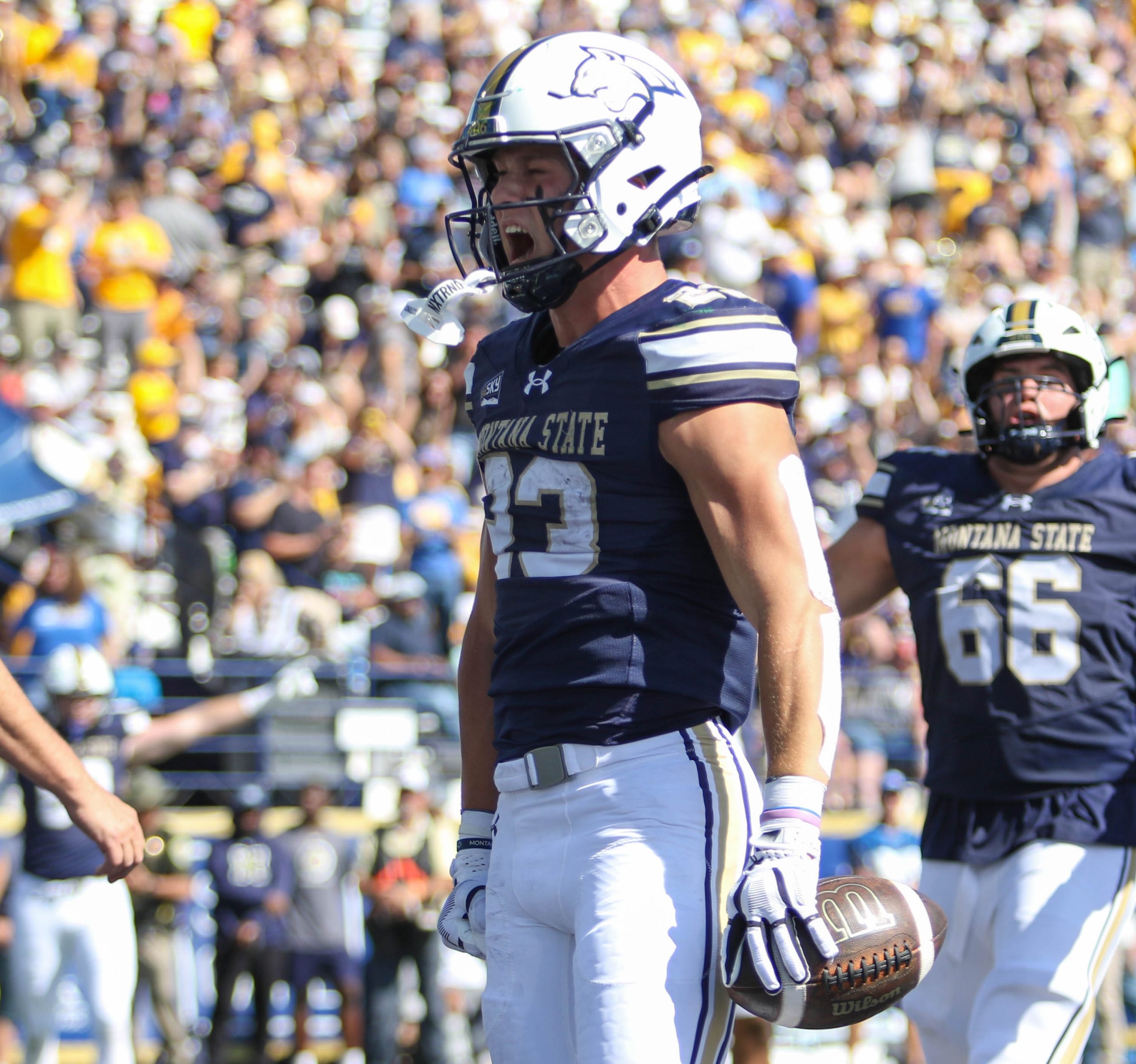
Herrin said he has clocked Jones and Mellott at more than 22 mph in games using sophisticated GPS measurements. Mellott ran sub-4.3, while Andersen, Okada and James Campbell all ran in the 4.4s during MSU’s must-see pro days over the last few years.
Herrin first found an affinity for speed training when his father bought him a speed ladder, medicine balls and parachutes as a teenager. Herrin quickly learned that, as a football and basketball player, being as strong as possible was only part of the equation.
You had to be able to move.
That still remains true. But Herrin has seen the world of strength training, the world of nutrition and the game of football change drastically over the last few decades. Even as recently as 10 or 12 years ago, Montana State offensive linemen tasked with gaining weight would be hitting up late-night drive-thrus and packing in as many calories as possible, whole foods or not.
It’s much more sophisticated now. Shiann Kramer is a full-time director of nutrition and a registered dietitian at Montana State. She can make meal plans, tell players to “eat this, not that,” set macro and calorie goals and more.
“Heck, the knowledge around it has all grown so much. You can get a ChatGPT diet plan,” Herrin said. “You can have a personalized nutrition plan in your pocket.
“But we have a real person who can cater to every single person and body and help our guys reach our goals in the healthiest fashion.”
When Brott first signed with Montana State, he was a 225-pound tweener who had a hard time projecting to a true college position defensively. Once he had an inkling he was moving to the interior of the defensive line, he set about remaking his body.
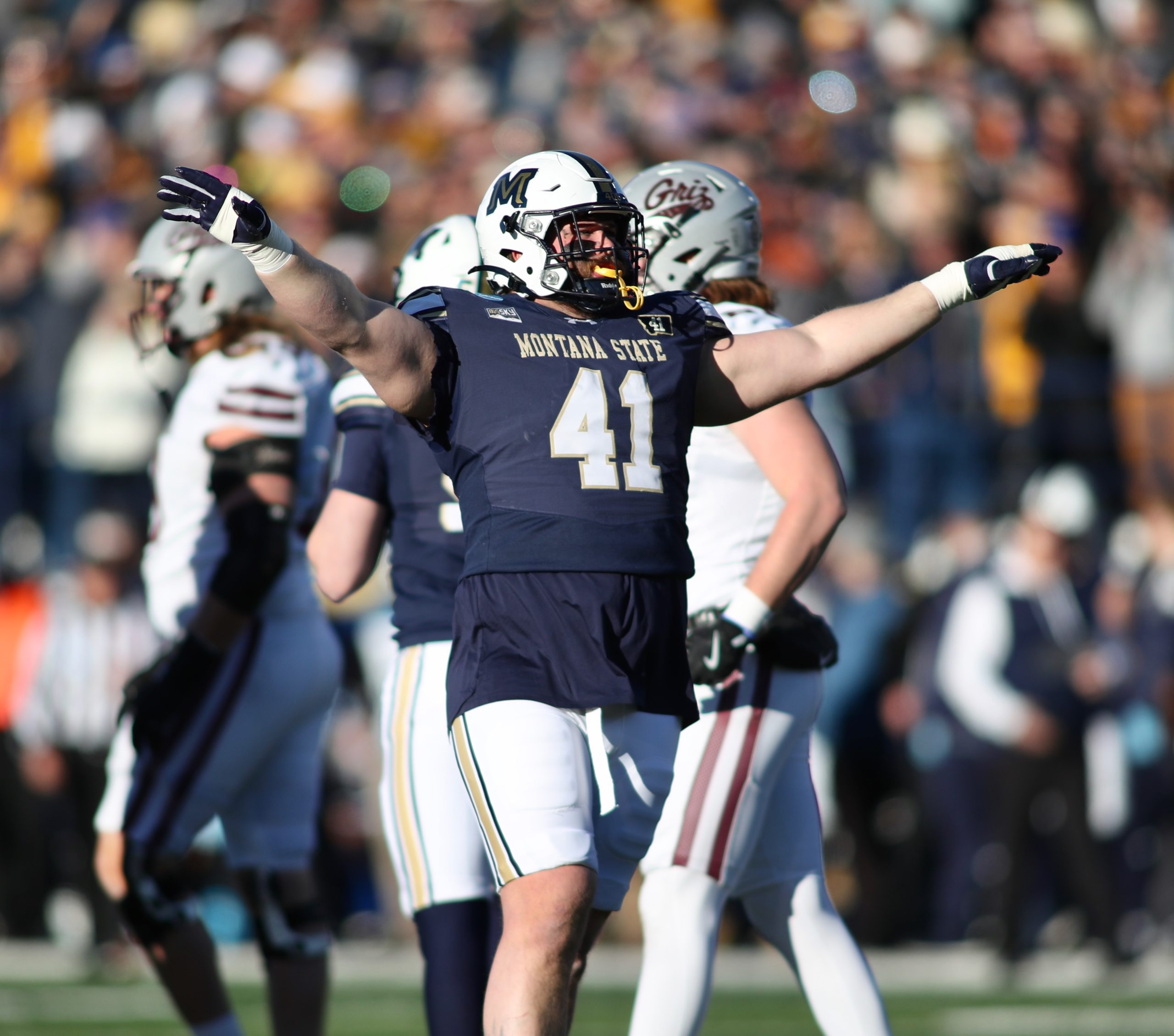
“When I first got here, I would lift two or three times a day, but I was still a knucklehead. I’d still get after it and go out and stuff,” Brott said. “But after a while, I decided to commit to it. So much of that is what I learned from the example set by guys like Brody (Grebe, a three-time All-American). And so much of it is because of the culture Coach Herrin helped create.”
Brott fully committed to getting his weight to more than 300 pounds, which was a key part of his ability to anchor the interior on one of the best teams in the country. Brott also dedicated himself over the last year and a half to not only maintaining 305 to 310 pounds on his frame but also focusing on his mobility, flexibility and recovery.
“I’m moving better at 305 than I was at 275,” Brott said. “When you fully buy in, you are just a better overall person and athlete. You feel differently when you are attacking everything right. Your mind is different. Then your body can match what your mind can do. That also comes from our strength culture.”
Even with that focus, Brott said nutrition has been the hardest part. Brott said he gained 90 pounds over the last five years. The winter before his final spring ball, Brott said he was eating six to seven meals a day, adding up to close to 7,000 calories per day. He would wake up at 5 a.m. every single morning to eat a full breakfast before MSU’s morning workouts.
“Being disciplined,” Brott said. “You don’t know who’s watching and you don’t want to let your teammates down. It’s more about what you do in the dark because it’s easy to perform when people are watching. Sometimes, I don’t want to wake up at 5 in the morning and make my breakfast, but I know my teammates are counting on me.”
College football strength coaching used to be centered on helping athletes bench press, back squat and power clean as much weight as possible, mobility and agility be damned.
“We used to often think that we needed the heaviest offensive and defensive lines and to be as strong as possible so we could move people,” Herrin said. “And now, guys have to be able to move. Guys have to be able to go at a faster, up-tempo pace.
“There’s also a lot more emphasis on injury reduction. If we were going to live and die by who has the heaviest bench, heaviest squat, heaviest clean and didn’t pay attention to how much hamstring work we are getting, how much posterior-chain stuff we are prioritizing, how much speed work, agility and conditioning we are getting…
“The way we practice and the way we play, we would have guys having soft-tissue issues all the time, right? The coaches have realized you can’t use old-school methods to prepare these guys for a new-school game.”
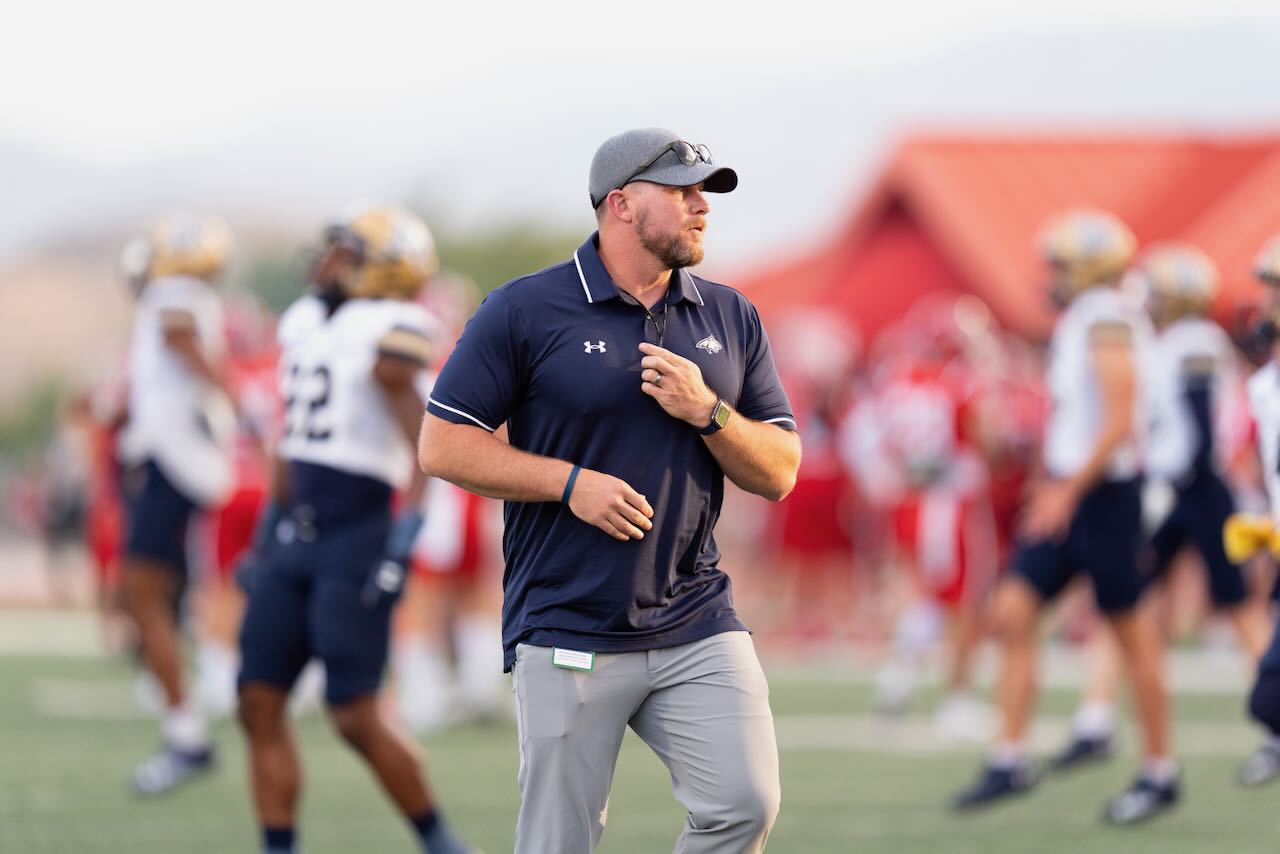
Herrin follows all the data and all the analytics that go hand in hand with high-level college football strength and conditioning these days. He tracks his players’ miles per hour while they run with “Next Gen” GPS technology. Numbers like mph, body mass, body fat and bar velocity help Herrin determine how close each player is to meeting the demands of his position and his responsibilities.
“At the end of the day, you just have to be able to assess, ‘What’s their workload?’ What do you have to prepare them for? And how do you put them in a situation where, when they show up to fall camp or they show up to that first game, they’ve prepared the right way to handle those speeds, those forces?”
That’s how Adam Jones went from a potential-filled but unproven and under-recruited three-sport athlete into the runner-up for the Jerry Rice Award by his fourth semester at Montana State.
Jones has always been fast. Under Herrin’s tutelage, he got even faster. Jones struggled with injuries during his time prepping at Missoula Sentinel. Over the last two years, he’s stayed, by and large, healthy, other than the dings a prolific running back endures during back-to-back 16-game seasons that saw Jones rush 357 times for 2,297 yards and 29 touchdowns.
“One of the biggest things that stands out is how much respect Coach Herrin has in this program,” Jones said. “The second you walk through the door, the older guys are talking about, ‘Hey, you need to be on your best when you are in that weight room. You need to take that stuff seriously.’ Coach Vigen gives him a ton of freedom. We spend so much time with Coach Herrin. Throughout summertime and winter workouts, we are probably with him more than anyone. He is a huge part of our development.
“For me, I came in here, and when I went home for winter break, people were telling me, ‘Man, you look so much different.’ I didn’t feel different, but then you look back on pictures of what you looked like when you came to college and you are like, ‘Oh my goodness.’ Coach Herrin really knows what he’s doing.
“He’s a vital person in our program.”
Jones said he’s put on between 15 and 20 pounds of muscle, depending on the part of the training block Montana State is in. Yet he still has consistently run more than 22 mph during his long bursts over the last two years. When Jones suffered a minor injury in 2024, Herrin researched “a bunch of ways to activate stuff for me to get me healthy.”
“He does whatever it takes,” Jones said. “He cares so much about us that it’s so easy to listen to him and want to listen to him. The knowledge he has is immeasurable.”
That knowledge has translated to Montana State winning 29 games over the last two seasons and playing for the national championship three times in Vigen’s five seasons at the helm. The Bobcats have stayed largely healthy, at least when it comes to soft-tissue issues, which are more preventable than catastrophic and unexpected injuries like torn ligaments or broken bones.
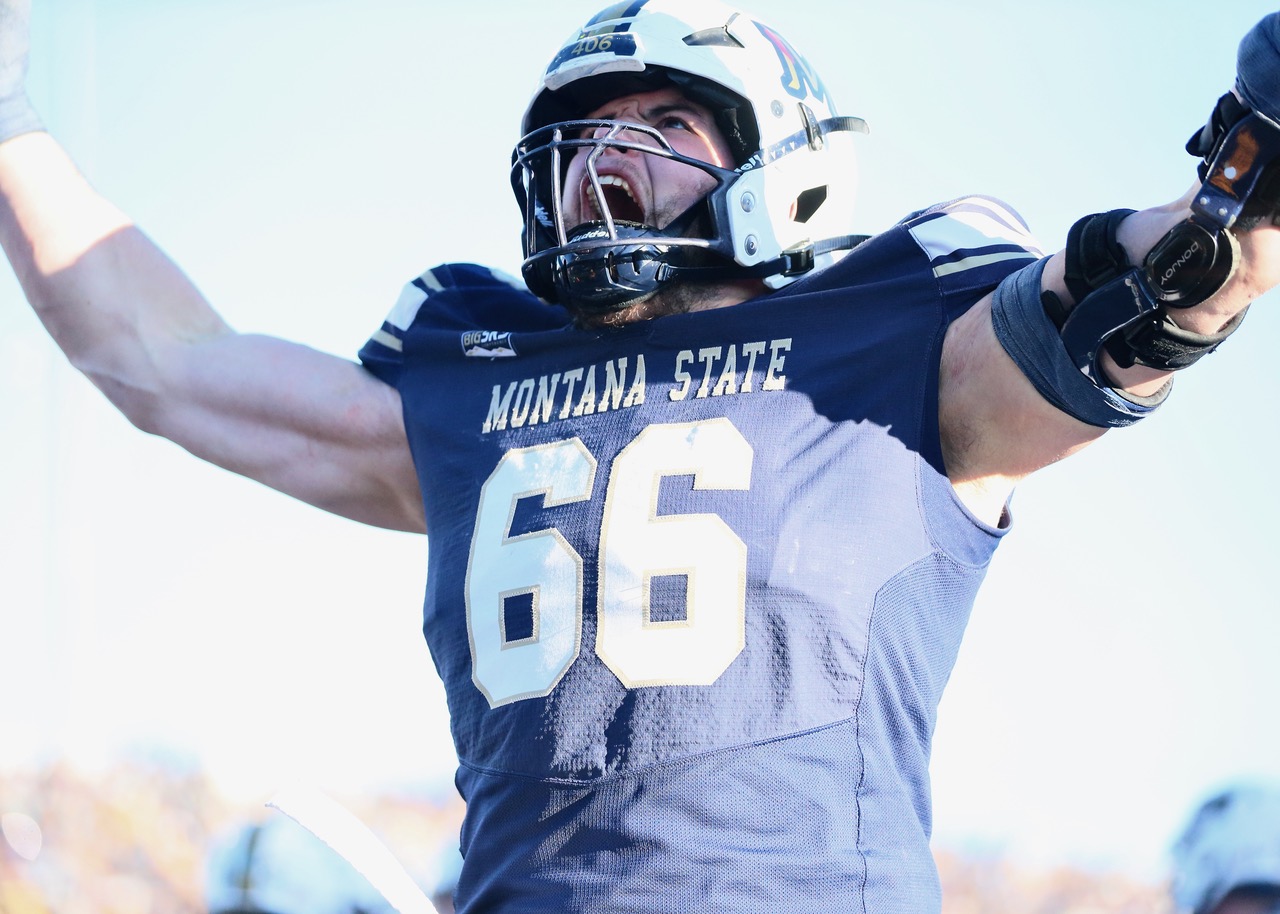
Herrin’s training also translates to Montana State gaining a psychological edge before games begin.
“He’s able to develop guys at a whole different level,” Fleishmann said. “There’s times when we walk out onto the field against a Big Sky opponent and we just pass the eyeball test a whole lot better than they do.”
Herrin’s expertise and affinity for strength training certainly resonate with the Bobcat players. So does the example he sets by exacting discipline in his day-to-day life. Herrin and his wife, Jessica, have two children: Hendricks is 5 years old and Bennett is almost 2.
“He’s the glue to our program,” said Taco Dowler, a junior wide receiver who caught the game-winning touchdown in the national title game. “He’s a great man like Coach Vigen and he practices what he preaches. He’s a great father, great husband, and that’s so admirable. He takes on a lot more than most strength coaches because he’s built that trust and Coach Vigen lets him do what he’s trained to do. He excels at what he does and he loves what he does.
“He knows how to win, and taking advice from winners is what you should do. He doesn’t have an ego. He has so much respect in this building and he’s a huge reason why we win.”
The Bobcat program has been refreshingly self-aware, particularly since Vigen took over. Each offseason that did not result in a national championship did result in frank, focused conversations about where Montana State needed to improve. Coming off a 2022 loss in the semifinals of the FCS playoffs to eventual two-time national champion South Dakota State, the Bobcats collectively agreed to never get pushed around like that again.
Coming off a 2024 national championship game loss to North Dakota State, MSU knew the ultimate goal was almost within reach, but still recommitted to focusing and sharpening the chip on its collective shoulder.
Coming off a 2025 national championship game victory, don’t count on Montana State resting on its laurels. And for all the praise Herrin has received, he knows what it’s like to chase a repeat and a three-peat.
Don’t expect any complacency from him, either.
“I’m not going to take responsibility for (the culture), but I think my job is to foster an environment where the guys can become motivated themselves within it,” Herrin said. “How do you become motivated in that environment? Well, here at Montana State, the weight room or the run, that’s the place where you earn respect from your teammates. That’s where you earn trust from your teammates. You also earn trust from your coaches based on what they are watching. But it’s also the place where you can lose respect and trust.
“When you see a team where everyone is emptying the bucket in terms of developing themselves physically and mentally, all you’re doing is showing your teammates around you that you can trust this guy. I can count on this guy when it’s fourth-and-1 because I’ve seen him push himself to the limit when no one else is watching.
“Ultimately, in the end, you get out what you put in. What you put in, effort- and attitude-wise, in preparation is what you are going to get out. And I’ve seen that come to fruition time and time again. That’s my job. That’s what I live for.”