SPOKANE, Washington — For every Cam Ward, there’s a Gevani McCoy.
For every Vernon Adams, there’s a Gage Gubrud. And for every Trinidad Chambliss, there’s a Kevin Thomson, Dakota Prukop or R.J. Martinez.
During this modern era so thoroughly defined by the NCAA transfer portal — its existence, its influence, the triumphs and tribulations it relentlessly creates — plenty of the Football Championship Subdivision’s best players, including some of its best quarterbacks, have been among the hottest transfer commodities in college football.
The transferring trend among Big Sky Conference quarterbacks started much before the “transfer portal era” erupted five years ago. But most of those who left the FCS or the Big Sky for greener pastures found scorched, dry grass instead.
Which is why this year at the Big Sky Kickoff at Northern Quest Resort & Casino might have been the most refreshing scene of the post-pandemic era at a BSC media day. In a bustling room filled with all 13 head coaches from the league’s football teams, along with an offensive and defensive star from each roster, sat a collection of some of the league’s returning players.
Running back Eli Gillman, the reigning Offensive Player of the Year, flanked newly minted Montana Griz head coach Bobby Kennedy. Safety Caden Dowler, the reigning Defensive Player of the Year, sat next to Brent Vigen, the don of Big Sky coaches as the 21st century enters its second quarter.
And Vigen, who has had plenty of potential suitors — New Mexico, Oregon State and Fresno State, just to name a few — over the last few offseasons, sat between Caden and his twin brother, Taco Dowler, the man of singular and hilarious moniker and electric open-field skills that yielded him at least one high-six- or low-seven-figure offer from a West Coast power-conference team.
The list goes on and on. But perhaps the most striking part of the vibes that come with a room full of stars where almost everyone decided to stay was the fact that arguably the five best quarterbacks in the conference from a season ago are back leading their respective teams.
“I’m really pleased to see all these great quarterbacks choose to come back,” UC Davis head coach Tim Plough said. “I think it shows the conference what those guys can see. There’s Power 4 football and then there’s kind of everybody else. To me, there’s no difference between the Mountain West and the Big Sky. If the Big Sky played the Mountain West tomorrow, you would see Big Sky teams at the top of that conference and vice versa. To me, there’s no difference. And I think a lot of our players recognize that, which is cool to see.”
For Montana State, certainly the head coach and the star twin brothers played a big role in MSU winning the Big Sky’s first national title since Eastern Washington in 2010 and the first in Bozeman since 1984. But so did a vicious defense led by defensive coordinator Shawn Howe, who jumped to the NFL to work with the Pittsburgh Steelers this offseason.
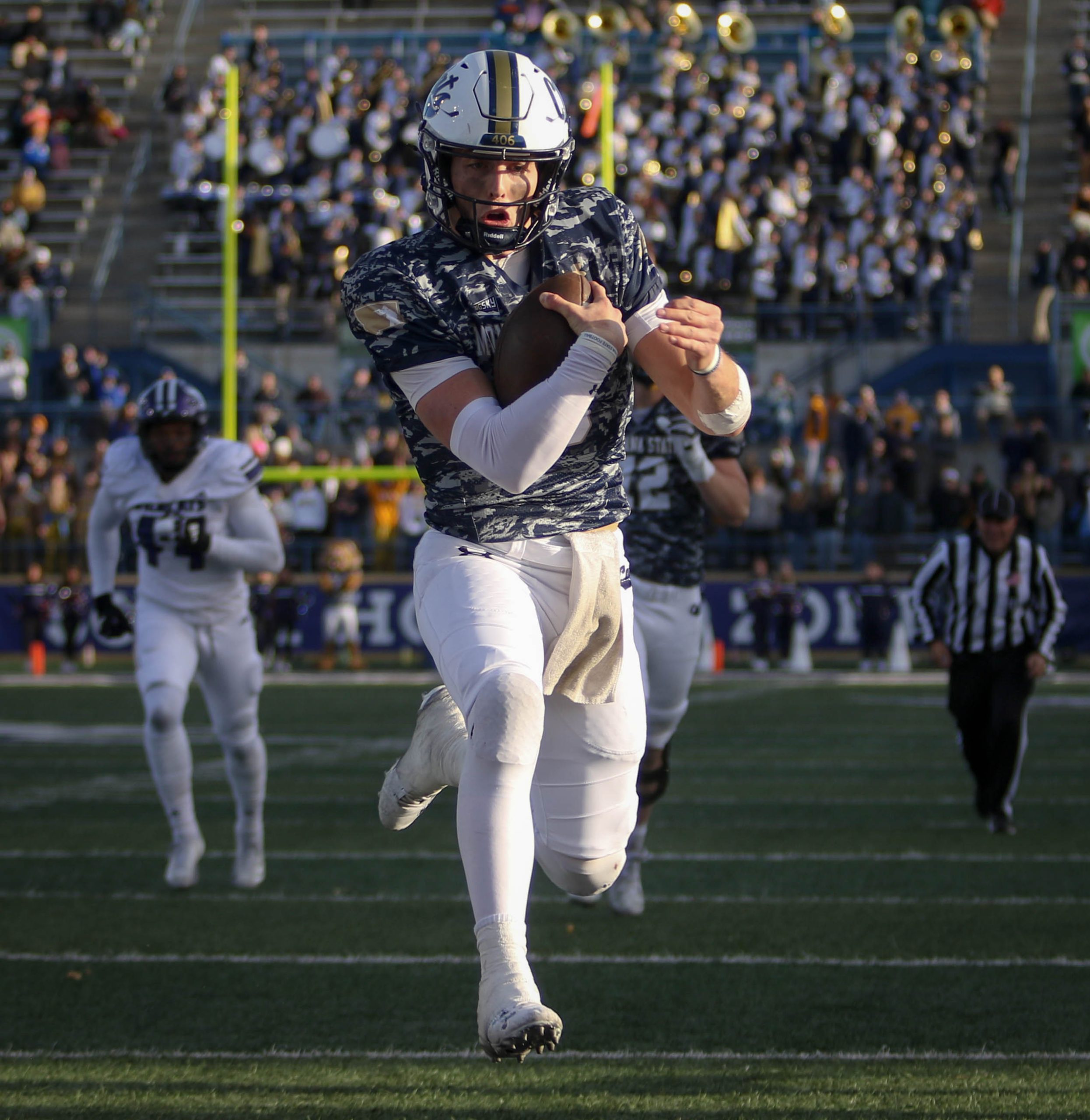
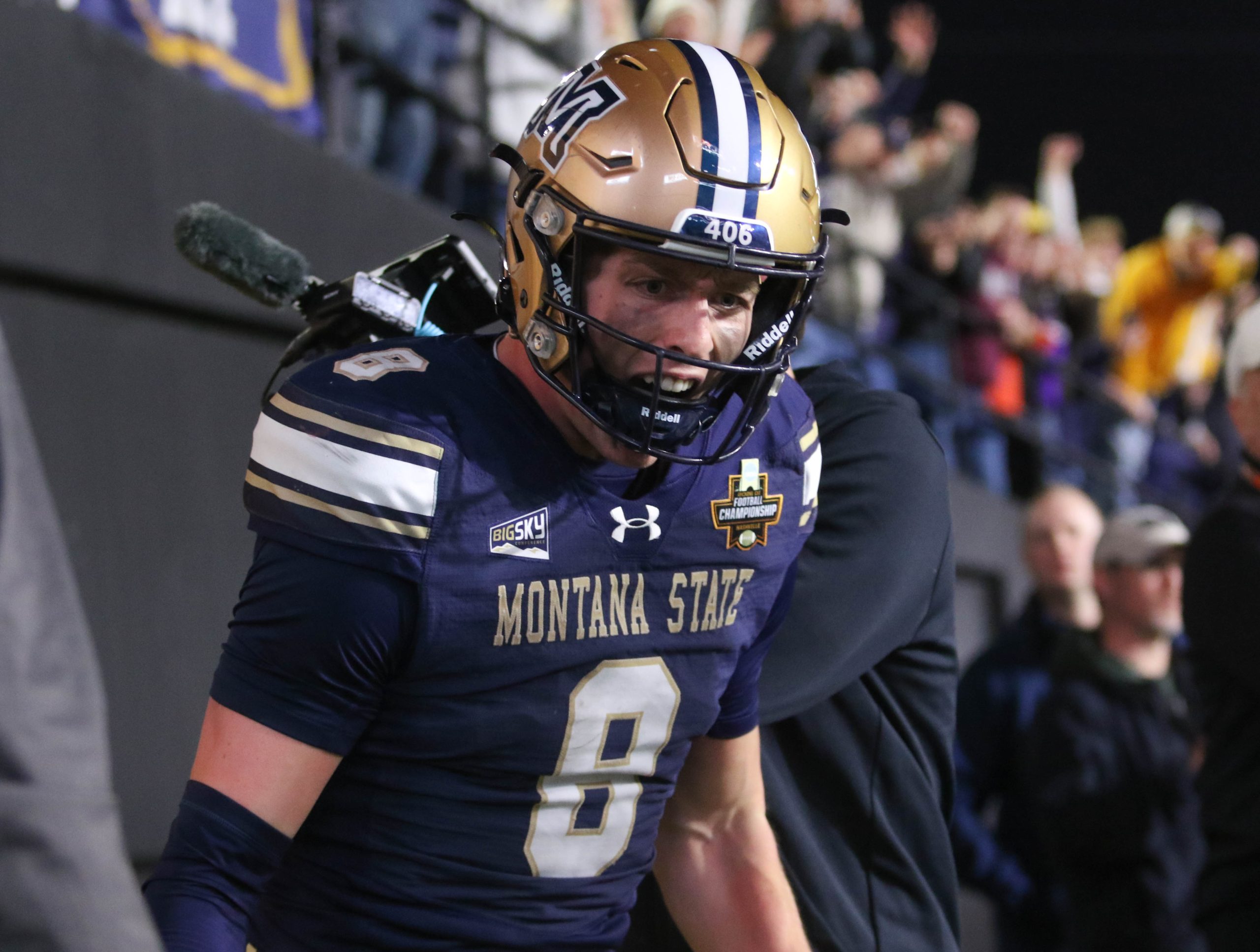
And certainly, the acquisition and ascendance of Justin Lamson also played an enormous role. Lamson, a transfer from Stanford who started his career at Syracuse, went from a stabilizing force following the graduation of Tommy Mellott to an all-conference-caliber quarterback to a bona fide Grizzly slayer during a stratospheric 2025 season.
Lamson put a cherry on top by earning Most Outstanding Player honors in Montana State’s thrilling 35-34 overtime win over Illinois State in the title game.
This offseason, the rumor was Lamson was offered seven figures by an ACC school but turned it down, instead deciding to return to Montana State to try to help the Bobcats become the first Big Sky team ever to win back-to-back titles.
“I think there’s some intelligent guys playing those positions, meaning, what are they after? They’re after success,” Vigen said. “They’re after individual success for sure, but they’re after team success. So I think we have some intelligent competitors in the group that understand that playing that spot is about a lot of things.
“Going somewhere else and getting more money maybe is one of those things, but ultimately having success, you’re dependent on so many factors. So I think what it reflects is a bunch of guys that feel really good in their surroundings. That’s coaches. That’s teammates.
“I know for Justin, I think he recognized that here’s the things that I’m about, and staying at Montana State is the best way to take that next step, to be coached, to have success, to be around guys I love being around. And ultimately, it is about the experience more than it is about a dollar sign. But it’s unfortunate in our day and age that kids are having to choose between those two things.”
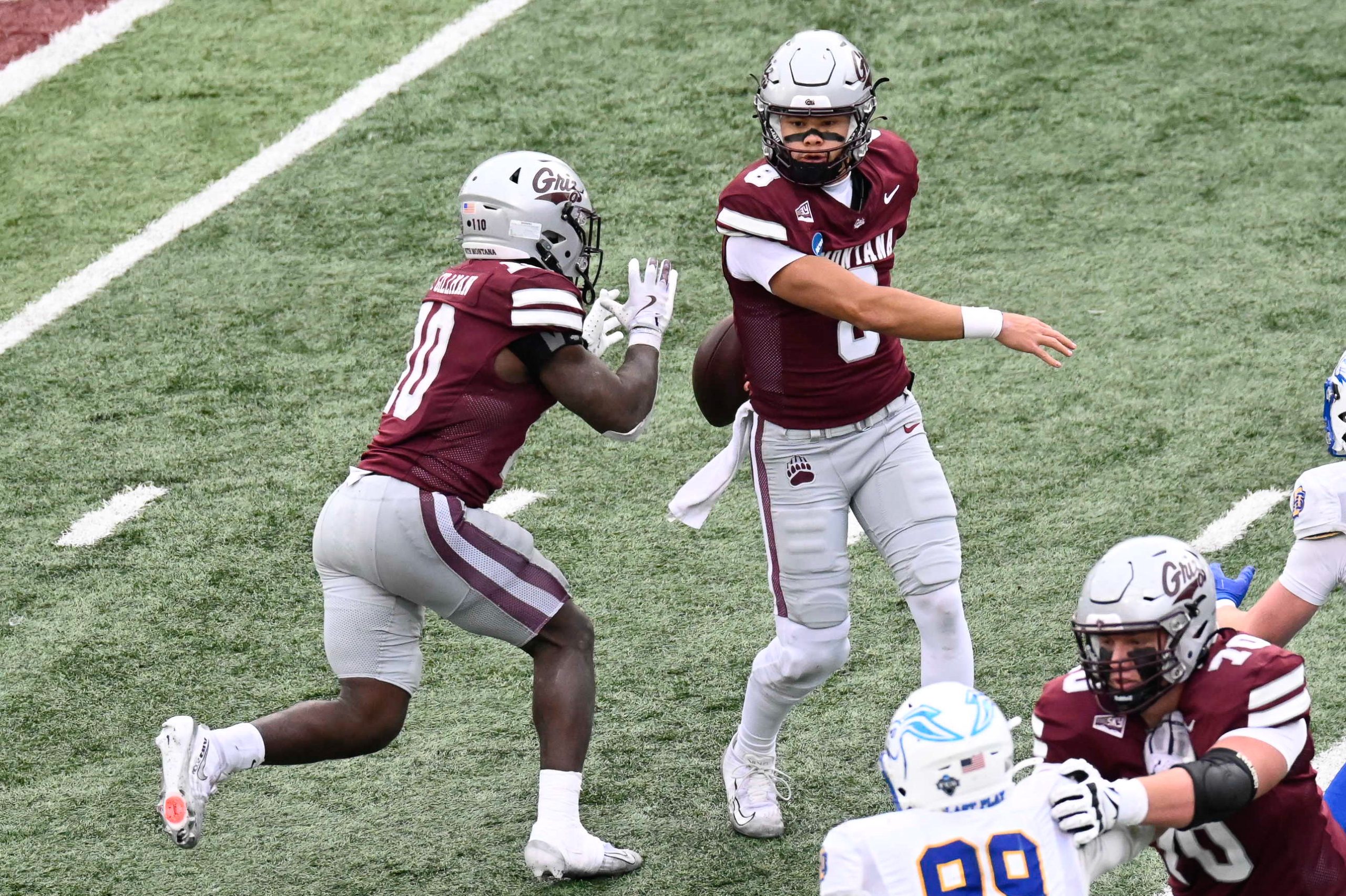
For Montana, Gillman was the offensive representative in Spokane, but Keali’i Ah Yat will be equally important to UM’s fortunes. The savvy, cool Hawaiian is not only a legacy — his father, Brian, was an All-American QB in the late 1990s — but has rapidly developed into one of the top quarterback talents in college football.
After splitting time with Logan Fife as a redshirt freshman (how excruciating…) Ah Yat took the reins last year and soared. He led the FCS with 4,070 passing yards and connected on 33 touchdowns to earn first-team All-Big Sky and All-American honors. He was Montana’s first quarterback to earn first-team all-conference honors since Craig Ochs in 2004.
This offseason, the rumor was that an SEC school offered Ah Yat somewhere between $1 million and $2 million. Instead, he decided to return to the school where his father is a Hall of Famer and to a town where he’s painted on a mural on the side of The Press Box, one of the Garden City’s favorite game-day watering holes.
“He’s one of the best quarterbacks I’ve been around,” Kennedy, who’s coached everywhere from Penn State to Arizona to Washington to Texas to Iowa to Stanford with five other FBS stops in between, said in an interview with Skyline Sports. “He’s one of the best quarterbacks in the country and he will be the center of what we are going to do this season.”
Montana State enters the season as the consensus No. 1 team in the preseason polls. Despite the abrupt “retirement” of former head coach Bobby Hauck, who is now the defensive coordinator at Illinois, Montana is the No. 2 team in both the STATS Perform and Hero Sports Top 25 polls.
Northern Arizona came in at No. 25 in both polls. Ty Pennington, a three-year starter who came to NAU from Pittsburg State with third-year head coach Brian Wright, is a huge reason why.
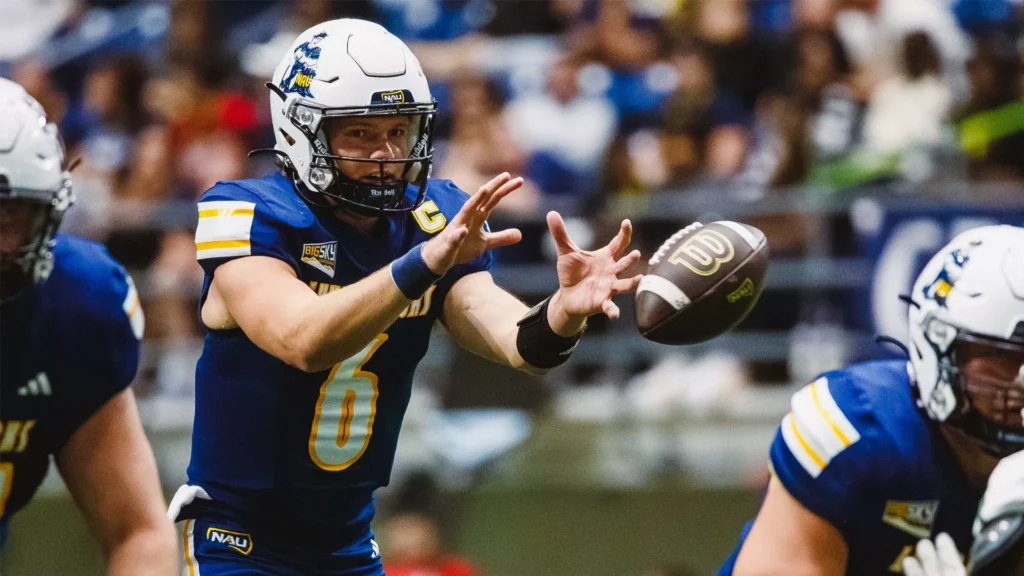
“I’m a very relationship-driven person,” Pennington said. “Seeing the way Coach Wright’s relationship with me has blossomed over time is important to me. That’s not something I take for granted, and that’s not something I want to just throw out the window trying to look for another opportunity out there just for a couple bucks.”
Pennington was the Big Sky Newcomer of the Year two years ago after leading NAU to its first playoff berth since 2017 and the sixth in program history. He’s amassed more than 6,000 total yards, including 5,404 passing yards and 41 total touchdowns, over the last two seasons.
Last season, NAU lost five times, including to Weber State in its season finale, to miss the playoffs. Pennington is hungry to get the Lumberjacks back to the postseason in his final season in Flagstaff.
“It’s also about development,” Pennington said. “I’ve seen myself develop and get better every year under (Wright). In order to play at the next level, you have to not plateau in college. You got to keep getting better. That’s really what brought me back.”
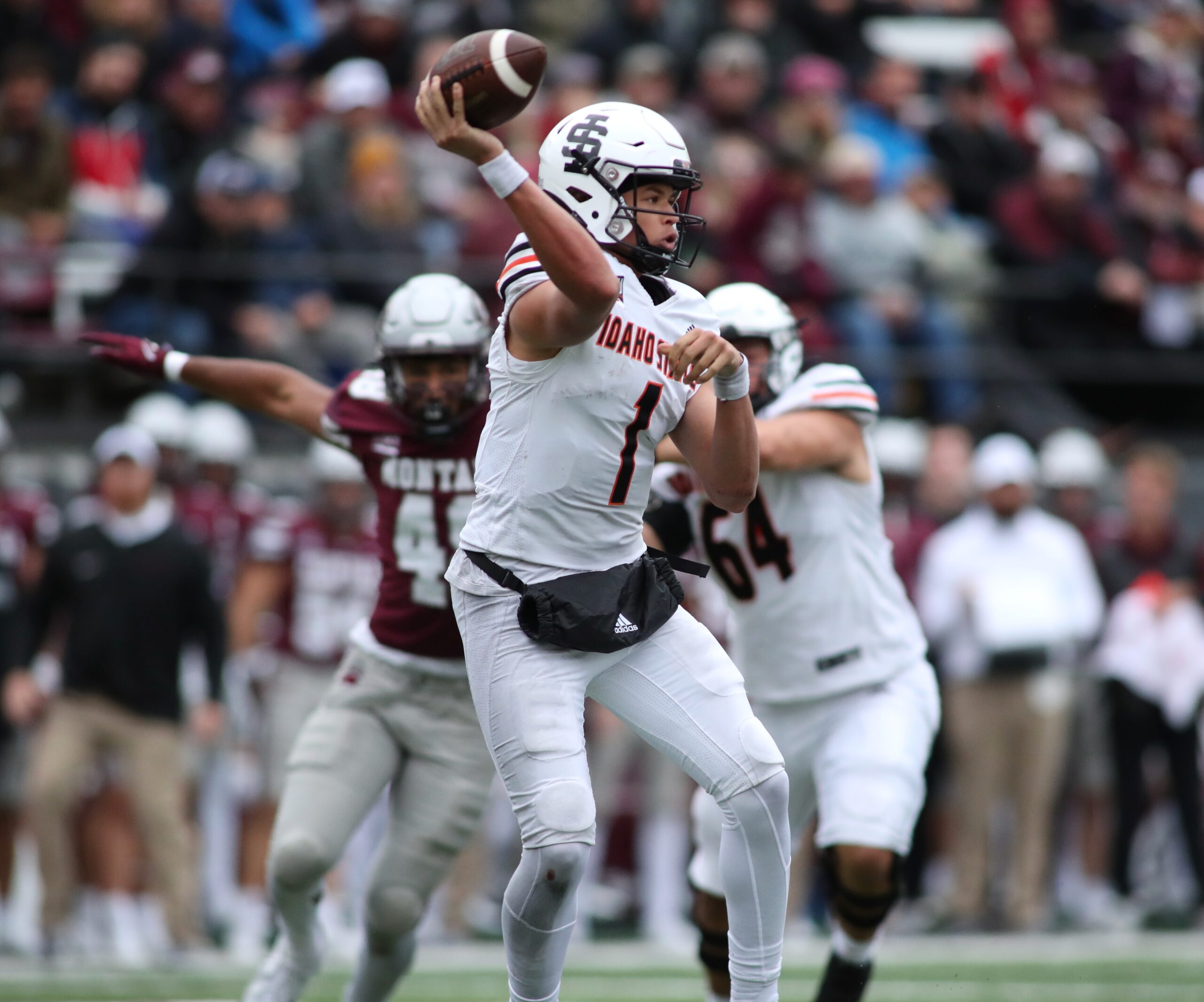
Idaho State finished 6-6 a year ago despite a 1-5 start. A huge reason was the continued development of senior Jordan Cooke. The 6-foot-3, 235-pounder has some of the best pure arm talent in the league and the country.
He’s taken the long road to reach his final collegiate season. He started in junior college, came to ISU and played right away, only to redshirt his second season in Pocatello simply to develop. Idaho State is receiving votes in the first Top 25 poll, and the Bengals have realistic playoff aspirations as Cooke enters his final season.
“He’s such a quiet, reserved kid that grew into the authentic, mature version of himself,” Idaho State fourth-year head coach Cody Hawkins said. “He got voted a team captain and if you’d told me a few years ago that Jordan Cooke was going to be a team captain, I would’ve laughed at you.
“Now, going into his senior year, he has a chance to become what we knew he always would become. And that’s being one of the best players in the country.”

And at Idaho, the hopes of the Vandals returning to the postseason form they showed during three seasons under Jason Eck from 2022-24 rest on the shoulders of senior quarterback Josh Wood.
The former Washington Gatorade Player of the Year transferred to Moscow ahead of last season after an absent career at Fresno State that finished with a flurry as Wood threw for 180 yards and two touchdowns in the Famous Idaho Potato Bowl in his final game with the Bulldogs.
Last season, Wood showed plenty of razzle-dazzle but also had a hard time staying consistent. His talent is apparent, though. He threw for 1,898 yards and 18 touchdowns. He rushed for a team-high 597 yards and seven more scores, but he missed a start and missed snaps in a few other games, too, because he was banged up.
Wood’s ups and downs were only part of Idaho’s problem-laden 2025. From tumult on its coaching staff to a string of one-score losses to a disappointing 4-8 finish, the second season under Thomas Ford Jr. will be under an even sharper microscope. As will Wood’s performances.
This offseason, Idaho hired Ian Shoemaker as offensive coordinator. Shoemaker was the offensive coordinator at Eastern Washington when Eric Barriere was lighting up scoreboards and stat sheets.
“I was a senior in high school, and I remember that and I remember being able to see what he’s done with him,” Wood said. “I was committed to Eastern Washington coming out of high school and to Shoemaker before I got Fresno. I’ve known the man since I was a senior, and just being able to understand and knowing the details it takes to be the quarterback. You look at a guy like Eric Barriere, a Walter Payton Award winner, and what Shoemaker did with him, I’m excited.”
Wood could be the latest example of an FBS recruit finding his place for an FCS power. McCoy, is not quite Wood’s predecessor; Jack Lane started for the Vandals in 2024 before transferring to New Mexico with Eck ahead of last season. But it’s hard to not wonder what could have been with McCoy as a senior fourth-year starter last season.
McCoy helped lead Idaho to consecutive playoff appearances in 2022 and 2023, earning the Jerry Rice Award in his first year as a starter and first-team all-conference honors in his second year as a starter. That prompted a move to Oregon State, where he flamed out, throwing for 1,300 yards with three touchdowns against six interceptions before being benched.
He then transferred to Incarnate Word, where things didn’t stick. He landed at Texas State for spring ball in 2025 but entered the portal again after that.
McCoy played his final college season at Temple, throwing for 256 yards and two touchdowns, which was somehow enough to get him a shot with the BC Lions. But he did not make the active roster.
And he’s just the latest in the saga of Big Sky standout signal-callers who leave for greener pastures and fall flat.
“Those guys staying is going to influence the conference race in the best way possible,” said Jordan Tripp, the lead color commentator for Scripps Sports Big Sky television broadcasts and a contributing analyst at Skyline Sports. “If you have a quarterback, you have a chance. If you have a quarterback who understands how to protect the ball and who knows how to bring a team together and who knows how to manage a game outside of what a coach gives you, that’s a huge advantage. At that position, you either got it or you don’t and in this conference, those guys being able to do those things, that’s huge for the conference.
“NIL aside, I think they realize that maybe grass isn’t greener. You hear these stories of guys like McCoy who leave and it doesn’t go there way, we have a sample size now of what it is.”
Plough has been on both sides of the scenario. When Plough first got an opportunity to call plays as a 20-something offensive coordinator at Northern Arizona, he rolled out a little-known, never-recruited quarterback named Case Cookus. The lanky former junior college wide receiver rapidly developed into one of the best college quarterbacks in the Western United States. And he still makes money playing football as the starting quarterback for the Birmingham Stallions of the UFL.
Plough helped Cookus become the 2015 FCS National Freshman of the Year — they started calling it the Jerry Rice Award the following year — and to earn all-league status following his sophomore campaign the next fall. Cookus went on to be a four-year starter who threw for 12,082 yards and 105 touchdowns.
When Plough returned to his alma mater at UC Davis to join Dan Hawkins’ staff, he helped mentor Jake Maier, a three-year starter and the 2018 Big Sky Offensive Player of the Year. After throwing for 11,163 yards and 88 touchdowns at UCD, Maier currently is in his seventh season in the CFL and is the starting quarterback for the Ottawa Redblacks.
Miles Hastings was the Aggies’ starting quarterback the next four seasons, throwing for 11,168 yards and 80 touchdowns while earning All-American honors twice.
Last season, Plough went about his quest to turn another freshman phenom into a four-year starter. But Caden Pinnick bolted after earning Big Sky Freshman of the Year honors. He threw for 3,206 passing yards and 32 touchdowns, numbers good enough to get him a shot at Washington State.
“I’ve been pretty vocal about the fact that I love Caden and I’m rooting for him, but I thought it was a mistake to leave as early as he did,” Plough said. “I feel like when you leave Montana, Montana State, UC Davis, any of these top schools, I would hope that you go to a Power 4 school and financially that would be the right decision, in my mind.
“I think he and his team thought that’s where he was going to go. And it didn’t work out that way.”
Washington State is still in the Pac-12, but the league is a shell of its former self. Pinnick did go on a visit to Colorado before that opportunity fell through, ensuring he ended up in Pullman instead of in the Power 4.
“I’m still rooting for him to have great success,” Plough said.
Pinnick reportedly received interest from Power 4 schools, evidenced by the visit to Colorado. But instead of matriculating at a blueblood institution, he landed at a program in purgatory after the initial dissolution of the Pac-12 and its pending, chaotic attempted resurrection.
“As far as our quarterback turnover, for me, I’ve coached the quarterback the same way since 2008,” said Plough, who played quarterback at Davis 2003 through 2007 during an injury-riddled career that saw him play in just 16 games. “I believe in the stuff I was taught and I believe in how we coach the quarterback. I think we coach the quarterback as well as anybody in the country, so we are going to recruit great players in that position room and those guys are going to be chomping at the bit to have an opportunity.
“And I truly believe no matter who that guy is, we’ve created a lion’s den of competitors and every year, whatever lion emerges from that den is going to be a good player.”
This off-season, Plough brought in Jackson Kollock, a transfer from Laguna Beach, California who was a redshirt who saw no action last season at Minnesota. Plough said he likes a few of his young guys and a few of his transfers, but said he is looking forward to another competition.
“I think whoever emerges from that room will have fully solidified it and hopefully, he’ll be surrounded by great receivers, a great tight end, great running backs and a great offensive line,” Plough said. “I just want him to do his job and get the ball to the right guy.”
(On Tuesday, UC Davis released its first depth chart. Sophomore Treynor Cleeland, a former 3-star recruit out of Jesuit High School in Portland, was named the starter over Kollock, who is listed as the backup.)
Some would say Cam Ward has influenced the modern generation of small-school quarterbacks. The 2025 No. 1 overall NFL draft pick started his career at Incarnate Word. After an electric freshman year that saw him throw for 2,260 yards and 24 touchdowns, he transferred to Washington State.
In two years on the Palouse, he threw for 6,963 yards and 48 touchdowns and rushed for 13 more scores. That helped earn him a seven-figure deal with the Miami Hurricanes. While guiding “The U,” Ward threw for 4,313 yards and 39 touchdowns, earning All-American honors and becoming the No. 1 pick of the Tennessee Titans.
Trinidad Chambliss actually never played in the FCS. He transferred from Division II power Ferris State — yes, he was on the roster when the Bulldogs took Montana down to the wire in a 17-10 loss in Missoula in 2023 — to Ole Miss, where he threw for 3,937 yards and 22 touchdowns and rushed for 527 yards and eight more scores to lead the Rebels to a 13-2 record and a national semifinal appearance.
But some of the best quarterbacks in the Big Sky Conference over the last decade have transferred out as well, including several cases that actually came years before the “portal era” began.
Vernon Adams needed to pass a math test to earn his undergraduate degree and transfer to Oregon. That used to be one of the prerequisites if you wanted to play right away – you had to graduate. After throwing for 10,438 yards and 110 touchdowns at Eastern Washington, Adams did pass the summer school math class, did earn his degree and did move on to become the starting QB for the Ducks for the 2015 season.
The results were OK as Oregon went 7-3 and played in the Alamo Bowl, where the Ducks lost 47-41 in overtime to TCU. Adams threw for 2,643 yards and 26 touchdowns. It was enough to earn him a spot in the CFL, where he still plays for Dave Dickenson’s Calgary Stampeders.
Gage Gubrud broke all of Adams’ records. The 2016 Eastern Washington offense is arguably, at least statistically, the greatest in the history of college football. Gubrud threw for more than 5,160 yards and 48 touchdowns. Cooper Kupp shattered every major college football career receiving record, finishing with 424 catches for 6,464 yards and 80 touchdowns. Kupp finished that year with 117 catches for 1,700 yards and 17 touchdowns, yet it wasn’t like he was a ball hog.
Kendrick Bourne hauled in 79 catches for 1,201 yards and seven touchdowns to earn himself an opportunity with the NFL, where he plays to this day. Shaq Hill also had more than 1,000 yards receiving, catching 77 passes for 1,157 yards and 17 touchdowns to also earn a brief NFL shot.
That Eagles team put up 43 points and 539 yards per game, including 400 yards per game through the air. That’s all to say that when Gubrud transferred to Washington State, it seemed like a natural progression.
He threw for 89 yards total after leading EWU.
Thomson was a drop-down turned transfer up. He went from toiling at UNLV in 2015 to leading Sacramento State to its first-ever Big Sky Conference championship in 2019. He threw for 3,215 yards and 26 touchdowns as the Hornets beat Eastern Washington, Montana State and Montana in consecutive weeks, becoming the first team in the conference to ever do that since EWU joined the league in 1987.
That earned Thomson an opportunity at Washington.
He never threw another collegiate pass.
Prukop supporters — we are one — would say that Prukop got scapegoated at Oregon. He bailed from the sinking ship that was the 2015 Montana State Bobcats. MSU all-time wins leader Rob Ash was fired after a disappointing 5-6 campaign in 2015, leading to OC Tim Cramsey trying to use Prukop as a pawn to become Ash’s replacement.
Instead, MSU hired Jeff Choate and, like Big Play VA, Prukop bounced to Eugene.
He started for the Ducks for the first month of the season. But Mark Helfrich could feel his seat getting hotter and hotter, so he elected to go with the freshman from Eugene with the big arm and the high ceiling. Prukop didn’t play after October 1, and Justin Herbert became the No. 6 pick in the NFL draft four years later.

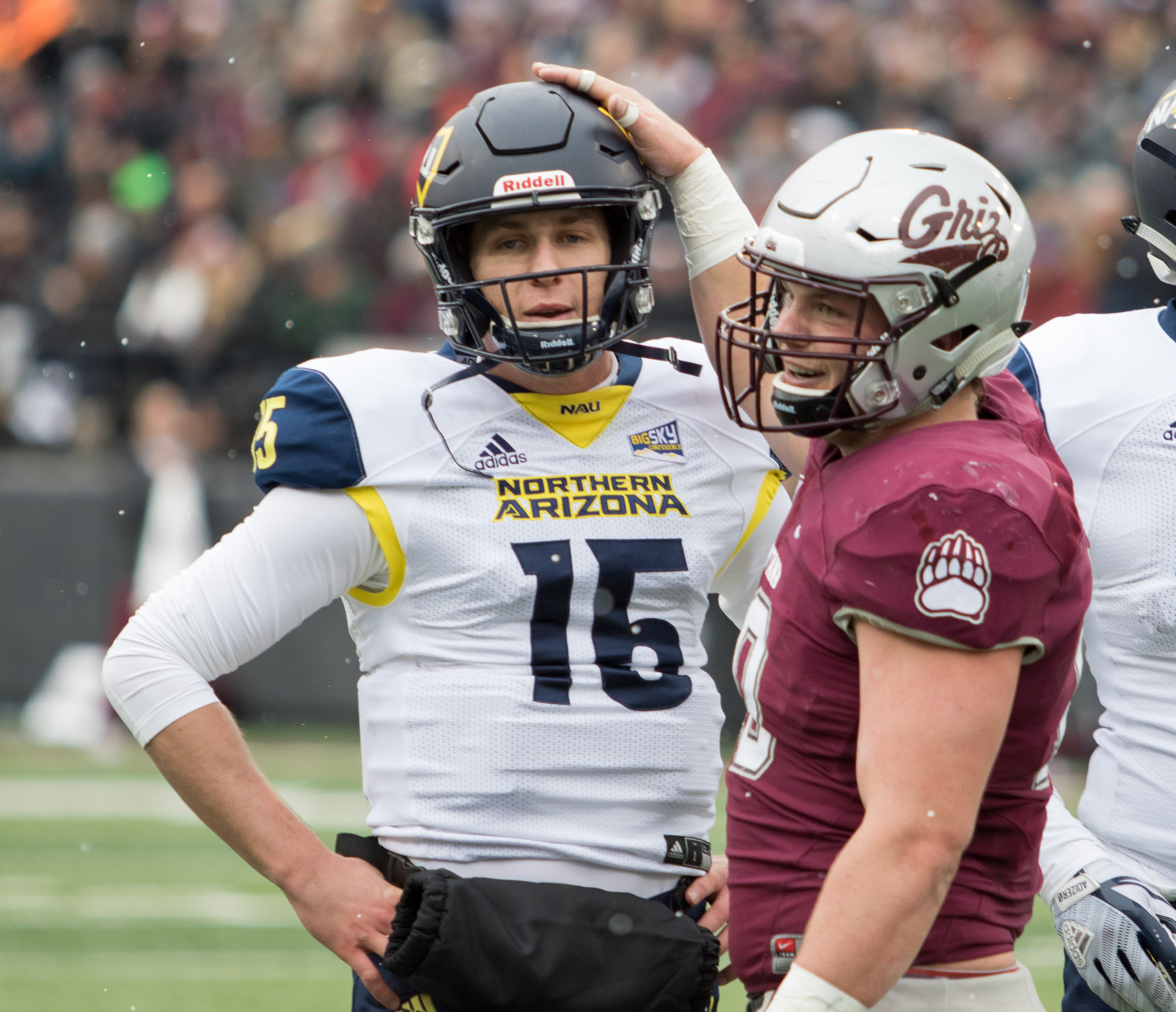
Like McCoy, Martinez is a perplexing case study. He was the Freshman of the Year in the conference at NAU in 2021 and had a standout sophomore year the following season. Then he inexplicably transferred to Baylor, where it was clear that he would be way down the depth chart.
After playing in three games, he transferred to Texas State for the 2024 season and to Division II West Texas A&M for his final season last fall.
Martinez threw for 4,590 yards and 30 touchdowns during his time in Flagstaff. He played in seven total games during his two seasons in the FBS. He threw for 4,122 yards and 36 touchdowns during his lone season playing Division II.
That’s all to say the grass is not always greener.
And it seems more and more quarterbacks in the Big Sky Conference are content to stay right where they are thriving.
“I think it’s really awesome to see people stay,” said Cooke, who enters his final season at ISU with 5,495 passing yards and 28 passing touchdowns. “In today’s world, not a lot of people are staying at their schools. They’re just having a good year and then leaving for money or whatever it is.
“But I think Coach Hawke and my teammates and people like my good friend Nate (Reynolds) were reasons I wanted to stay. I just felt like we had a good year last year, but I just felt like there’s so much potential left, and I love Idaho State. I met my wife in Pocatello, and it’s meant the world to me, so it was an easy decision to stay.”